 Back
BackParametric and Polar Curves, Arc Length, Area, and Conic Sections
Study Guide - Smart Notes
 Tailored notes based on your materials, expanded with key definitions, examples, and context.
Parametric Curves
Astroid Curve and Tangents
Parametric equations allow us to describe curves using a parameter, typically denoted as t. The astroid is a classic example of a parametric curve, often defined by equations such as x = a cos3 t and y = a sin3 t. The tangent lines to such curves can be classified as horizontal or vertical based on the derivatives.
Horizontal Tangent: Occurs when dy/dt = 0 and dx/dt ≠ 0.
Vertical Tangent: Occurs when dx/dt = 0 and dy/dt ≠ 0.
Example: For x = 4 cos t, y = 16 sin t, horizontal tangents are found by setting dy/dt = 0, vertical tangents by dx/dt = 0.
Formulas:
and are computed from the parametric equations.
The slope of the tangent is .
Arc Length of Parametric Curves
The arc length of a parametric curve defined by x = f(t) and y = g(t) for a ≤ t ≤ b is given by:
Example: For x = cos3 t, y = sin3 t, the total length is four times the length in the first quadrant.
Polar Coordinates
Introduction to Polar Coordinates
The polar coordinate system represents points in the plane using a distance r from the origin (pole) and an angle θ from the polar axis. This system is an alternative to the rectangular (Cartesian) coordinate system.
Conversion Formulas:
From polar to rectangular: ,
From rectangular to polar: ,
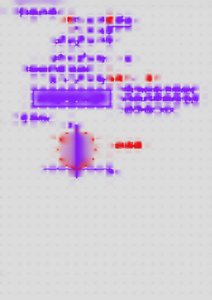
Graphing: In polar coordinates, curves are described by equations of the form r = f(θ).
Basic Curves in Polar Coordinates
Circle:
Line through the pole:
Spiral:

Graphing Polar Equations
There are three main methods to graph polar equations:
Table of Values: Compute r for various θ and plot the points.
Convert to Rectangular: Use conversion formulas to rewrite the equation in terms of x and y.
Use Cartesian Graph as Guide: Sketch the Cartesian graph and use it to inform the polar graph.
Calculus in Polar Coordinates
Slope of Tangent Line in Polar Coordinates
Given a polar equation r = f(θ), the slope of the tangent line at a point is found using parametric representations:
The slope is
Where and
Area in Polar Coordinates
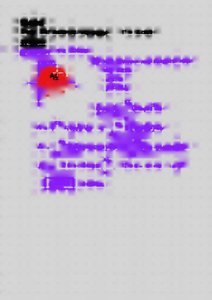
The area enclosed by a curve r = f(θ) between θ = α and θ = β is:
Example: Area of a circle r = 2 \cos \theta is calculated by integrating over the appropriate interval.
Area Between Two Polar Curves
If a region is bounded by two curves r = f(θ) and r = g(θ), the area is:
Example: Area between r = 1 + \cos \theta and r = \cos \theta.
Conic Sections
Introduction to Conic Sections
Conic sections are curves obtained by intersecting a plane with a double cone. The main types are:
Parabola
Ellipse
Hyperbola
The Parabola
A parabola is the set of points equidistant from a fixed point (focus) and a fixed line (directrix).
Standard Equation: or
Focus: Located at or depending on orientation.
Directrix: Line or .
Example: For , focus at , directrix .
The Ellipse
An ellipse is the set of points where the sum of distances from two fixed points (foci) is constant.
Standard Equation:
Vertices: or
Foci: or where
Major Axis: Length
Minor Axis: Length
Eccentricity: ,
Example: has vertices at , foci at .
The Hyperbola
A hyperbola is the set of points where the absolute difference of distances from two fixed points (foci) is constant.
Standard Equation: or
Vertices: or
Foci: or where
Asymptotes:
Eccentricity: ,

Summary Table: Conic Sections
Type | Standard Equation | Vertices | Foci | Eccentricity |
|---|---|---|---|---|
Parabola | 1 | |||
Ellipse | , | |||
Hyperbola | , |
Additional info: Some details and examples were inferred for completeness and clarity, especially where original notes were fragmented or brief.
