Back
Back
Problem 7.2.43
Evaluate the integrals in Exercises 39–56.
43. ∫(from 0 to π)(sin t)/(2 - cos t) dt
Problem 7.1.27
Each of Exercises 25–36 gives a formula for a function y=f(x). In each case, find f^(-1)(x) and identify the domain and range of f^(-1). As a check, show that f(f^(-1)(x))=f^(-1)(f(x))=x.
f(x) = x³ + 1
Problem 7.2.37
In Exercises 7–38, find the derivative of y with respect to x, t, or θ, as appropriate.
37. ∫(from x²/2 to x²)ln(√t)dt
Problem 7.4.19
Solve the differential equation in Exercises 9–22.
19. y²(dy/dx) = 3x²y³ - 6x²
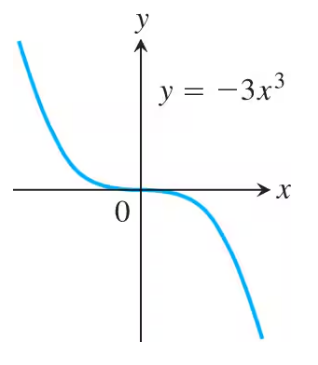
Problem 7.1.1
Which of the functions graphed in Exercises 1–6 are one-to-one, and which are not?
Problem 7.4.21
Solve the differential equation in Exercises 9–22.
21. (1/x)(dy/dx) = ye^(x²) + 2√y e^(x²)
Problem 7.6.43
In Exercises 21–48, find the derivative of y with respect to the appropriate variable.
43. y=√(arcsin x)
Problem 7.1.9
In Exercises 7–10, determine from its graph if the function is one-to-one.
f(x) = 1 - x/2, x ≤ 0
x/(x + 2), x > 0
Problem 7.5.39
Use l’Hôpital’s rule to find the limits in Exercises 7–52.
39. lim (x → ∞) (ln 2x - ln(x + 1))
Problem 7.3.79
In Exercises 59–86, find the derivative of y with respect to the given independent variable.
79. y = θ sin(log₇ θ)
Problem 7.7.23
In Exercises 13–24, find the derivative of y with respect to the appropriate variable.
23. y = (x²+1)sech(ln x)
(Hint: Before differentiating, express in terms of exponentials and simplify.)
Problem 7.3.67
"In Exercises 59–86, find the derivative of y with respect to the given independent variable.
67. y = 7^(sec θ) ln 7"
Problem 7.5.17
Use l’Hôpital’s rule to find the limits in Exercises 7–52.
17. lim (θ → π/2) (2θ - π) / cos(2π - θ)
Problem 7.2.23
In Exercises 7–38, find the derivative of y with respect to x, t, or θ, as appropriate.
23. y = ln(x)/(1+ln(x))
Problem 7.2.27
In Exercises 7–38, find the derivative of y with respect to x, t, or θ, as appropriate.
27. y = θ(sin(lnθ) + cos(lnθ))
Problem 7.5.53
Indeterminate Powers and Products
Find the limits in Exercises 53–68.
53. lim (x → 1⁺) x^(1/(1 - x))
Problem 7.2.14
In Exercises 7–38, find the derivative of y with respect to x, t, or θ, as appropriate.
14. y = ln(2θ+2)
Problem 7.7.73
Evaluate the integrals in Exercises 31–78.
73. ∫dx/√(-2x-x²)
Problem 7.2.59
In Exercises 57–70, use logarithmic differentiation to find the derivative of y with respect to the given independent variable.
59. y = √(t/(t+1))
Problem 7.1.51
Let f(x) = x³ − 3x² − 1, x ≥ 2. Find the value of df⁻¹/dx at the point x = −1 = f(3).
Problem 7.6.73
Evaluate the integrals in Exercises 53–76.
73. ∫(from 0 to ln√3) e^x dx/(1+e^(2x))
Problem 7.3.126
In Exercises 115–126, use logarithmic differentiation or the method in Example 6 to find the derivative of y with respect to the given independent variable.
126. eʸ = y^(ln x)
Problem 7.2.25
In Exercises 7–38, find the derivative of y with respect to x, t, or θ, as appropriate.
25. y = ln(ln(x))
Problem 7.3.13
In Exercises 7–26, find the derivative of y with respect to x, t, or θ, as appropriate.
y = (x^2 - 2x + 2)e^(x)
Problem 7.4.44
44. Silver cooling in air The temperature of an ingot of silver is 60°C above room temperature right now. Twenty minutes ago, it was 70°C above room temperature. How far above room temperature will the silver be
b. 2 hours from now?
Problem 7.3.124
In Exercises 115–126, use logarithmic differentiation or the method in Example 6 to find the derivative of y with respect to the given independent variable.
124. x^(sin y) = ln y
Problem 7.3.120
In Exercises 115–126, use logarithmic differentiation or the method in Example 6 to find the derivative of y with respect to the given independent variable.
120. y = x^(sin x)
Problem 7.5.55
Indeterminate Powers and Products
Find the limits in Exercises 53–68.
55. lim (x → ∞) (ln x)^(1/x)
Problem 7.1.55
Show that increasing functions and decreasing functions are one-to-one. That is, show that for any x₁ and x₂ in I, x₂ ≠ x₁ implies f(x₂) ≠ f(x₁).
Problem 7.3.5
5. e^(2t)-3e^t = 0