
Textbook Question
Lifetime of a tire Assume the random variable L in Example 2f is normally distributed with mean μ = 22,000 miles and σ = 4,000 miles.
a. In a batch of 4000 tires, how many can be expected to last for at least 18,000 miles?
20
views



Lifetime of a tire Assume the random variable L in Example 2f is normally distributed with mean μ = 22,000 miles and σ = 4,000 miles.
a. In a batch of 4000 tires, how many can be expected to last for at least 18,000 miles?
Using different substitutions
Show that the integral
∫((x² - 1)(x + 1))^(-2/3) dx
can be evaluated with any of the following substitutions.
a. u = 1/(x + 1)
What is the value of the integral?
In Exercises 11–22, estimate the minimum number of subintervals needed to approximate the integrals with an error of magnitude less than 10^-4 by (a) the Trapezoidal Rule (The integrals in Exercises 11–18 are the integrals from Exercises 1–8.)
∫ from -1 to 1 of (t³ + 1) dt
In Exercises 11–22, estimate the minimum number of subintervals needed to approximate the integrals with an error of magnitude less than 10^-4 by (a) the Trapezoidal Rule (The integrals in Exercises 11–18 are the integrals from Exercises 1–8.)
∫ from 1 to 2 of 1/s² ds
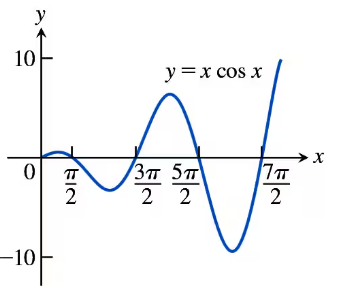
Finding volume: Find the volume of the solid generated by revolving the region bounded by the x-axis and the curve y = x sin(x), 0 ≤ x ≤ π, about
a. The y-axis.
(See Exercise 57 for a graph.)
Evaluate ∫ sec θ dθ by:
a. Multiplying by (sec θ + tan θ) / (sec θ + tan θ) and then using a u-substitution.