 Back
BackCell Biology Midterm 1 Review: Cells, Biochemistry, Macromolecules, and Genome Organization
Study Guide - Smart Notes
 Tailored notes based on your materials, expanded with key definitions, examples, and context.
Cells
Types of Cells
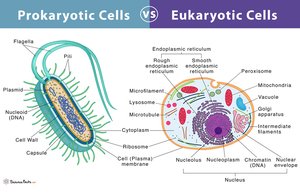
Cells are the fundamental units of life, classified into two main types: prokaryotic and eukaryotic cells. Prokaryotic cells lack a membrane-bound nucleus and organelles, while eukaryotic cells possess these structures, allowing for compartmentalization of cellular functions.
Prokaryotic cells: Include Bacteria and Archaea; lack nucleus and organelles.
Eukaryotic cells: Include plants, animals, fungi, and protists; have nucleus and organelles.
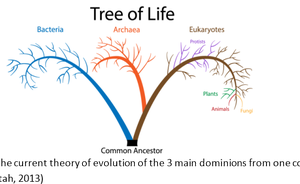
Three Domains of Life
The tree of life illustrates the evolutionary relationships among the three domains: Bacteria, Archaea, and Eukaryotes. All domains share a common ancestor, but diverged to form distinct lineages.
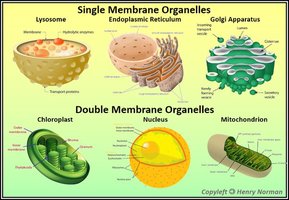
Membranous Organelles
Eukaryotic cells contain various organelles, some with single membranes (e.g., lysosome, endoplasmic reticulum, Golgi apparatus) and others with double membranes (e.g., nucleus, mitochondrion, chloroplast). These organelles perform specialized functions essential for cell survival.
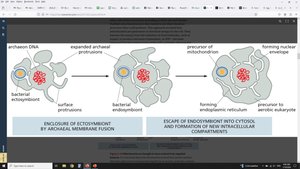
Eukaryotic Cell Origin
The origin of eukaryotic cells is hypothesized to involve endosymbiosis, where ancestral prokaryotes engulfed other cells, leading to the formation of mitochondria and other organelles. Membrane fusion and compartmentalization were key steps in this evolutionary process.
Biochemistry
Chemical Bonds
Chemical bonds are essential for molecular structure and function. Covalent bonds involve electron sharing between atoms and can be classified as non-polar or polar based on electronegativity differences. If the difference exceeds 1.6 units, the bond becomes ionic.
Non-polar covalent: Electronegativity difference < 0.4
Polar covalent: Electronegativity difference 0.4–1.6
Ionic: Electronegativity difference > 1.6
Macromolecules
Types of Macromolecules
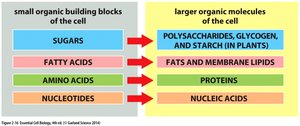
Cells are built from four major types of macromolecules: polysaccharides, fats, proteins, and nucleic acids. These are synthesized from smaller organic building blocks: sugars, fatty acids, amino acids, and nucleotides.
Polysaccharides: Energy storage and structural support
Fats: Membrane structure and energy storage
Proteins: Enzymatic and structural functions
Nucleic acids: Genetic information storage and transfer
Nucleotides and Nucleic Acids
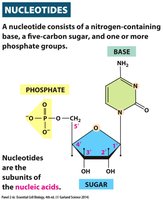
Nucleotides are the building blocks of nucleic acids (DNA and RNA). Each nucleotide consists of a nitrogenous base, a five-carbon sugar, and one or more phosphate groups.
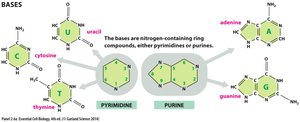
Bases: Purines (adenine, guanine) and pyrimidines (cytosine, thymine, uracil)
Sugar: Ribose (RNA) or deoxyribose (DNA)
Phosphate: Links nucleotides together
DNA Structure
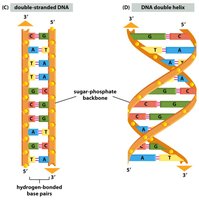
DNA is a double-stranded helix with a sugar-phosphate backbone and hydrogen-bonded base pairs. The strands are antiparallel, running 5' to 3' and 3' to 5'.
Base pairing: Adenine pairs with thymine, guanine pairs with cytosine
Helical structure: Provides stability and allows for replication
Amino Acids and Proteins
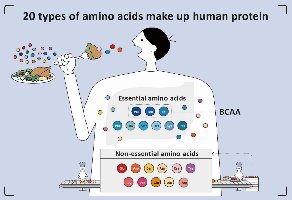
Proteins are polymers of amino acids. There are 20 standard amino acids, with 9 essential for humans. Amino acids are linked by peptide bonds to form polypeptides.
Essential amino acids: Must be obtained from diet
Non-essential amino acids: Synthesized by the body
Polysaccharides & Energy Storage
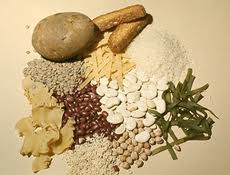
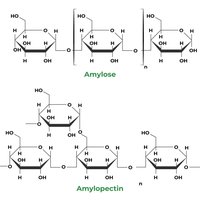
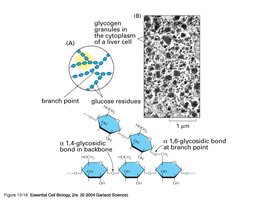
Polysaccharides such as starch (plants) and glycogen (animals) serve as energy reserves. Starch consists of amylose (unbranched) and amylopectin (branched), while glycogen is highly branched.
Starch: α(1→4) and α(1→6) glycosidic bonds
Glycogen: Similar structure, more branching
Cellulose and Chitin
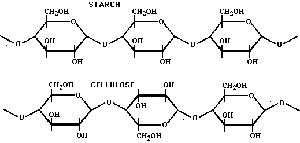
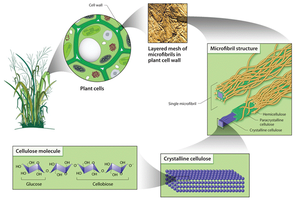
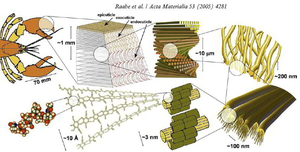
Cellulose is a linear polymer of glucose with β1-4 glycosidic bonds, providing mechanical support in plant cell walls. Chitin is a linear polymer of N-acetylglucosamine, found in insect exoskeletons and fungal cell walls.
Genome Organization
Genome Definition and Size
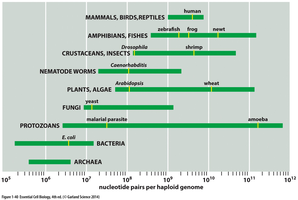
The genome is the total genetic information carried by all chromosomes, including coding and non-coding DNA. Genome size is measured in nucleotides or base pairs and does not correlate directly with organism complexity.
Chromosome Number and Genes
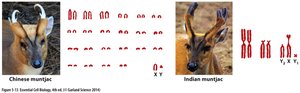
The number of chromosomes does not equal the number of genes. Different organisms have varying chromosome counts and gene numbers.
Chromosomal DNA Organization During Cell Cycle
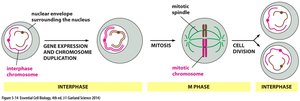
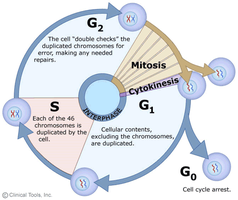
Chromosomal DNA undergoes structural changes during the cell cycle, including duplication and condensation for mitosis.
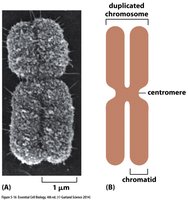
Duplicated Mitotic Chromosome
A duplicated mitotic chromosome consists of two sister chromatids joined at the centromere, ready for segregation during cell division.
Nucleosome Structure and Histones
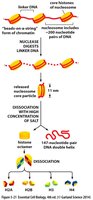
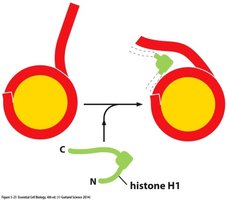
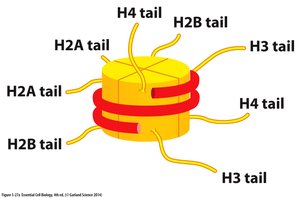
Nucleosomes are the basic units of chromatin, consisting of DNA wrapped around histone proteins. Core histones (H2A, H2B, H3, H4) form the nucleosome, while linker histones (H1, H5) help compact chromatin.
Summary Table: Model Organisms and Their Genomes
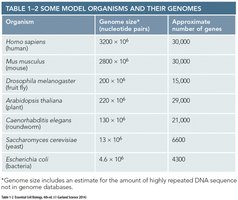
This table compares genome sizes and gene numbers in several model organisms, illustrating the diversity in genome organization.
Organism | Genome size* (nucleotide pairs) | Approximate number of genes |
|---|---|---|
Homo sapiens (human) | 3200 x 106 | 30,000 |
Mus musculus (mouse) | 2800 x 106 | 30,000 |
Drosophila melanogaster (fruit fly) | 200 x 106 | 15,000 |
Arabidopsis thaliana (plant) | 220 x 106 | 25,000 |
Caenorhabditis elegans (worm) | 100 x 106 | 21,000 |
Saccharomyces cerevisiae (yeast) | 13 x 106 | 6600 |
Escherichia coli (bacteria) | 4.6 x 10⁶ | 4300 |
Additional info: Academic context was added to clarify cell types, macromolecule functions, genome organization, and the significance of histones and nucleosomes.
