 Back
BackGlycolysis and Fermentation: Pathways, Regulation, and Cellular Context
Study Guide - Smart Notes
 Tailored notes based on your materials, expanded with key definitions, examples, and context.
Glycolysis and Fermentation
Overview of Glycolysis and Fermentation
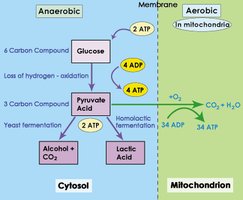
Glycolysis is a central metabolic pathway that converts glucose into pyruvate, generating ATP and NADH in the process. It is common to both aerobic and anaerobic organisms and occurs in the cytosol. When oxygen is limited, cells utilize fermentation to regenerate NAD+ and allow glycolysis to continue, producing lactate or ethanol as end products.
Glycolysis: Ten-step pathway converting one glucose (6C) to two pyruvate (3C) molecules.
ATP Yield: Net gain of 2 ATP and 2 NADH per glucose molecule.
Fermentation: Anaerobic process that regenerates NAD+ from NADH, allowing glycolysis to proceed in the absence of oxygen.
Phases of Glycolysis
The glycolytic pathway can be divided into three main phases, each with distinct biochemical events and regulatory points:
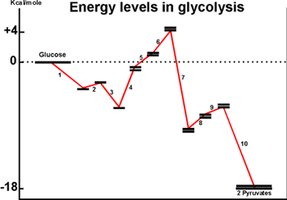
Phase I: Preparation and Cleavage (Gly-1 to Gly-5)
Glucose is phosphorylated and split into two three-carbon molecules (dihydroxyacetone phosphate and glyceraldehyde-3-phosphate).
Requires investment of 2 ATP molecules.
Phase II: Oxidation and ATP Generation (Gly-6 and Gly-7)
Glyceraldehyde-3-phosphate is oxidized, generating NADH and ATP.
ATP is produced via substrate-level phosphorylation.
Phase III: Second ATP Generation (Gly-8 to Gly-10)
Phosphoenolpyruvate is converted to pyruvate, yielding additional ATP.
Net yield: 2 ATP per glucose (after accounting for the initial investment).
Key Regulatory Features of Glycolysis
Glycolysis is tightly regulated at several enzymatic steps to ensure efficient energy production and integration with other metabolic pathways:
Hexokinase: Catalyzes the phosphorylation of glucose; inhibited by ATP (feedback inhibition).
Phosphofructokinase-1 (PFK-1): Major regulatory enzyme; allosterically regulated by ATP, AMP, and fructose-2,6-bisphosphate.
Pyruvate kinase: Catalyzes the final step; regulated by ATP and other effectors.
Feedback Inhibition: High ATP levels inhibit glycolysis, conserving energy resources.
Fate of Pyruvate: Aerobic vs. Anaerobic Conditions
Pyruvate, the end product of glycolysis, is a metabolic branch point. Its fate depends on oxygen availability:
Aerobic Respiration: Pyruvate is transported into mitochondria and converted to acetyl-CoA, entering the citric acid cycle and oxidative phosphorylation for maximal ATP yield.
Anaerobic Fermentation: Pyruvate is reduced to lactate (in animals) or ethanol and CO2 (in yeast), regenerating NAD+ for continued glycolysis.
Lactate Fermentation and Gluconeogenesis
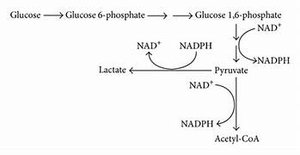
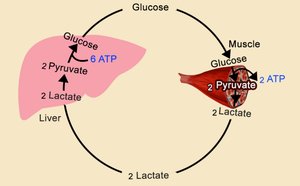
Lactate fermentation allows glycolysis to continue under hypoxic conditions by regenerating NAD+. Lactate produced in muscles can be transported to the liver, where it is converted back to glucose via gluconeogenesis—a process known as the Cori cycle.
Lactate Dehydrogenase: Catalyzes the reversible conversion of pyruvate to lactate.
Gluconeogenesis: Occurs mainly in the liver; converts lactate (or pyruvate) back to glucose, consuming ATP.
Alternative Substrates for Glycolysis
While glucose is the primary substrate, other sugars (e.g., galactose, fructose, mannose) and glycerol can also enter the glycolytic pathway after conversion to intermediates. Polysaccharides like glycogen and starch are broken down to glucose-1-phosphate, which is then converted to glucose-6-phosphate and enters glycolysis.
Monosaccharides: Enter glycolysis after phosphorylation.
Glycerol: Enters as dihydroxyacetone phosphate.
Polysaccharides: Mobilized by phosphorolysis to yield glucose-1-phosphate.
Regulation of Glycolysis and Gluconeogenesis
Cells regulate glycolysis and gluconeogenesis reciprocally to avoid futile cycles. Key enzymes are subject to allosteric regulation by metabolites such as AMP, ATP, acetyl-CoA, and citrate.
Allosteric Regulation: Enzymes switch between active and inactive forms depending on effector binding.
Reciprocal Regulation: AMP activates glycolysis and inhibits gluconeogenesis; acetyl-CoA has the opposite effect.
Irreversible Steps: Three glycolytic steps are bypassed in gluconeogenesis using different enzymes.
Glycolysis in Cancer Cells (Warburg Effect)
Many cancer cells preferentially ferment glucose to lactate even in the presence of oxygen (aerobic glycolysis). This adaptation supports rapid proliferation by providing biosynthetic precursors and can be detected clinically using positron emission tomography (PET) with fluorodeoxyglucose.
Warburg Effect: Aerobic glycolysis in cancer cells supports biosynthesis and rapid growth.
PET Imaging: Detects tumors based on increased glucose uptake and metabolism.
Summary Table: Glycolysis vs. Fermentation vs. Aerobic Respiration
Pathway | Oxygen Requirement | End Product | ATP Yield (per glucose) | Location |
|---|---|---|---|---|
Glycolysis | None | Pyruvate | 2 (net) | Cytosol |
Fermentation | None | Lactate or Ethanol + CO2 | 2 (from glycolysis) | Cytosol |
Aerobic Respiration | Required | CO2 + H2O | ~36-38 | Mitochondria |
Key Equations
Overall Glycolysis:
Lactate Fermentation:
Alcoholic Fermentation (yeast):
Sample Quiz Questions (Selected)
Which molecule could phosphorylate a compound with a free energy of phosphate hydrolysis of –10.3 kcal/mol? Answer: PEP only
The gross output of ATP from glycolysis is ________, whereas the net output is ________. Answer: 4; 2
During strenuous exercise, a temporary oxygen deficit causes muscle to: Answer: Ferment pyruvate to lactate
The process of gluconeogenesis converts pyruvate or lactate into: Answer: Glucose
Allosteric regulation of key enzymes in glycolytic and gluconeogenesis pathways may involve each of the following except: Answer: Binding of the allosteric regulator molecule to directly compete with substrate binding in the enzyme active site
