 Back
BackMembranes: Structure, Function, and Chemistry – Study Notes
Study Guide - Smart Notes
 Tailored notes based on your materials, expanded with key definitions, examples, and context.
Membrane Structure and Function
Overview of Membrane Functions
Biological membranes are essential for defining the boundaries of cells and their internal compartments. They serve as selective barriers, sites for biochemical reactions, and platforms for cell communication and adhesion.
Permeability Barrier: Membranes prevent the free passage of most molecules, maintaining distinct internal environments.
Compartmentalization: Internal membranes create specialized organelles, allowing for distinct metabolic processes.
Transport Regulation: Membrane proteins control the entry and exit of ions, nutrients, and waste products.
Signal Transduction: Membranes contain receptors that detect and transmit signals from the environment.
Cell Adhesion and Communication: Specialized proteins mediate cell-cell contact, adhesion, and communication, forming tissues.
Models of Membrane Structure
The Fluid Mosaic Model
The fluid mosaic model describes membranes as a dynamic, two-dimensional liquid composed of a lipid bilayer with embedded proteins. Lipids and proteins can move laterally, giving the membrane flexibility and allowing for the formation of specialized domains.
Fluid: Lipids and proteins move laterally within the layer.
Mosaic: Proteins are interspersed within the lipid bilayer, creating a patchwork of functional regions.
Membrane Lipids: The "Fluid" Part of the Model
Major Classes of Membrane Lipids
Membrane lipids are amphipathic molecules, possessing both hydrophilic and hydrophobic regions. The main classes include phospholipids, glycolipids, and sterols.
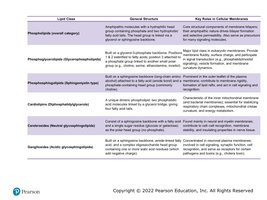
Phospholipids: Most abundant; consist of a glycerol or sphingosine backbone, two fatty acid tails, and a phosphate group with a polar head. Amphipathic nature is critical for bilayer formation.
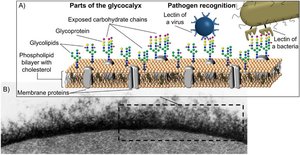
Glycolipids: Lipids with attached carbohydrate groups; important for cell recognition and signaling, often found on the outer membrane leaflet.
Sterols: Cholesterol (animals), phytosterols (plants), and ergosterol (fungi) stabilize membranes and modulate fluidity.
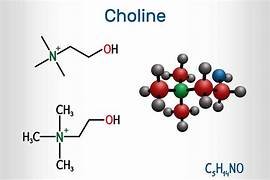
Phospholipid Structure and Choline
Phospholipids often contain choline as a head group, forming phosphatidylcholine, a major component of eukaryotic membranes. Choline is a quaternary ammonium compound with the formula C5H14NO.
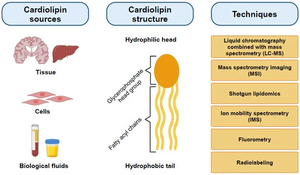
Cardiolipin: Structure and Function
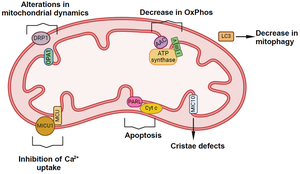
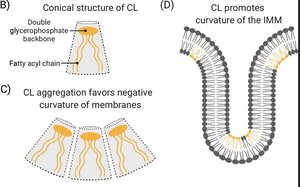
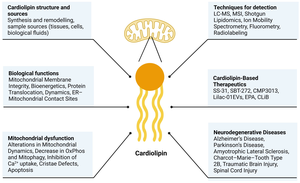
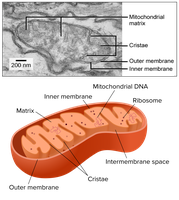
Cardiolipin is a unique phospholipid found predominantly in the inner mitochondrial membrane. It has a dimeric structure with four fatty acid tails and plays a critical role in mitochondrial function, including membrane curvature and the organization of protein complexes.
Fatty Acids in Membranes
Fatty acids are essential for membrane structure, providing the hydrophobic barrier. They vary in chain length (12–20 carbons) and degree of saturation (number of double bonds), affecting membrane thickness and fluidity.
Saturated fatty acids: No double bonds; pack tightly, increasing membrane rigidity.
Unsaturated fatty acids: One or more double bonds; introduce kinks, increasing fluidity.
Polyunsaturated fatty acids: Multiple double bonds; important for maintaining fluidity, especially in nerve and brain cells.
Membrane Asymmetry
Membranes are asymmetric, with different lipid compositions on the inner and outer leaflets. Glycolipids are typically found on the outer leaflet, contributing to cell recognition and signaling. Asymmetry is established during membrane synthesis and maintained by limited flip-flop movement of lipids.
Lipid Mobility and Fluidity
Lipids move laterally and can rotate within their monolayer. Rarely, they flip-flop between leaflets, a process catalyzed by flippases. Membrane fluidity is essential for function and is influenced by temperature, fatty acid composition, and sterol content.
Transition temperature (Tm): The temperature at which the membrane transitions from a gel to a fluid state.
Cholesterol: Acts as a fluidity buffer, preventing extremes of rigidity or fluidity.
Lipid Rafts and Microdomains
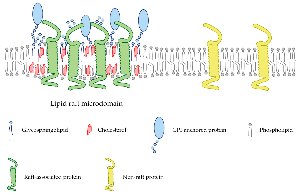
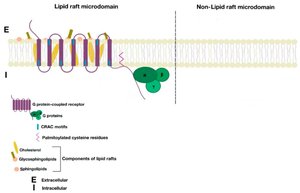
Lipid rafts are microdomains enriched in cholesterol, sphingolipids, and certain proteins. They organize membrane components for signaling and trafficking.
Membrane Curvature and Vesicle Formation
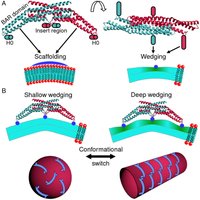
Membrane curvature is essential for vesicle and tubule formation. It is influenced by lipid composition (e.g., cardiolipin, phosphatidylethanolamine) and curvature-inducing proteins (e.g., BAR domain proteins, Sar1p, dynamin).
Vesicles and Tunneling Nanotubes
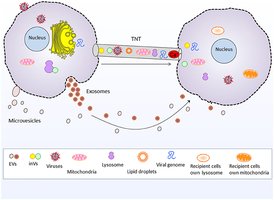
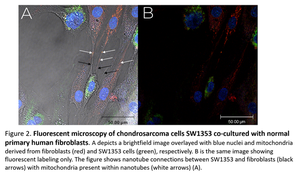
Membranes can form vesicles for transport and communication. Tunneling nanotubes (TNTs) are membrane extensions that connect cells, allowing exchange of materials and signals.
Organelle Membranes
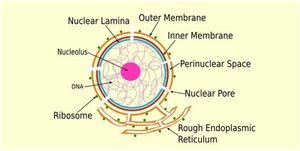
Organelles such as the nucleus and mitochondria are surrounded by double membranes (envelopes), which compartmentalize their functions.
Membrane Proteins: The "Mosaic" Part of the Model
Classification of Membrane Proteins
Membrane proteins are classified based on their association with the lipid bilayer:
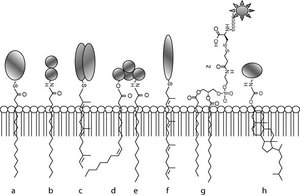
Integral (Intrinsic) Proteins: Span or are embedded in the bilayer; include transmembrane proteins (single- or multipass).
Peripheral (Extrinsic) Proteins: Loosely attached to the membrane surface via non-covalent interactions.
Lipid-Anchored Proteins: Covalently attached to lipids within the bilayer but do not span the membrane.
Transmembrane Proteins
Transmembrane proteins have hydrophobic regions that span the bilayer, often as α-helices or β-barrels. They function as channels, transporters, receptors, and enzymes.
Peripheral and Lipid-Anchored Proteins
Peripheral proteins associate with membrane surfaces via electrostatic interactions and hydrogen bonds. Lipid-anchored proteins are covalently linked to fatty acids or prenyl groups.
Protein Mobility and Membrane Domains
Some membrane proteins move freely, while others are anchored to the cytoskeleton or extracellular matrix, restricting their mobility and creating functional domains.
Glycosylation of Membrane Proteins
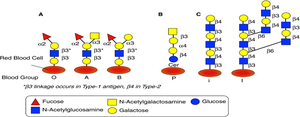
Many membrane proteins are glycosylated, with carbohydrate chains attached via N-linked (asparagine) or O-linked (serine/threonine) glycosylation. Glycoproteins are important for cell recognition, adhesion, and immune response.
The Glycocalyx
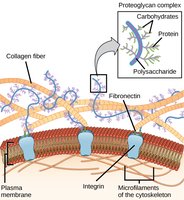
The glycocalyx is a carbohydrate-rich layer on the cell surface, formed by glycoproteins and glycolipids. It mediates cell-cell recognition, adhesion, and protection.
Membrane Protein Interactions with Cytoskeleton and ECM
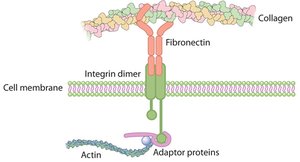
Membrane proteins interact with the cytoskeleton and extracellular matrix (ECM), providing structural support and facilitating signal transduction.
Endocytosis and Exocytosis
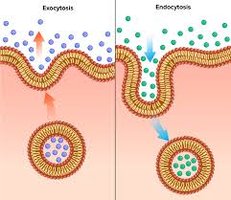
Membrane proteins mediate the uptake (endocytosis) and release (exocytosis) of materials, essential for nutrient uptake, signaling, and waste removal. Viruses can exploit these pathways for entry and exit.
Sample Questions for Review
What is the primary structural component of the plasma membrane in a eukaryotic cell? Answer: Phospholipid bilayer
Which model describes the structure of the plasma membrane as a mosaic of components? Answer: Fluid Mosaic Model
What is the role of cholesterol in the plasma membrane? Answer: It maintains membrane fluidity and stability.
Integral membrane proteins are characterized by: Answer: Spanning the entire lipid bilayer.
Which type of protein in the plasma membrane is responsible for the facilitated diffusion of substances? Answer: Channel proteins
What function do glycolipids and glycoproteins serve in the plasma membrane? Answer: They facilitate cell-cell recognition and adhesion.
How are small nonpolar molecules like O2 and CO2 transported across the plasma membrane? Answer: Simple diffusion
What is the main function of transport proteins in the plasma membrane? Answer: To facilitate the transport of substances across the membrane
The plasma membrane is selectively permeable. What does this mean? Answer: It allows only certain substances to pass through.
What role do receptor proteins play in the plasma membrane? Answer: They receive and transmit signals from the external environment to the inside of the cell.
Summary
Membranes are dynamic structures composed of lipids, proteins, and carbohydrates. Their fluid mosaic organization allows for compartmentalization, selective transport, signal transduction, and cell communication. Understanding membrane structure and function is fundamental to cell biology and underpins many physiological and pathological processes.
