 Back
BackMutations and Cancer: Mechanisms, Types, and Implications in Cell Biology
Study Guide - Smart Notes
 Tailored notes based on your materials, expanded with key definitions, examples, and context.
Mutations: Definition and Overview
What is a Mutation?
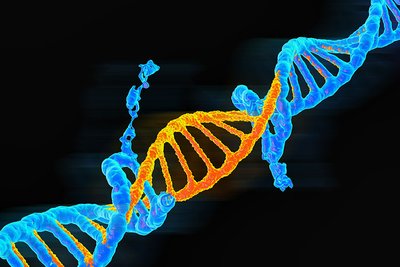
A mutation is a change in the nucleotide sequence of an organism’s DNA. Mutations can alter the structure and function of the protein encoded by the affected gene, leading to a range of effects from harmful to beneficial or neutral. The likelihood of a mutation occurring in humans is approximately 1 in 107 base pairs per generation, resulting in about 1.5 inheritable mutations per year.
Harmful mutations can cause diseases or reduce fitness.
Neutral mutations have no observable effect on phenotype.
Beneficial mutations can confer advantages and drive evolution.
The Central Dogma and Mutations
DNA, RNA, Codons, and Proteins
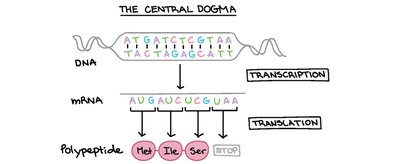
The central dogma of molecular biology describes the flow of genetic information: DNA is transcribed into mRNA, which is then translated into protein. mRNA is read in codons (groups of three nucleotides), each specifying an amino acid.
Types of Mutations
Point Mutations (Base-Pair Substitutions)
Point mutations involve the substitution of a single nucleotide in the DNA sequence. There are three main types:
Missense mutation: Substitution results in a different amino acid.
Nonsense mutation: Substitution creates a premature stop codon.
Silent mutation: Substitution does not change the amino acid due to the degeneracy of the genetic code.
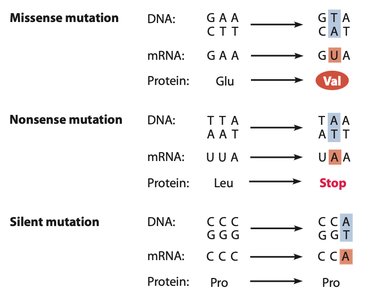
Degeneracy in the genetic code means that multiple codons can code for the same amino acid, explaining why some mutations are silent.
Frameshift Mutations
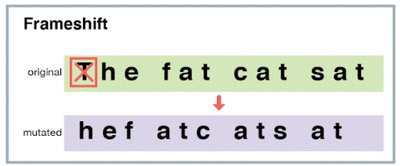
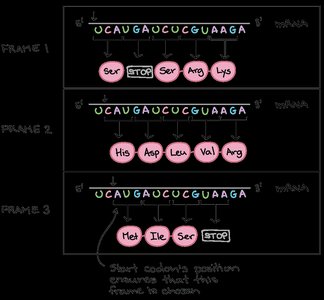
Frameshift mutations occur when nucleotides are inserted or deleted from the DNA sequence, shifting the reading frame of the mRNA. This often results in widespread changes to the amino acid sequence downstream of the mutation and is less likely to be silent.
Insertion: Addition of one or more nucleotides.
Deletion: Loss of one or more nucleotides.
Insertions and deletions can sometimes cancel each other out (indel).
Chromosomal Mutations
Chromosomal mutations involve larger segments of DNA and can affect multiple genes. Types include:
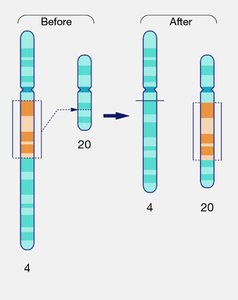
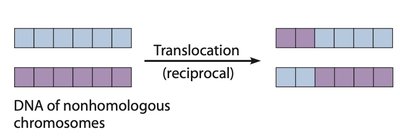
Insertion/Deletion (Indel): Addition or loss of chromosomal segments, often reciprocal and occurring between non-homologous chromosomes.
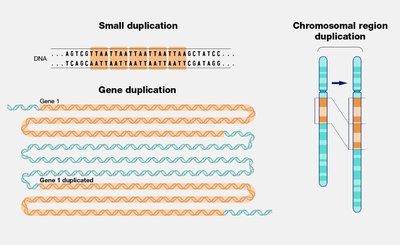
Duplication: Production of one or more copies of a DNA segment, leading to tandem repeats. Example: Huntington’s disease is caused by gene duplication resulting in abnormal protein.
Inversion: A chromosome segment is cut out and reinserted in reverse orientation, potentially disrupting gene function.
Translocation: Chromosome fragments break and reattach to different, non-homologous chromosomes. Not the same as crossing over.

Summary Table: Types of Mutations
Type | Description | Example |
|---|---|---|
Point (Substitution) | Single nucleotide change | Missense, nonsense, silent |
Frameshift | Insertion or deletion of nucleotides | Shifts reading frame |
Chromosomal | Large-scale changes (insertion, deletion, duplication, inversion, translocation) | Huntington’s disease, cancer |
Diseases Caused by Mutation
Sickle Cell Anemia
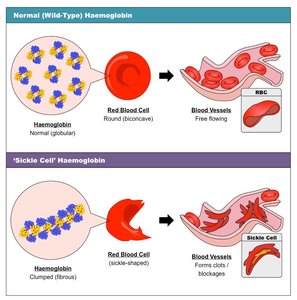
Sickle cell anemia is caused by a point mutation in the β-globin gene, resulting in a hydrophobic amino acid substitution. This changes the shape and function of hemoglobin, leading to sickle-shaped red blood cells that can block blood vessels.
Cystic Fibrosis
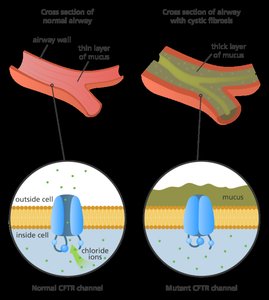
Cystic fibrosis is caused by a deletion mutation (F508del) in the CFTR gene, which encodes a chloride ion channel. The mutation disrupts ion transport, leading to thick mucus in the airways and impaired cilia movement.
Beneficial Mutations and Evolution
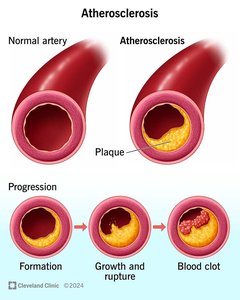
Mutations are a source of genetic variation and drive evolution. Beneficial mutations can become new alleles and spread through populations over time. For example, a mutant form of apolipoprotein A (ApoA-1 Milano) found in a population in Limone sul Garda, Italy, provides resistance to atherosclerosis by giving antioxidant properties to the protein, reducing inflammation and plaque buildup in arteries.
Causes of Mutations
Random Chance and Inheritance
Errors in DNA replication, synthesis, or repair
Errors during mitosis or meiosis
Inherited mutations passed from parent to offspring
Environmental Causes (Mutagens)
Physical mutagens: Electromagnetic radiation (X-rays, UV rays), heat
Chemical mutagens: Pollutants, tobacco smoke, vaping chemicals
Biological mutagens: Viruses, bacteria, phages
Aging and Mutation Rate
Mutation rates increase with age due to reduced DNA repair, increased cell divisions, telomere shortening, and accumulation of DNA damage.
Cancer and Mutations
Pathology of Cancer
Cancer is a disease characterized by uncontrolled cell growth and division. It is primarily caused by mutations in genes that regulate these processes. While 5-10% of cancers are inherited, the majority arise from spontaneous mutations influenced by aging, environment, and lifestyle.
Genes Involved in Cancer
Proto-oncogenes: Normal genes that promote cell growth and division. When mutated, they become oncogenes, driving uncontrolled proliferation (e.g., Ras family genes).
Tumor suppressor genes: Act as brakes to prevent uncontrolled division. Mutations in these genes (e.g., tp53/p53) remove growth inhibition.
DNA repair genes: Maintain genome integrity. Mutations (e.g., BRCA1, BRCA2) impair DNA repair, increasing cancer risk.
Examples of Cancer-Related Mutations
Ras proto-oncogene: Mutations freeze the protein in an active state, promoting unchecked cell growth.
tp53 (p53): Mutations prevent the cell from repairing DNA or undergoing apoptosis, allowing damaged cells to survive and proliferate.
BRCA1/BRCA2: Inherited mutations greatly increase the risk of breast, ovarian, and other cancers.
Metastasis and Cancer Progression
Cancers can be localized or spread (metastatic). Metastasis is the process by which cancer cells travel through the blood or lymphatic system to establish new tumors in other parts of the body.
Cancer Treatment Advances
Survival rates have improved due to early diagnosis, better understanding of risk factors, and advances in therapies such as CAR-T cells and targeted chemotherapies.
Summary Table: Genes and Cancer
Gene Type | Normal Function | Effect of Mutation | Example |
|---|---|---|---|
Proto-oncogene | Promotes cell growth/division | Uncontrolled growth (oncogene) | Ras |
Tumor suppressor | Inhibits cell division | Loss of growth control | p53 |
DNA repair gene | Fixes DNA damage | Genome instability | BRCA1/2 |
