 Back
BackPhototrophic Energy Metabolism: Photosynthesis – Study Notes
Study Guide - Smart Notes
 Tailored notes based on your materials, expanded with key definitions, examples, and context.
Phototrophic Energy Metabolism: Photosynthesis
Introduction to Photosynthesis
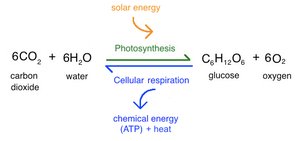
Photosynthesis is the process by which plants, algae, and some bacteria convert light energy into chemical energy, producing glucose and releasing oxygen as a byproduct. This process is essential for life on Earth, as it forms the foundation of most food chains and provides the oxygen necessary for aerobic respiration.
Definition: Conversion of light energy to chemical energy, used to synthesize organic molecules.
Overall Equation:
Location: Occurs in the chloroplasts of plant cells, specifically in two stages: the light reactions and the dark reactions (Calvin cycle).
Types of Phototrophs
Photoautotrophs: Use solar energy to synthesize organic molecules from CO2 and H2O (e.g., plants, algae, cyanobacteria).
Photoheterotrophs: Acquire energy from sunlight but require organic carbon sources (e.g., some bacteria).
Chloroplast Structure and Function
Chloroplasts: The Photosynthetic Organelle
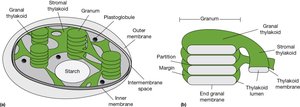
Chloroplasts are specialized organelles in eukaryotic phototrophs where photosynthesis occurs. They contain an internal membrane system called thylakoids, which house the components necessary for the light reactions.
Membrane Systems: Outer membrane (freely permeable), inner membrane (selectively permeable), and thylakoid membrane (site of light reactions).
Stroma: Gel-like matrix containing enzymes for the Calvin cycle.
Grana: Stacks of thylakoids interconnected by stroma thylakoids.
Light Reactions (Light-Dependent Reactions)
Overview and Location
The light reactions convert solar energy into chemical energy in the form of ATP and NADPH. These reactions occur in the thylakoid membranes of the chloroplasts.
Photon Absorption: Light energy is absorbed by chlorophyll in Photosystem II (PSII), exciting electrons.
Water Splitting (Photolysis): Water is split into O2, protons (H+), and electrons; O2 is released as a byproduct.
Electron Transport Chain (ETC): Electrons move through the ETC, pumping protons into the thylakoid lumen and creating a proton gradient.
ATP Production (Photophosphorylation): Protons flow back into the stroma through ATP synthase, synthesizing ATP from ADP and Pi.
NADPH Formation: Electrons are transferred to NADP+ to form NADPH in Photosystem I (PSI).
Key Molecules and Enzymes
Chlorophyll: Main pigment absorbing light energy.
Photosystem II (PSII) and Photosystem I (PSI): Protein complexes where electron excitation and transport occur.
ATP Synthase: Enzyme complex that synthesizes ATP using the proton gradient.
Photoexcitation and Resonance Energy Transfer
When a pigment molecule absorbs a photon, an electron is excited to a higher energy state. This energy can be transferred to neighboring pigment molecules via resonance energy transfer, funneling energy to the reaction center of the photosystem.
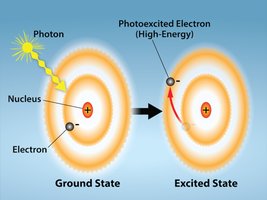
Resonance Energy Transfer: Only energy (not electrons) is transferred between pigment molecules until it reaches the reaction center (P680 in PSII, P700 in PSI).
Outcomes of Light Reactions
Production of ATP and NADPH (used in the Calvin cycle).
Release of O2 as a byproduct.
Dark Reactions (Light-Independent Reactions or Calvin Cycle)
Overview and Location
The Calvin cycle uses ATP and NADPH from the light reactions to fix CO2 and produce glucose. This process occurs in the stroma of the chloroplasts.
Carbon Fixation: CO2 is captured by rubisco and added to ribulose bisphosphate (RuBP), forming 3-phosphoglycerate (3-PGA).
Reduction: ATP and NADPH convert 3-PGA into glyceraldehyde-3-phosphate (G3P).
Regeneration of RuBP: Some G3P is used to regenerate RuBP, allowing the cycle to continue.
Key Molecules and Enzymes
Rubisco: Enzyme that catalyzes CO2 fixation.
Ribulose bisphosphate (RuBP): 5-carbon molecule that binds CO2.
ATP and NADPH: Provide energy and reducing power for the cycle.
Outcomes of the Calvin Cycle
Production of G3P, which can be used to form glucose and other organic molecules.
Regeneration of RuBP.
Summary: Photosynthesis as a Two-Part Process
Light Reactions: Capture solar energy and convert it into chemical energy (ATP and NADPH).
Dark Reactions: Use chemical energy to fix carbon and produce glucose.
The two processes are interdependent.
Production and Fate of Sugars
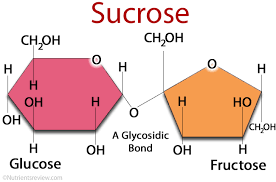
The intermediates of photosynthesis are used for biosynthesis of a variety of products, including glucose, sucrose, and starch. Sucrose is the major transport carbohydrate in most plants, while starch is the major storage carbohydrate.
Regulation and Evolutionary Context
Key enzymes of the Calvin cycle are regulated for efficiency, including activation by light and stromal conditions.
Photosynthetic pathways are evolutionarily related to mitochondrial respiration, sharing homologous protein complexes.
Modern research aims to enhance photosynthetic efficiency for increased crop yields and climate change mitigation.
Key Terminology
Photosynthesis: Conversion of light energy to chemical energy for organic synthesis.
Phototrophs: Organisms that convert solar energy into chemical energy as ATP and NADPH.
Photoautotrophs vs. Photoheterotrophs: Differ in their carbon sources.
