 Back
BackThe Origin and Chemistry of Life: Foundations of Cell Biology
Study Guide - Smart Notes
 Tailored notes based on your materials, expanded with key definitions, examples, and context.
The Origin of Life and Early Evolution
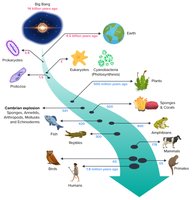
Timeline of Life on Earth
The history of life on Earth spans billions of years, beginning with the formation of the universe and culminating in the diversity of organisms seen today. Key evolutionary milestones include the emergence of prokaryotes, eukaryotes, multicellularity, and the Cambrian explosion, which led to the rapid diversification of animal life.
Big Bang: ~13.8 billion years ago (BYA)
Earth forms: ~4.5 BYA
First prokaryotic life: ~3.5 BYA
First eukaryotic life: ~2 BYA
Cambrian Explosion: ~500-600 million years ago (MYA)
Homo sapiens: ~2 MYA
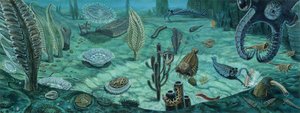
The Cambrian Explosion
The Cambrian Explosion marks a period of rapid evolutionary diversification, resulting in the emergence of most major animal phyla. Factors contributing to this event include increased oxygen levels, genome complexity, ecological diversity, and the evolution of multicellularity.
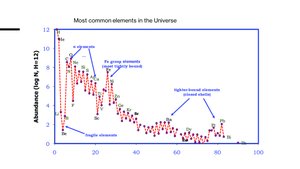
Abiotic Synthesis of Biomolecules
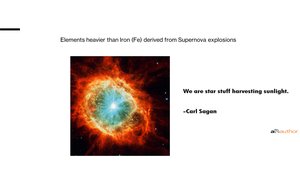
Early Earth was rich in the atomic building blocks necessary for life, such as hydrogen, carbon, nitrogen, and oxygen. These elements were abundant due to cosmic processes, including supernovae, which produced elements heavier than iron.
The Miller-Urey Experiment
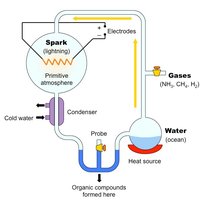
The Miller-Urey experiment demonstrated that organic molecules, including amino acids and nucleotide bases, could form abiotically under conditions simulating early Earth's atmosphere. This provided experimental support for the chemical origins of life.
Key finding: Simple gases (NH3, CH4, H2) and energy (lightning) can yield organic compounds.
Modern updates: A variety of organic molecules, including nucleotides and lipids, can form under different atmospheric conditions.
Extraterrestrial Sources of Organic Molecules
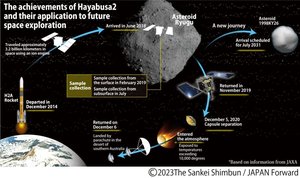
Meteorites and asteroids may have delivered amino acids and nucleotide bases to early Earth. Recent space missions, such as Hayabusa2, have collected uncontaminated samples from asteroids, supporting the idea that organic molecules are widespread in the solar system.
The RNA World Hypothesis
RNA as the First Genetic Molecule
The RNA World hypothesis proposes that RNA was the first macromolecule to store genetic information and catalyze chemical reactions. RNA's dual role as both genetic material and catalyst (ribozyme) supports this idea.
Self-replication: Some ribozymes can catalyze their own replication.
Modern relevance: RNA is central to protein synthesis (mRNA, tRNA, rRNA) and energy metabolism (ATP).
The Three Domains of Life
Bacteria, Archaea, and Eukarya
Life is classified into three domains based on molecular and genetic evidence: Bacteria, Archaea, and Eukarya. The main distinction is the presence of a membrane-bound nucleus in eukaryotes.
Bacteria: Prokaryotic, no nucleus, diverse metabolic pathways.
Archaea: Prokaryotic, often extremophiles, unique membrane lipids, transcription/translation machinery more similar to eukaryotes.
Eukarya: True nucleus, complex organelles, includes plants, animals, fungi, and protists.
Genetic Recombination in Bacteria
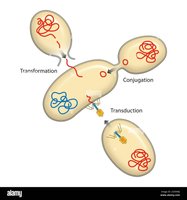
Bacteria achieve genetic diversity through mechanisms such as transformation, conjugation, and transduction, collectively known as lateral gene transfer.
The Endosymbiosis Hypothesis
Origin of Eukaryotic Cells
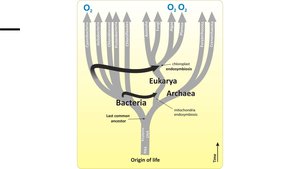
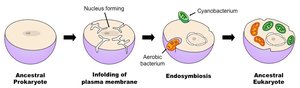
The endosymbiosis hypothesis explains the origin of mitochondria and chloroplasts as descendants of free-living bacteria engulfed by ancestral eukaryotic cells. This mutually beneficial relationship led to the evolution of complex eukaryotic cells.
Mitochondria: Derived from aerobic bacteria; retain their own DNA and replicate independently.
Chloroplasts: Derived from photosynthetic bacteria; also contain their own DNA.
Experimental Evidence and Modern Examples
Modern mutualistic relationships, such as those between Paramecium and green algae, or corals and zooxanthellae, provide insight into the evolutionary steps toward endosymbiosis.
Genetic Changes in Endosymbiosis
Genome reduction: Many genes are lost or transferred to the host nucleus.
Retention of core genome: Only essential genes for bioenergetics and organelle function are retained.
Genetic interdependence: Host and symbiont become mutually dependent for survival.
Comparison of Cell Types
Bacterial, archaeal, and eukaryotic cells have distinct properties, including differences in cell wall composition, membrane lipids, and sensitivity to antibiotics.
Cell Structure and Function
Cell Size and Limitations
Cells are typically small due to limitations imposed by surface area-to-volume ratio, diffusion rates, and the need to maintain adequate concentrations of biomolecules.
Bacteria: 1–5 μm
Animal cells: 10–100 μm
The Plasma Membrane (PM)
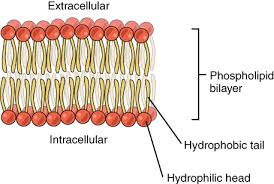
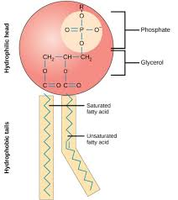
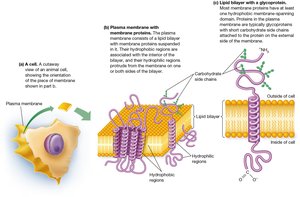
The plasma membrane defines the cell boundary, maintains selective permeability, and supports cell signaling and transport. It is composed of a phospholipid bilayer with embedded proteins.
Phospholipids: Amphipathic molecules with hydrophilic heads and hydrophobic tails.
Proteins: Function as enzymes, transporters, receptors, and structural components.
The Nucleus
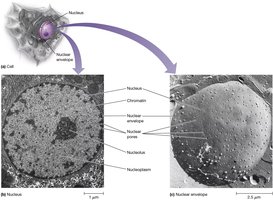
The nucleus is a double-membrane-bound organelle that contains the cell's genetic material (DNA) organized into chromosomes. It is the site of transcription and ribosome assembly (nucleolus).
Mitochondria
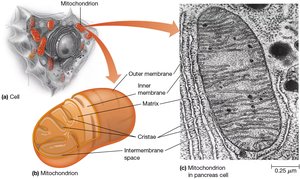
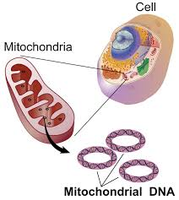
Mitochondria are double-membrane organelles responsible for ATP production via oxidative phosphorylation. They contain their own circular DNA (mtDNA) and are maternally inherited in animals.
Chloroplasts
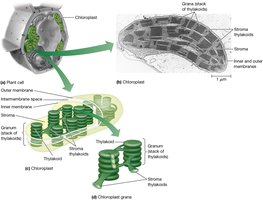
Chloroplasts are the sites of photosynthesis in plants and algae. They have a double membrane, their own DNA, and an internal system of thylakoid membranes for light harvesting.
The Endomembrane System
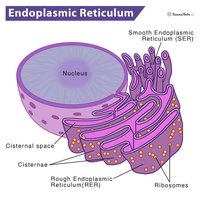
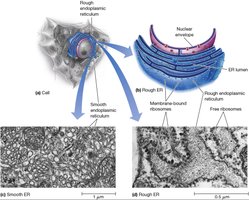
The endomembrane system includes the rough and smooth endoplasmic reticulum (ER), Golgi apparatus, and vesicles. It is responsible for the synthesis, processing, and sorting of proteins and lipids.
Rough ER: Studded with ribosomes; site of protein synthesis and initial processing.
Smooth ER: Involved in lipid synthesis and detoxification.
Golgi apparatus: Modifies, sorts, and packages proteins and lipids for secretion or delivery to other organelles.
Lysosomes
Lysosomes are single-membrane organelles containing hydrolases for the degradation of macromolecules and damaged organelles.
The Cytoskeleton and Extracellular Matrix (ECM)
The cytoskeleton provides structural support, facilitates intracellular transport, and enables cell movement. The ECM surrounds animal cells, providing structural integrity and mediating cell signaling.
The Chemistry of the Cell
Importance of Carbon
Carbon is the backbone of biological molecules due to its tetravalency, allowing for diverse and stable covalent bonding with other atoms (H, O, N, S).
Covalent bonds: Strong, stable bonds forming the backbone of macromolecules.
Non-covalent bonds: Weaker, dynamic interactions (hydrogen bonds, ionic bonds, van der Waals forces, hydrophobic interactions) that confer flexibility and specificity.
Water: The Universal Solvent
Water is essential for life due to its polarity, high heat capacity, cohesiveness, and excellent solvent properties. It facilitates biochemical reactions and stabilizes cellular environments.
Selective Permeability of Membranes
Biological membranes are selectively permeable, allowing the passage of certain molecules while restricting others. This is achieved through the amphipathic nature of phospholipids and the presence of specific transport proteins.
Synthesis by Polymerization
Cells synthesize macromolecules (proteins, nucleic acids, polysaccharides) by polymerizing monomers through condensation reactions. The process is directional and requires energy input (often from ATP).
Self-Assembly
Many cellular structures form spontaneously through self-assembly, guided by the chemical properties of their components. Molecular chaperones may assist in proper folding and assembly.
Summary Table: Key Differences Among Cell Types
Feature | Bacteria | Archaea | Eukaryotes |
|---|---|---|---|
Nucleus | No | No | Yes |
Cell Wall | Peptidoglycan | Varied (no peptidoglycan) | Cellulose (plants), chitin (fungi), none (animals) |
Membrane Lipids | Ester-linked | Ether-linked | Ester-linked |
Ribosomes | 70S | 70S | 80S |
Antibiotic Sensitivity | Yes | No | No |
Extremophiles | Some | Many | Few |
Key Concepts for Review
Theories of the origin of life and experimental evidence for abiotic synthesis of biomolecules
The RNA World hypothesis and the role of RNA in early evolution
The endosymbiosis theory for the origin of mitochondria and chloroplasts
Unique features of eukaryotic cells: nucleus, organelles, size
Basic chemistry of the cell: importance of carbon, water, and chemical bonds
Structure and function of the plasma membrane and key organelles
Polymerization and self-assembly in macromolecule synthesis
