 Back
BackCh. 8: Transport Across Membranes-Overcoming the Permeability Barrier
Study Guide - Smart Notes
 Tailored notes based on your materials, expanded with key definitions, examples, and context.
Transport Across Membranes: Overcoming the Permeability Barrier
Introduction to Membrane Transport
The plasma membrane acts as a selective barrier, regulating the movement of substances into and out of the cell. This selective permeability is essential for maintaining cellular homeostasis and is achieved through various transport mechanisms. The rate and method by which molecules cross the membrane depend on their size, polarity, and the presence of specific transport proteins.
Types of Membrane Transport
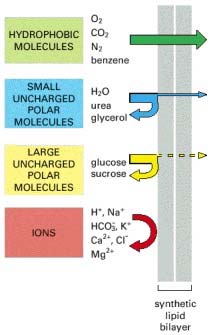
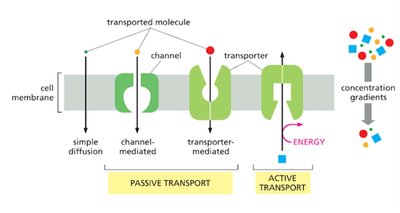
Simple Diffusion: Movement of small, nonpolar molecules (e.g., O2, CO2, N2, benzene) and small polar molecules (e.g., H2O, urea, glycerol) directly through the lipid bilayer without assistance.
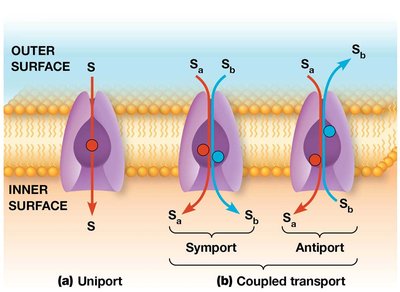
Facilitated Diffusion: Movement of molecules across the membrane via specific transport proteins (channels or carriers), down their concentration gradient, without energy input.
Active Transport: Movement of molecules against their concentration gradient, requiring energy, usually from ATP hydrolysis.
Simple Diffusion
Simple diffusion is the unassisted movement of molecules from an area of higher concentration to one of lower concentration, minimizing free energy. Only certain molecules can diffuse freely across the lipid bilayer.
Key Properties: No energy required, direction is always down the concentration gradient, and no membrane protein is involved.
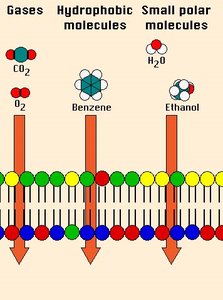
Examples: Gases (O2, CO2), hydrophobic molecules (benzene), and small polar molecules (H2O, ethanol).
Osmosis: The Diffusion of Water
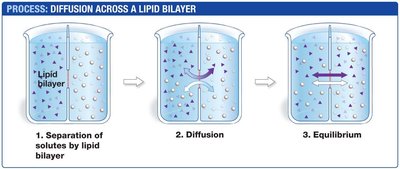
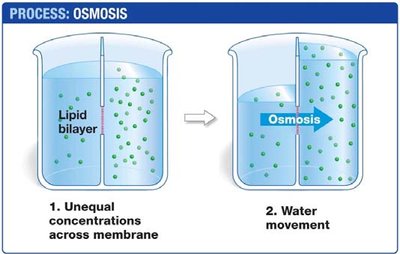
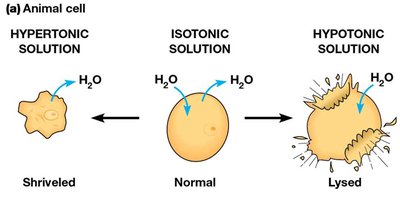
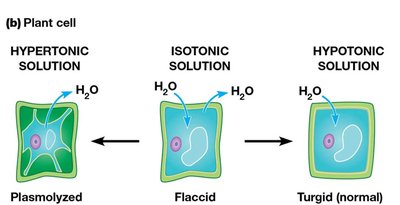
Osmosis is the passive movement of water molecules across a selectively permeable membrane from a region of lower solute concentration to higher solute concentration. This process is crucial for maintaining cell volume and internal environment.
Tonicity: Refers to the ability of an extracellular solution to cause water movement into or out of a cell by osmosis.
Osmolarity: The total concentration of solute particles in a solution.
Facilitated Diffusion
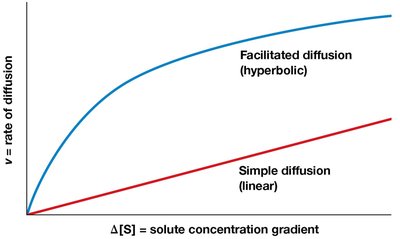
Facilitated diffusion allows specific molecules to cross the membrane with the help of transport proteins. This process is faster than simple diffusion and is highly specific, but it can become saturated at high solute concentrations.
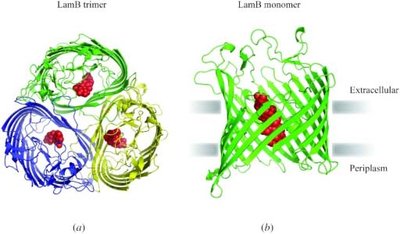
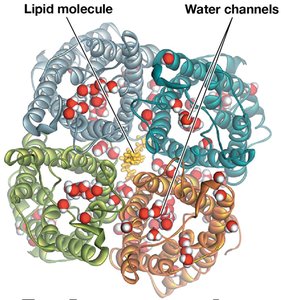
Channel Proteins: Form hydrophilic pores for ions and water to pass through (e.g., ion channels, porins, aquaporins).
Carrier Proteins: Bind specific solutes and undergo conformational changes to transport them across the membrane.
Gated Channels: Can be regulated by mechanical, voltage, or ligand signals.
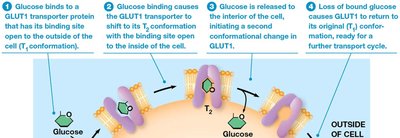

Active Transport
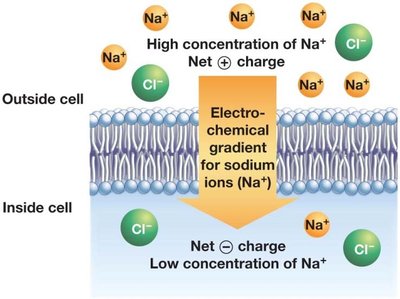
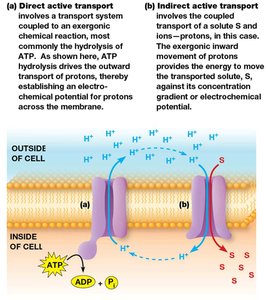
Active transport moves solutes against their concentration gradients, requiring energy input. This process is essential for nutrient uptake, waste removal, and maintaining ion gradients across membranes.
Primary Active Transport: Direct use of ATP to transport molecules (e.g., Na+/K+ pump).
Secondary Active Transport: Uses the energy stored in ion gradients established by primary active transport to drive the movement of other molecules.
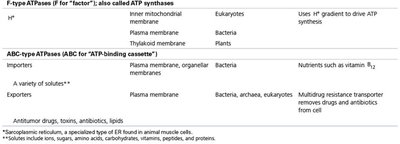
Main Types of Transport ATPases (Pumps)
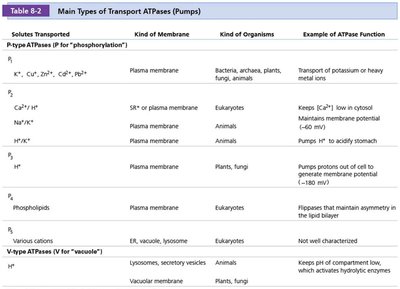
Transport ATPases are specialized proteins that use ATP hydrolysis to move ions and other solutes across membranes. They are classified based on their structure, mechanism, and the solutes they transport.
Type | Solutes Transported | Kind of Membrane | Kind of Organisms | Example of ATPase Function |
|---|---|---|---|---|
P-type ATPases | K+, Na+, Ca2+, H+, Cu2+, Zn2+, Cd2+, Pb2+ | Plasma membrane, SR/plasma membrane | Bacteria, archaea, plants, fungi, animals | Transport of K+, Na+, Ca2+, H+ |
V-type ATPases | H+ | Vacuole, lysosome, secretory vesicles | Eukaryotes, plants, fungi, animals | Acidification of vacuoles, lysosomes |
F-type ATPases | H+ | Inner mitochondrial, plasma, thylakoid membranes | Eukaryotes, bacteria, plants | ATP synthesis |
ABC-type ATPases | Various solutes | Plasma membrane, organellar membranes | Bacteria, archaea, eukaryotes | Import/Export of nutrients, drugs, antibiotics |
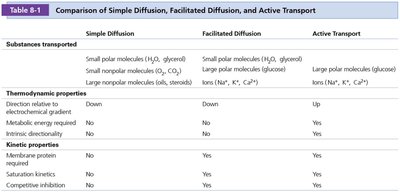
Comparison of Simple Diffusion, Facilitated Diffusion, and Active Transport
The three main types of membrane transport differ in their energy requirements, directionality, and specificity.
Simple Diffusion | Facilitated Diffusion | Active Transport | |
|---|---|---|---|
Substances Transported | Small polar/nonpolar molecules | Small/large polar molecules, ions | Large polar molecules, ions |
Direction relative to gradient | Down | Down | Up |
Energy Required | No | No | Yes |
Membrane Protein Required | No | Yes | Yes |
Saturation Kinetics | No | Yes | Yes |
Summary
Membrane transport is essential for cellular function, involving a variety of mechanisms to move substances across the permeability barrier. Simple diffusion, facilitated diffusion, and active transport each play distinct roles in maintaining cellular homeostasis, nutrient uptake, and waste removal. Understanding these processes is fundamental to cell biology and physiology.
