Determine the intervals of the domain over which each function is continuous.
Verified step by step guidance
1
Step 1: Identify the domain of the function from the graph. Notice that the red curve starts at the point (5, 0) and continues to the right, but there is no graph to the left of x = 5.
Step 2: Understand that the function is defined and graphed only for x-values greater than or equal to 5. The filled-in point at (5, 0) indicates the function is defined at x = 5.
Step 3: Recall that a function is continuous on an interval if there are no breaks, jumps, or holes in the graph on that interval. Here, the graph is a smooth curve starting at x = 5 and continuing to the right without interruption.
Step 4: Conclude that the function is continuous on the interval starting at 5 and extending to positive infinity, which is written as \([5, \infty)\).
Step 5: Note that the function is not defined for any x-values less than 5, so it is not continuous there. Therefore, the only interval of continuity is \([5, \infty)\).
Verified video answer for a similar problem:
This video solution was recommended by our tutors as helpful for the problem above
Video duration:
1m
Play a video:
0 Comments
Key Concepts
Here are the essential concepts you must grasp in order to answer the question correctly.
Continuity of a Function
A function is continuous at a point if the limit of the function as it approaches the point equals the function's value at that point. Continuity over an interval means the function has no breaks, jumps, or holes within that interval.
The domain of a function is the set of all possible input values (x-values) for which the function is defined. Understanding the domain helps identify where the function exists and where continuity can be analyzed.
By examining a graph, continuity can be visually assessed by checking for unbroken curves without gaps or jumps. Points where the function starts or ends, or where there are holes or jumps, indicate intervals where the function may not be continuous.

 1:41 minutes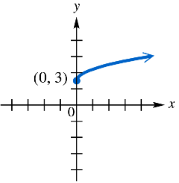
 Verified step by step guidance
 5:57
5:57