Use the vertical line test to identify graphs in which y is a function of x.
Verified step by step guidance
1
Recall that the vertical line test is used to determine if a graph represents a function. The test states that if any vertical line drawn through the graph intersects it at more than one point, then the graph does not represent a function.
Observe the given graph, which is a parabola opening upwards. Notice the shape and how it behaves along the x-axis.
Imagine drawing vertical lines (lines parallel to the y-axis) at various x-values across the graph. For each vertical line, check how many points it intersects on the parabola.
Since the parabola opens upwards and is symmetric, each vertical line will intersect the graph at exactly one point for every x-value in the domain.
Conclude that because no vertical line intersects the graph at more than one point, the graph passes the vertical line test and therefore represents y as a function of x.
Verified video answer for a similar problem:
This video solution was recommended by our tutors as helpful for the problem above
Video duration:
50s
Play a video:
0 Comments
Key Concepts
Here are the essential concepts you must grasp in order to answer the question correctly.
Vertical Line Test
The vertical line test is a method to determine if a graph represents a function. If any vertical line drawn through the graph intersects it at more than one point, the graph does not represent a function. This test ensures each input (x-value) has only one output (y-value).
A function is a relation where each input corresponds to exactly one output. In terms of graphs, this means for every x-value, there is only one y-value. This concept is fundamental to understanding why the vertical line test works.
A parabola is a U-shaped curve that can open upwards or downwards. The graph shown is a parabola opening upwards, which typically passes the vertical line test, indicating it is a function. Recognizing common function shapes helps in quickly applying the vertical line test.

 0:50 minutes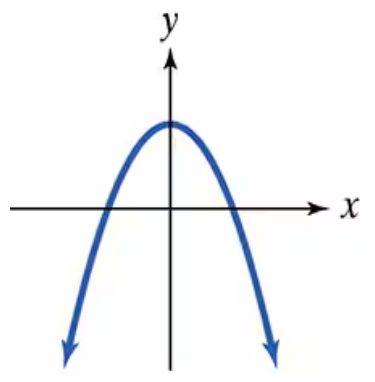
 Verified step by step guidance
 06:49
06:49