 Back
BackComprehensive Study Notes: Functions, Limits, Differentiation, and Integration for College Algebra & Calculus
Study Guide - Smart Notes
 Tailored notes based on your materials, expanded with key definitions, examples, and context.
Functions
Definition and Properties of Functions
A function is a rule that assigns a unique output value to each input value from a specified set called the domain. The set of all possible output values is called the range. If the domain is not specified, it is assumed to be the largest set of real numbers for which the function is defined.
Domain: Set of all possible input values (x-values).
Range: Set of all possible output values (y-values).
Vertical Line Test: A graph represents a function if and only if no vertical line intersects the graph more than once.
Piecewise-Defined and Absolute Value Functions
Piecewise-defined functions use different formulas for different parts of their domain. The absolute value function is a classic example:
Domain: , Range:
Composite, Even, and Odd Functions
Composite Function:
Even Function: (symmetric about the y-axis)
Odd Function: (symmetric about the origin)
Trigonometric Functions and Radian Measure
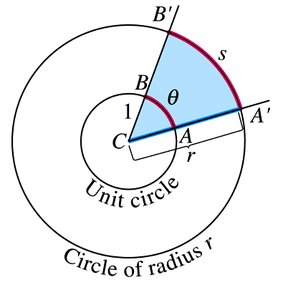
Angles are measured in radians for calculus. The radian measure is defined as , where is the arc length and is the radius.
Conversion: radians
Arc length: (with in radians)
Area of sector:
Inverse Functions and Logarithms
The inverse function reverses the effect of .
The logarithm function is the inverse of .
Key properties: ,
Limits and Continuity
Definition of a Limit
The limit of as approaches is if $f(x)$ gets arbitrarily close to $L$ as $x$ approaches $x_0$:
Limit Laws
Sum/Difference:
Product:
Quotient: (if )
Continuity
A function is continuous at if:
exists
exists
Differentiation
Definition and Notation
The derivative of at is the slope of the tangent to the curve at that point:
Basic Differentiation Rules
Power Rule:
Sum Rule:
Constant Multiple:
Product, Quotient, and Chain Rules
Product Rule:
Quotient Rule:
Chain Rule: if and
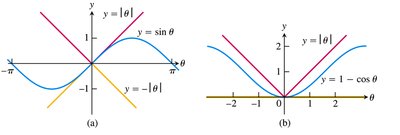
Differentiation of Trigonometric, Exponential, and Logarithmic Functions
Higher Derivatives and Applications
The second derivative gives information about concavity and points of inflection.
Critical points occur where or is undefined.
The second derivative test helps classify maxima and minima:
If , local minimum at
If , local maximum at
Integration
Indefinite Integrals (Antiderivatives)
The indefinite integral of is a function such that :
Power Rule: ,
Definite Integrals and Area
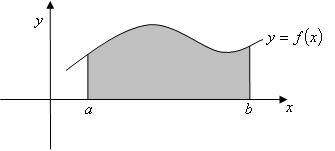
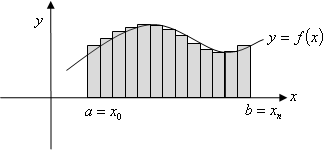
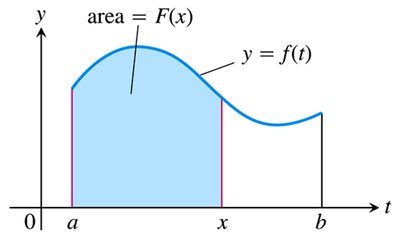
The definite integral gives the net area under from to .
Area under from to :
Fundamental Theorem of Calculus
If is any antiderivative of , then
Area Between Curves
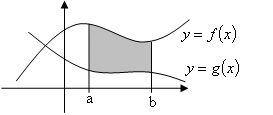
Area between and from to :
Volumes of Revolution
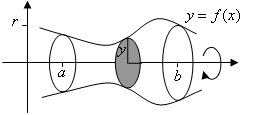
Volume generated by rotating about the x-axis from to :
Area in Polar Coordinates
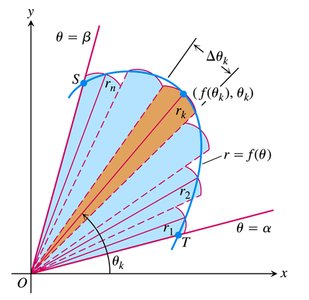
For a polar curve , the area between and is:
Applications and Problem Solving
Optimization (Maxima and Minima)
To optimize a quantity, find the critical points by setting the derivative to zero and use the second derivative test or sign chart to classify them.
Related Rates
When two or more variables change with respect to time, relate their rates using the chain rule.
Example: If and changes with time, then
Curve Sketching
Find intercepts, asymptotes, critical points, inflection points, and analyze end behavior to sketch the graph of a function.
Summary Table: Key Differentiation and Integration Formulas
Function | Derivative | Integral |
|---|---|---|
Additional info: This guide covers foundational topics in college algebra and introductory calculus, including functions, limits, differentiation, and integration, with applications to optimization, area, and volume problems. The included images reinforce geometric and graphical concepts essential for understanding these topics.
