 Back
BackInternal Control, Receivables, and Inventory: Study Guide for Financial Accounting
Study Guide - Smart Notes
 Tailored notes based on your materials, expanded with key definitions, examples, and context.
Internal Control and Cash
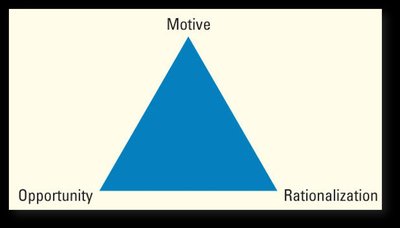
The Fraud Triangle
The fraud triangle is a model that explains the factors that lead to fraudulent behavior in organizations. It consists of three elements: motive, opportunity, and rationalization. Understanding these elements helps companies design controls to prevent fraud.
Motive: The reason or pressure to commit fraud, such as financial need.
Opportunity: The ability to commit fraud, often due to weak internal controls.
Rationalization: The justification for fraudulent actions, such as believing the act is harmless.
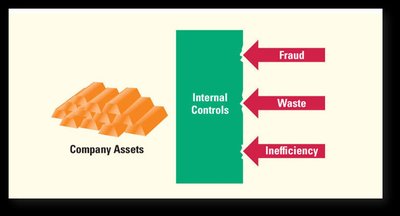
The Function of an Internal Control System
Internal controls are processes and procedures implemented by companies to safeguard assets, ensure accurate financial reporting, and promote operational efficiency. They act as barriers against fraud, waste, and inefficiency.
Fraud: Intentional misrepresentation or theft.
Waste: Inefficient use of resources.
Inefficiency: Poor management of assets.
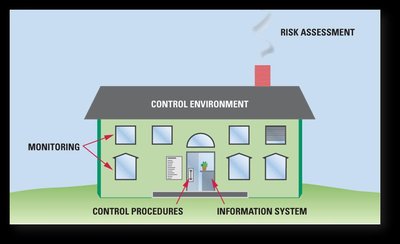
Components of Internal Control
An effective internal control system is built on several components, often illustrated as a house structure. These include the control environment, risk assessment, control procedures, information system, and monitoring.
Control Environment: The overall attitude, awareness, and actions of management regarding internal controls.
Risk Assessment: Identifying and analyzing risks that may affect the achievement of objectives.
Control Procedures: Policies and procedures to address risks.
Information System: Methods for recording and reporting financial data.
Monitoring: Ongoing review of controls by management and auditors.
Internal Control Procedures
Internal control procedures are specific actions taken to achieve the objectives of internal controls. Examples include:
Smart Hiring Practices: Background checks, training, supervision, competitive salaries, and clear responsibilities.
Separation of Duties: Dividing asset handling, record keeping, and transaction approval among different employees.
Adequate Records: Maintaining detailed, prenumbered documents for transactions.
Information Technology: Using electronic systems for accuracy and speed, such as bar codes and sensors.
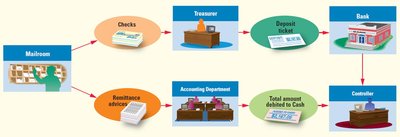
Cash Receipts by Mail
Companies implement controls over cash receipts by mail to prevent theft and errors. The process involves multiple departments and documentation.
Mailroom opens mail and prepares remittance advice.
Treasurer deposits checks and prepares deposit ticket.
Accounting department records the transaction.
Controller verifies total amount credited to cash.
Controls Over Payment by Check
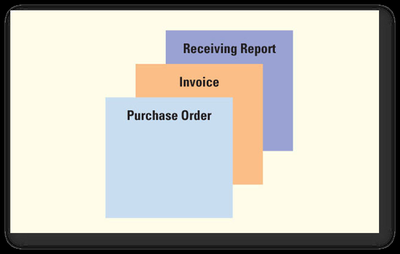
To prevent unauthorized payments, companies split duties related to purchasing, receiving goods, preparing payments, and approving payments. Payment packets typically include a purchase order, invoice, and receiving report.
Bank Reconciliation and Journalizing Transactions
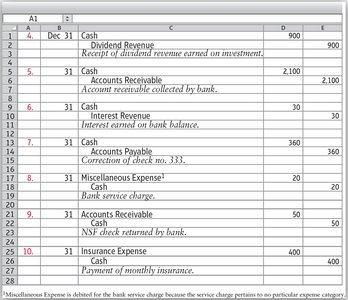
Bank reconciliation compares the company's records with the bank's records to identify discrepancies. Adjustments are made for deposits in transit, outstanding checks, bank errors, collections, electronic transfers, service charges, interest, NSF checks, and book errors. Journal entries are then recorded to update the books.
Reporting Cash on the Balance Sheet
Cash equivalents are highly liquid investments with maturities of three months or less. Companies disclose these in footnotes to financial statements for transparency.
Receivables and Revenue
Revenue Recognition under GAAP
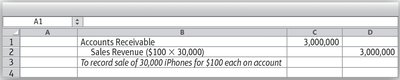
Revenue is recognized when earned, either when goods are delivered or services performed. The amount recorded is the cash received or the fair market value of assets received. GAAP outlines a five-step process for revenue recognition:
Identify the contract(s).
Identify the performance obligation(s).
Determine the transaction price.
Allocate the transaction price to the performance obligations.
Recognize revenue when obligations are satisfied.
Shipping Terms
FOB Shipping Point: Ownership and revenue recognition occur when goods leave the seller's dock.
FOB Destination: Ownership and revenue recognition occur upon delivery to the customer.
Sales Returns and Allowances
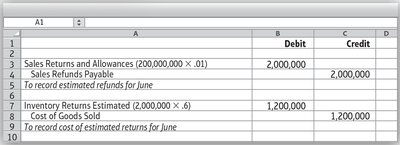
Customers may return unsatisfactory goods. Companies estimate returns and record allowances using credit memos. Example: If Apple expects 1% returns on $200 million sales, it records estimated refunds and adjusts inventory.
Sales Discounts
Sales discounts incentivize early payment. For example, 2/10, n/30 means a 2% discount if paid within 10 days; otherwise, full payment is due in 30 days.
Types of Receivables
Accounts Receivable: Amounts owed by customers for goods/services.
Notes Receivable: Amounts owed from lending money.
Allowance for Uncollectible Accounts
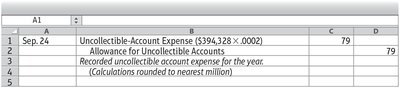
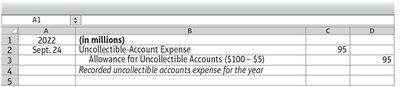
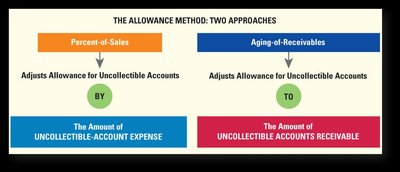
Companies estimate uncollectible accounts and record an expense. The allowance method uses a contra account to show expected losses. Two methods are used:
Percent-of-Sales Method: Estimates expense as a percent of revenue (income statement approach).
Aging-of-Receivables Method: Analyzes accounts based on age (balance sheet approach).
Writing Off Uncollectible Accounts
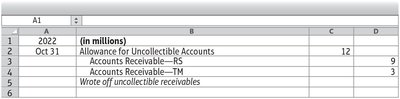
When specific accounts are deemed uncollectible, they are written off against the allowance account.
Comparison of Percent-of-Sales and Aging Methods
The percent-of-sales method adjusts the allowance by the amount of expense, while the aging method adjusts it to the amount of uncollectible accounts receivable.
Direct Write-Off Method
This method records expense only when a specific account is uncollectible. It is not GAAP-compliant and may overstate assets.
Receivables Ratios
Quick (Acid-Test) Ratio: Measures liquidity.
Accounts Receivable Turnover: Indicates how often receivables are collected.
Days' Sales Outstanding (DSO): Measures average collection period.
Inventory and Cost of Goods Sold
Inventory Accounting
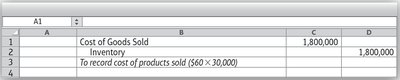
Inventory is recorded as an asset until sold, at which point its cost becomes an expense (Cost of Goods Sold) on the income statement. Gross profit is sales revenue minus cost of goods sold.
Inventory Systems
Perpetual System: Continuous record of inventory.
Periodic System: Inventory counted periodically; used for inexpensive goods.
Inventory Costing Methods
Specific Identification: Tracks individual items.
Average Cost: Uses weighted average cost.
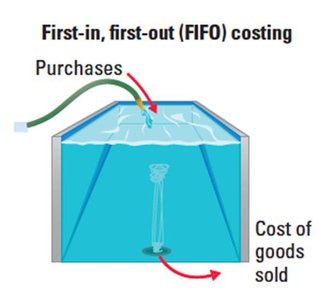
FIFO (First-In, First-Out): First costs in are first costs out.
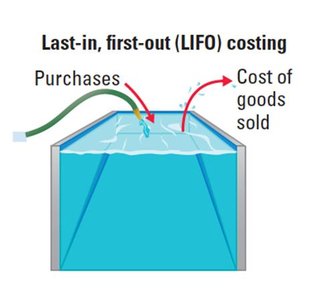
LIFO (Last-In, First-Out): Last costs in are first costs out.
FIFO Method
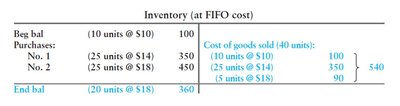
FIFO assigns the oldest costs to cost of goods sold. Ending inventory reflects the most recent costs.
LIFO Method
LIFO assigns the most recent costs to cost of goods sold. Ending inventory reflects the oldest costs.
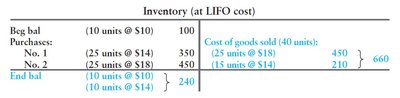
Income Effects of Inventory Methods
FIFO | LIFO | Average | |
|---|---|---|---|
Sales revenue (assumed) | $1,000 | $1,000 | $1,000 |
Cost of goods sold | 540 (lowest) | 660 (highest) | 600 |
Gross profit | $460 (highest) | $340 (lowest) | $400 |
Effects of Inventory Methods When Costs Are Decreasing
Cost of Goods Sold (COGS) | Ending Inventory (EI) | |
|---|---|---|
FIFO | COGS is highest (oldest costs, high) | EI is lowest (recent costs, low) |
LIFO | COGS is lowest (recent costs, low) | EI is highest (oldest costs, high) |
Tax Advantages of LIFO
When costs are rising, LIFO results in lower taxable income and lower income taxes, increasing available cash.
LIFO provides a more realistic net income figure; FIFO gives a more up-to-date inventory cost on the balance sheet.
LIFO Liquidation
LIFO liquidation occurs when inventory levels fall below previous periods, causing older, lower costs to be shifted into cost of goods sold.
GAAP for Inventory
Disclosure: Financial statements must provide enough information for decision-making.
Representational Faithfulness: Inventory methods and material transactions must be properly disclosed.
Consistency: Use comparable methods from period to period.
Lower-of-Cost-or-Market (LCM) Rule
Inventory is reported at the lower of historical cost or market value (net realizable value), per GAAP principles of relevance and representational faithfulness.
Inventory Turnover and Days Inventory Outstanding (DIO)
Inventory Turnover: Indicates how rapidly inventory is sold.
Days Inventory Outstanding (DIO): Measures the average number of days inventory is held before sale.
