Back

Endothermic & Exothermic Reactions quiz

Control buttons has been changed to "navigation" mode.
1/15
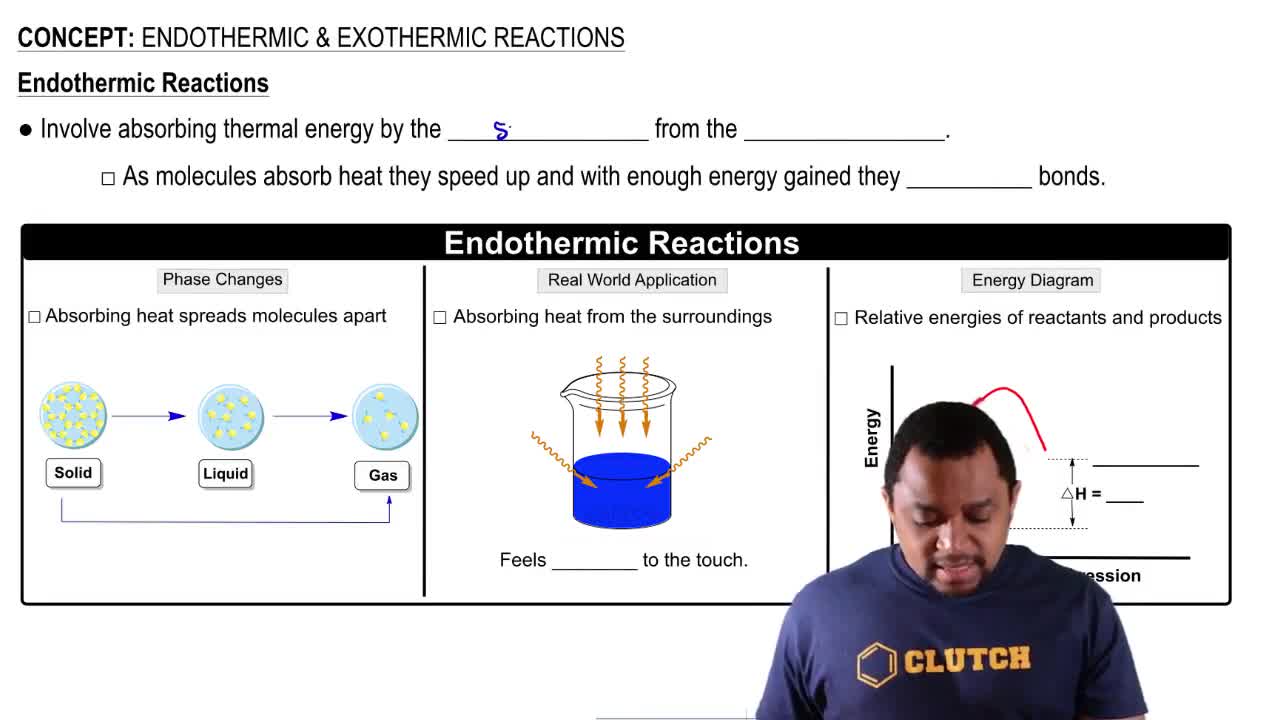
  • What happens to molecules during an endothermic reaction?

    Molecules absorb thermal energy, speed up, and may break bonds if enough energy is gained.
  • What is the main characteristic of an endothermic reaction?

    Endothermic reactions absorb heat from the surroundings.
  • How does an endothermic reaction feel to the touch and why?

    It feels cold because it absorbs heat from your hand or surroundings.
  • What phase change occurs when a solid absorbs heat and becomes a liquid?

    This phase change is called melting or fusion.
  • What is vaporization in terms of phase changes?

    Vaporization is the process where a liquid absorbs heat and becomes a gas.
  • What is sublimation?

    Sublimation is when a solid absorbs heat and changes directly into a gas.
  • How is an endothermic reaction represented on an energy diagram?

    The products are at a higher energy level than the reactants, showing a positive ΔH.
  • What does a positive enthalpy (ΔH) indicate about a reaction?

    It indicates the reaction is endothermic and absorbs energy.
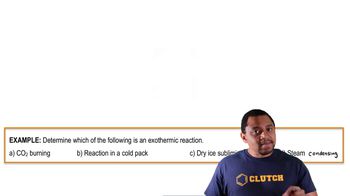
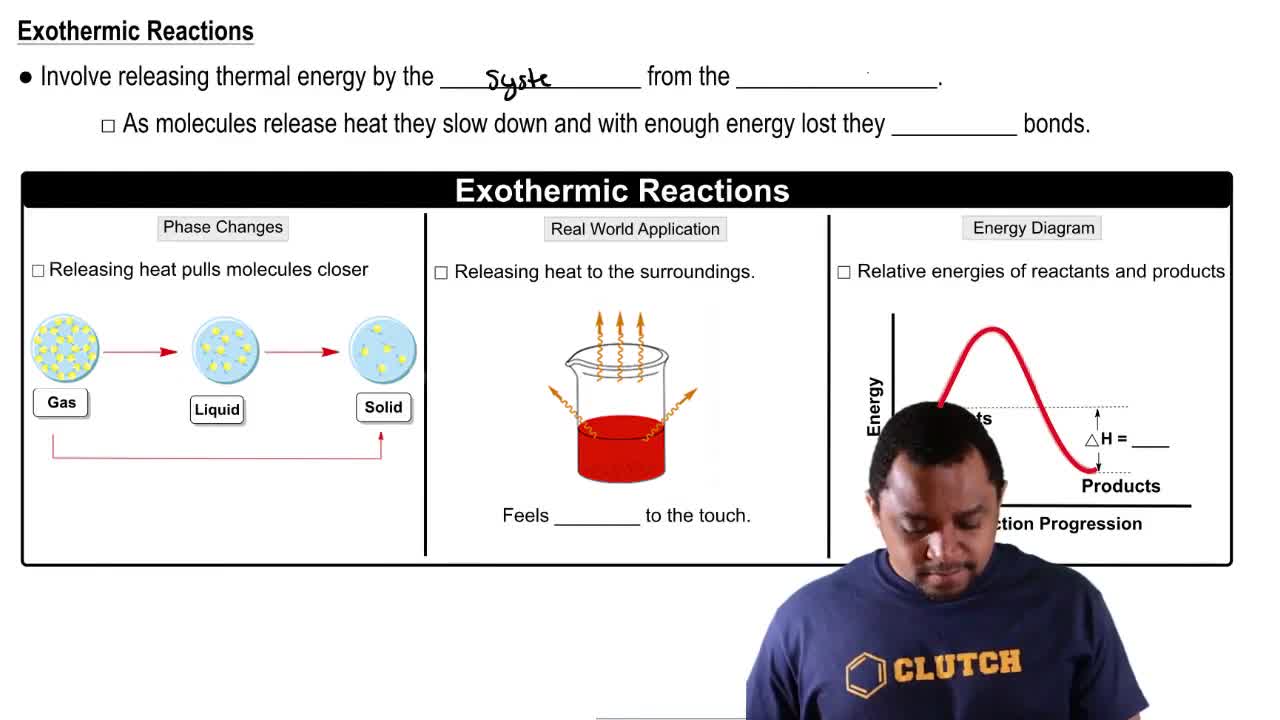
  • What happens to molecules during an exothermic reaction?

    Molecules release thermal energy, slow down, and form bonds.
  • What is the main characteristic of an exothermic reaction?

    Exothermic reactions release heat to the surroundings.
  • How does an exothermic reaction feel to the touch and why?

    It feels warm because it releases heat to your hand or surroundings.
  • What phase change occurs when a gas releases heat and becomes a liquid?

    This phase change is called condensation.
  • What is freezing in terms of phase changes?

    Freezing is when a liquid releases heat and becomes a solid.
  • What is deposition?

    Deposition is when a gas releases heat and changes directly into a solid.
  • How is an exothermic reaction represented on an energy diagram?

    The products are at a lower energy level than the reactants, showing a negative ΔH.