Back
BackAcid–Base Equilibria: General Chemistry Study Notes
Study Guide - Smart Notes
 Tailored notes based on your materials, expanded with key definitions, examples, and context.
Acid–Base Equilibria
Definitions of Acids and Bases
Acids and bases are fundamental concepts in chemistry, with several definitions used to describe their behavior in aqueous solutions.
Arrhenius Definition: An acid increases the concentration of hydrogen ions (H+) when dissolved in water. A base increases the concentration of hydroxide ions (OH-).
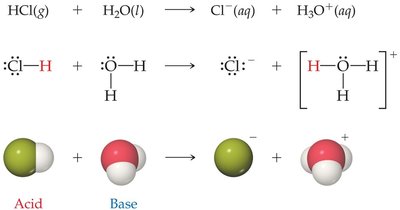
Brønsted–Lowry Definition: An acid is a proton donor, while a base is a proton acceptor.
Water as a Proton Acceptor
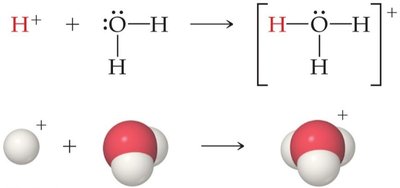
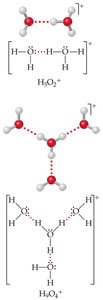
When a hydrogen ion is formed in water, it quickly forms hydrogen bonds with water molecules, resulting in the hydronium ion (H3O+).
Brønsted–Lowry Acid and Base Requirements
A Brønsted–Lowry acid must have at least one removable (acidic) proton to donate, and a Brønsted–Lowry base must have at least one nonbonding pair of electrons to accept a proton.
Amphiprotic Nature of Water
Water can act as both a Brønsted–Lowry acid and base, making it amphiprotic. It can donate or accept a proton depending on the reaction partner.
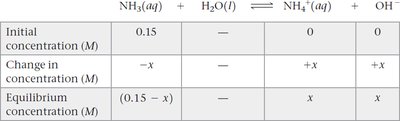
Example: NH3 + H2O ⇌ NH4+ + OH-
Conjugate Acids and Bases
Acid–base reactions yield conjugate acid–base pairs, which differ by one proton (H+).
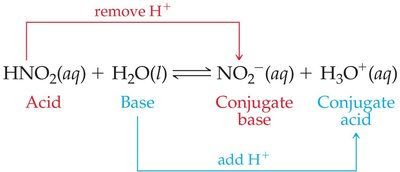
Relative Strengths of Acids and Bases
The strength of acids and bases is compared based on their ability to donate or accept protons. Strong acids and bases dissociate completely in water, while weak acids and bases only partially dissociate.
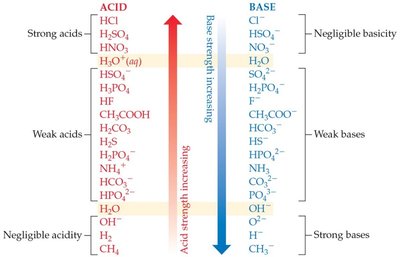
Acid and Base Strength in Equilibrium
In acid–base reactions, equilibrium favors the transfer of a proton from the stronger acid to the stronger base, forming the weaker acid and base.
Example: HCl + H2O → Cl- + H3O+ (strong acid, equilibrium lies far to the right)
Example: CH3COOH + H2O ⇌ CH3COO- + H3O+ (weak acid, equilibrium favors left)
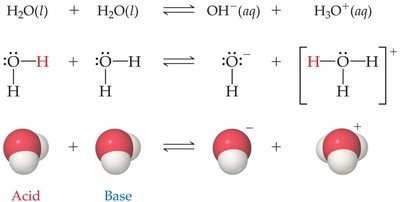
Autoionization of Water and Ion Product Constant
Water is amphoteric and undergoes autoionization, producing H3O+ and OH-. The equilibrium constant for this process is called the ion product constant for water, Kw.
Equation:
At 25°C:
Aqueous Solutions: Acidic, Basic, or Neutral
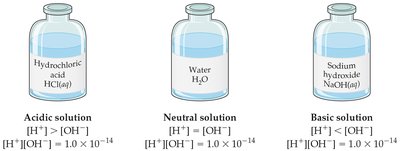
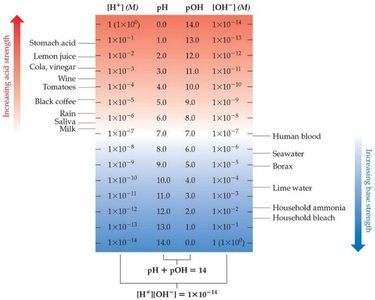
The nature of an aqueous solution depends on the relative concentrations of H+ and OH- ions.
Acidic: [H+] > [OH-]
Neutral: [H+] = [OH-]
Basic: [H+] < [OH-]
pH and Other "p" Scales
pH is a logarithmic measure of hydrogen ion concentration. Other related scales include pOH and pKw.
pH Equation:
pOH Equation:
Relationship:
Measuring pH
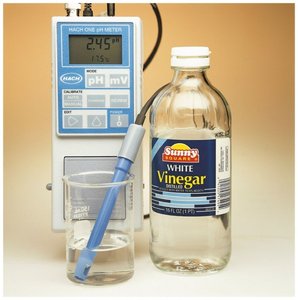
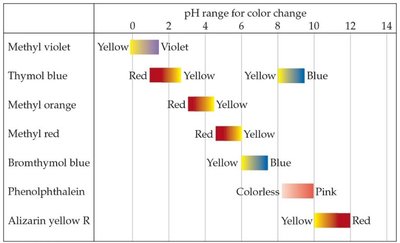
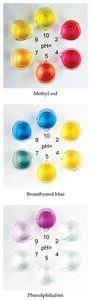
pH can be measured accurately with a pH meter or quickly with indicators. Indicators change color depending on the pH of the solution.
Strong Acids and Bases
Strong acids and bases dissociate completely in water. The seven strong acids are HCl, HBr, HI, HNO3, H2SO4, HClO3, and HClO4. Strong bases are soluble hydroxides of alkali and heavier alkaline earth metals.
Weak Acids and Bases
Weak acids and bases only partially dissociate in water. Their dissociation is described by equilibrium constants: Ka for acids and Kb for bases.
Acid Dissociation:
Base Dissociation:
Table: Some Weak Acids in Water at 25°C
Acid | Structural Formula | Conjugate Base | Ka |
|---|---|---|---|
Chlorous (HClO2) | H–Cl–O | ClO2- | 1.0 × 10⁻² |
Hydrofluoric (HF) | H–F | F- | 6.8 × 10⁻⁴ |
Nitrous (HNO2) | H–O–N=O | NO2- | 4.5 × 10⁻⁴ |
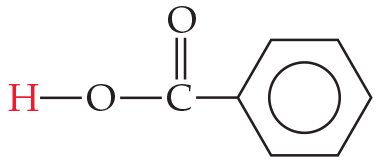
Benzoic (C6H5COOH) |
| C6H5COO- | 6.3 × 10⁻⁵ |
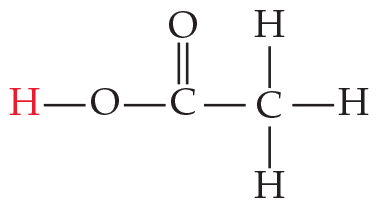
Acetic (CH3COOH) |
| CH3COO- | 1.8 × 10⁻⁵ |
Hypochlorous (HOCl) | H–O–Cl | OCl- | 3.0 × 10⁻⁸ |
Hydrocyanic (HCN) | H–C≡N | CN- | 4.8 × 10⁻¹⁰ |
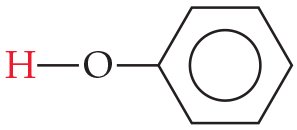
Phenol (HOC6H5) |
| C6H5O- | 1.3 × 10⁻¹⁰ |
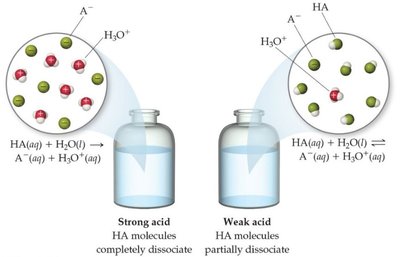
Comparing Strong and Weak Acids
Strong acids completely dissociate to ions, while weak acids only partially dissociate. This affects conductivity and reaction rates.
Calculating Ka from pH
To calculate the acid dissociation constant (Ka) from pH, use equilibrium concentrations determined from the pH measurement.
Example: For formic acid (HCOOH), pH = 2.38, [H+] = 4.2 × 10⁻³ M
Equilibrium Table:
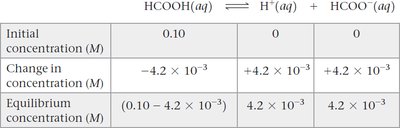
Ka Calculation:
Percent Ionization
Percent ionization quantifies the fraction of acid molecules that ionize in solution.
Equation:
Method for Calculating pH Using Ka
To calculate pH for a weak acid:
Write the chemical equation for ionization equilibrium.
Write the equilibrium constant expression.
Set up a table for initial, change, and equilibrium concentrations.
Substitute equilibrium concentrations into the constant expression and solve for x.

Polyprotic Acids
Polyprotic acids have more than one acidic proton. The first proton is always easier to remove than subsequent ones. If the difference in Ka values is large, the pH depends mainly on the first dissociation.
Table: Acid-Dissociation Constants of Common Polyprotic Acids
Name | Formula | Ka1 | Ka2 | Ka3 |
|---|---|---|---|---|
Ascorbic | H2C6H6O6 | 8.0 × 10⁻⁵ | 1.6 × 10⁻¹² | |
Carbonic | H2CO3 | 4.3 × 10⁻⁷ | 5.6 × 10⁻¹¹ | |
Citric | H2C6H5O7 | 7.4 × 10⁻⁴ | 1.7 × 10⁻⁵ | 4.0 × 10⁻⁷ |
Phosphoric | H3PO4 | 7.5 × 10⁻³ | 6.2 × 10⁻⁸ | 4.2 × 10⁻¹³ |
Weak Bases
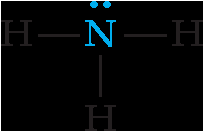
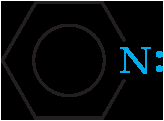
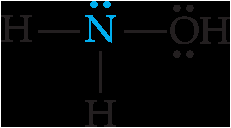
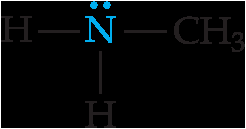
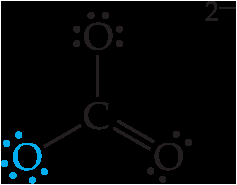
Weak bases, such as ammonia (NH3), have an equilibrium constant (Kb) describing their dissociation. Many weak bases contain nitrogen due to the presence of a lone pair of electrons.
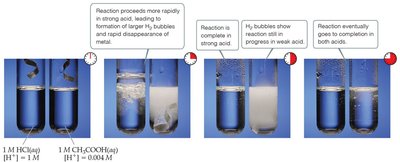
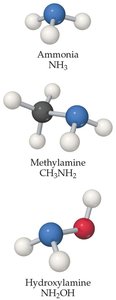
Table: Some Weak Bases in Water at 25°C
Base | Structural Formula | Conjugate Acid | Kb |
|---|---|---|---|
Ammonia (NH3) |
| NH4+ | 1.8 × 10⁻⁵ |
Pyridine (C5H5N) |
| C5H5NH+ | 1.7 × 10⁻⁹ |
Hydroxylamine (HONH2) |
| HONH3+ | 1.1 × 10⁻⁸ |
Methylamine (CH3NH2) |
| CH3NH3+ | 4.4 × 10⁻⁴ |
Hydrosulfide ion (HS-) | H–S | H2S | 1.8 × 10⁻⁷ |
Carbonate ion (CO32-) |
| HCO3- | 1.8 × 10⁻⁴ |
Hypochlorite ion (ClO-) | Cl–O | HClO | 3.3 × 10⁻⁷ |
Calculating pH of Weak Base Solutions
To calculate the pH of a weak base solution, set up an equilibrium table and solve for x, the concentration of OH- produced.
Relationship Between Ka and Kb
For a conjugate acid–base pair, the product of Ka and Kb equals Kw:
Equation:
Table: Conjugate Acid-Base Pairs
Acid | Ka | Base | Kb |
|---|---|---|---|
HF | 6.8 × 10⁻⁴ | F- | 1.5 × 10⁻¹¹ |
CH3COOH | 1.8 × 10⁻⁵ | CH3COO- | 5.6 × 10⁻¹⁰ |
NH4+ | 5.6 × 10⁻¹⁰ | NH3 | 1.8 × 10⁻⁵ |
Acid–Base Properties of Salts
Many ions react with water to create H+ or OH- through hydrolysis. The acid–base nature of a salt depends on its cation and anion.
Anions of strong acids: Neutral (e.g., Cl-)
Anions of weak acids: Basic (e.g., CH3COO-)
Group I/II metal cations: Neutral
Polyatomic cations: Acidic (e.g., NH4+)
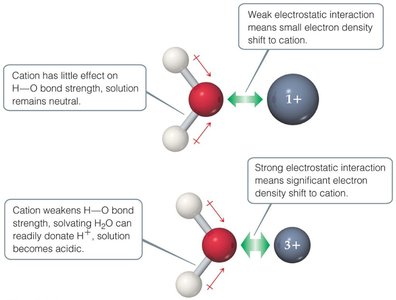
Transition metal cations: Acidic due to hydrated ion formation
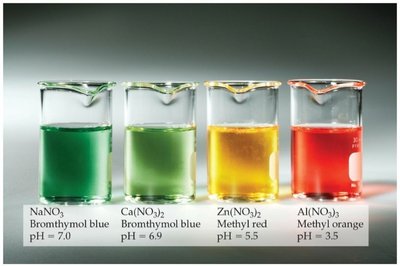
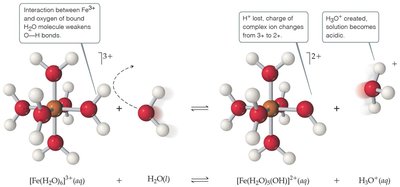
Table: Acid-Dissociation Constants for Metal Cations
Cation | Ka |
|---|---|
Fe3+ | 6.3 × 10⁻³ |
Cr3+ | 1.6 × 10⁻⁴ |
Al3+ | 1.4 × 10⁻⁵ |
Fe2+ | 3.2 × 10⁻¹⁰ |
Zn2+ | 2.5 × 10⁻¹⁰ |
Ni2+ | 2.5 × 10⁻¹¹ |
Factors Affecting Acid Strength
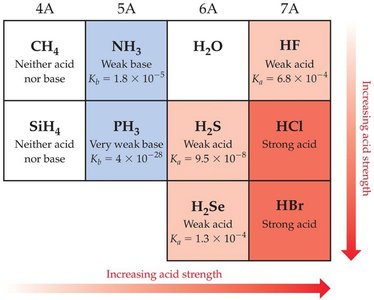
Acid strength is influenced by bond polarity, bond strength, and the stability of the conjugate base.
Bond polarity: H–A bond must be polarized with δ+ on H and δ− on A.
Bond strength: Weaker bonds are easier to break, increasing acid strength.
Conjugate base stability: More stable anions make stronger acids.
Binary Acids
Binary acids consist of hydrogen and one other element. Within a group, bond strength is most important; within a period, bond polarity is most important.
Oxyacids
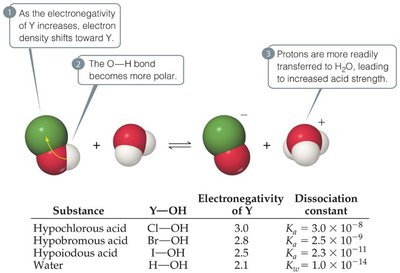
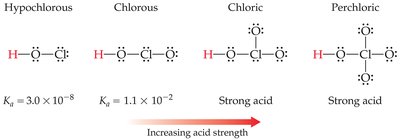
Oxyacids contain hydrogen, oxygen, and a nonmetal. Acidity increases with the electronegativity of the nonmetal and the number of oxygen atoms.
Carboxylic Acids
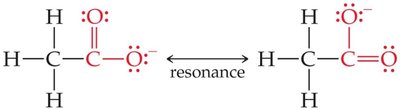
Carboxylic acids are organic acids containing the —COOH group. Their acidity is enhanced by electron-withdrawing oxygen atoms and resonance stabilization of the conjugate base.
Lewis Acid–Base Chemistry
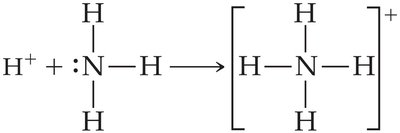
Lewis acids are electron pair acceptors, and Lewis bases are electron pair donors. All Brønsted–Lowry acids and bases are also Lewis acids and bases, but the Lewis definition is broader.
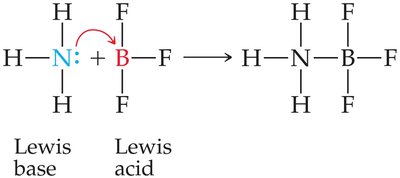
Lewis Acid–Base Chemistry and Hydrated Metal Cations
Hydrated metal cations exemplify electron pair donor/acceptor chemistry. Higher charges on the metal result in stronger water-to-metal bonds and greater acidity.