 Back
BackAcids, Bases, and Their Effects: Chemical Equilibria and Environmental Impact
Study Guide - Smart Notes
 Tailored notes based on your materials, expanded with key definitions, examples, and context.
Acids and Bases: Chemical Equilibria
Hydronium Ion Concentration and pH Calculations
Understanding the concentration of hydronium ions ([H3O+]) and pH is fundamental in acid-base chemistry. The pH is calculated using the formula:
pH Formula:
Strong Acids: Completely dissociate in water. For example, 0.10 M HCl yields [H3O+] = 0.10 M, so pH = 1.00.
Weak Acids: Partially dissociate. For 0.10 M CHOOH (formic acid), use the acid dissociation constant (Ka) to solve for [H3O+].
Example Calculation:
5% Rule: If the change in concentration (x) is less than 5% of the initial, the approximation is valid.
Mixtures of Acids
When mixing acids, the strongest acid dominates the [H3O+] in solution.
Strong + Strong: Add their concentrations directly.
Strong + Weak: The strong acid's contribution is usually much greater; the weak acid's effect is often negligible.
Weak + Weak: Calculate sequentially, starting with the stronger weak acid.
Polyprotic Acids
Polyprotic acids can donate more than one proton. Each dissociation step has its own Ka value, with the first (Ka1) always larger than the second (Ka2).
Example: H2SO4 dissociates in two steps, with the second step often contributing negligibly to [H3O+].
Calculation: Use ICE tables and Ka values for each step.
Acidic, Basic, and Neutral Salts
Salt Solutions and Their Properties
Salts are composed of a cation and an anion. Their behavior in water depends on the nature of these ions:
Neutral Salts: Both ions are from strong acids/bases (e.g., NaCl, Ca(NO3)2).
Basic Salts: Anion is the conjugate base of a weak acid (e.g., KNO2).
Acidic Salts: Cation is the conjugate acid of a weak base or a small, highly charged metal (e.g., NH4I, Al(CH3COO)3).
Complex Cases: Both ions can affect pH; compare Ka and Kb to determine overall acidity or basicity.
Cationic Acids
Category 1: Counter-ions of strong bases (e.g., Na+, K+) – do not affect pH.
Category 2: Conjugate acids of weak bases (e.g., NH4+) – act as acids in water.
Category 3: Small, highly charged metals (e.g., Al3+, Fe3+) – form complex ions that act as weak acids.
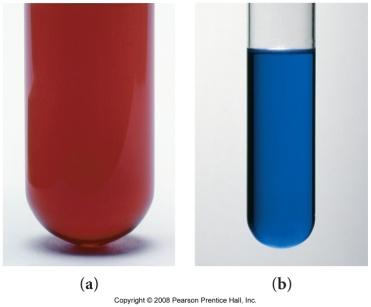
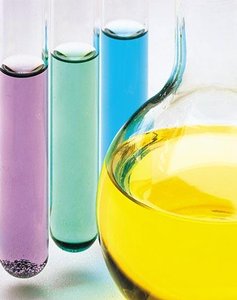
These complex ions often result in colored solutions due to their interaction with water molecules.
Molecular Structure and Acid Strength
Binary and Carboxylic Acids
The strength of an acid depends on its molecular structure:
Binary Acids: Acids with only two atoms (e.g., HF, HCl, HBr, HI). HF is weak due to strong H–F bond; others are strong acids.
Carboxylic Acids: The carboxyl proton is acidic due to resonance stabilization of the conjugate base.
Acid Definitions
Arrhenius: Acids produce H+ in water; bases produce OH–.
Brönsted–Lowry: Acids donate protons; bases accept protons.
Lewis: Acids accept electron pairs; bases donate electron pairs.
Environmental Impact: Acid Rain
Formation and Chemistry of Acid Rain
Acid rain is caused by atmospheric reactions involving CO2, SO2, and NO2:
CO2: Dissolves in water to form H2CO3, lowering rain pH to about 5.6.
SO2 and NO2: From burning fossil fuels, react to form H2SO4 and HNO3, making rain more acidic.
Key Reactions:
Effects of Acid Rain
Acid rain has significant environmental and structural impacts:
Corrosion: Damages metal structures (bridges, railroads, cars).
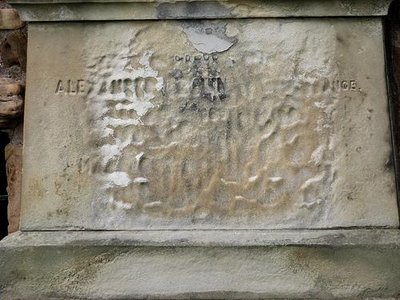
Degradation: Erodes marble, cement, and limestone.
Ecological Impact: Increases lake acidity, harming wildlife; destroys forests.


Legislation and Recovery
Legislation such as the Clean Air Act has reduced SO2 emissions, resulting in less acidic rain and recovery of affected ecosystems.
Summary Table: Salt Solution Properties
Salt | Cation Type | Anion Type | Resulting Solution |
|---|---|---|---|
Ca(NO3)2 | Strong base counter-ion | Strong acid counter-ion | Neutral |
KNO2 | Strong base counter-ion | Conjugate base of weak acid | Basic |
NH4I | Conjugate acid of weak base | Strong acid counter-ion | Acidic |
Al(CH3COO)3 | Small, highly charged metal | Conjugate base of weak acid | Acidic (if Ka > Kb) |
