 Back
BackLesson 3.5: Atomic Structure and the Periodic Table: Electron Configurations and Periodic Trends
Study Guide - Smart Notes
 Tailored notes based on your materials, expanded with key definitions, examples, and context.
Atomic Structure and the Periodic Table
Introduction to Atomic Structure and the Periodic Table
The study of chemistry has evolved from ancient models to a sophisticated understanding of atomic structure. The periodic table organizes elements based on their electron arrangements, which determine their chemical properties. Recognizing patterns in these arrangements allows chemists to predict element behavior and develop new technologies.
The Periodic Table and Electron Arrangement
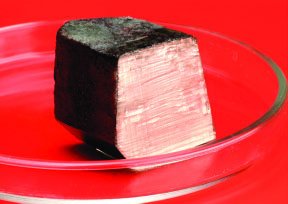
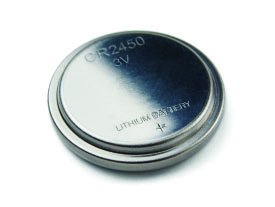
The periodic table is structured according to the arrangement of electrons around atomic nuclei. This arrangement, known as electron configuration, is fundamental to understanding chemical reactivity and periodic trends. For example, lithium is highly reactive due to its electron configuration, making it valuable in battery technology.
Electron configuration: The distribution of electrons among the energy levels and orbitals of an atom.
Periodic table organization: Elements are arranged by increasing atomic number, which corresponds to the number of protons and electrons in a neutral atom.
Application: Lithium's reactivity is harnessed in batteries for various devices.

Quantum Mechanical Model and Multi-Electronic Atoms
Quantum Mechanical Model of the Atom
The quantum mechanical model uses four quantum numbers to describe electron behavior in atoms. For multi-electronic atoms, three energy contributions are considered: kinetic energy of electrons, potential energy of attraction between nucleus and electrons, and potential energy of repulsion between electrons. The electron correlation problem arises because electron repulsions cannot be calculated exactly, requiring approximations.
Screening/Shielding: Outer electrons are shielded from the nucleus by inner electrons, reducing their attraction to the nucleus.
Orbital energies: In multi-electronic atoms, orbitals of the same principal quantum number (n) have different energies: .
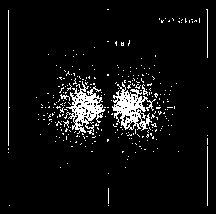
Penetration effect: Electrons in s orbitals penetrate closer to the nucleus, resulting in lower energy compared to p, d, or f orbitals of the same shell.

Relative Energies of Orbitals
The order in which orbitals fill is determined by their relative energies. The more effectively an electron penetrates the shielding electrons, the lower its energy. For example, the 4s orbital fills before the 3d orbital due to its lower energy.
Order of filling: s → p → d → f
Energy values: The energy of orbitals increases as follows within a shell:
The Aufbau Principle and Electron Configurations
Aufbau Principle
The aufbau principle states that electrons fill the lowest available energy orbitals first before occupying higher energy orbitals. This principle explains the organization of the periodic table and allows prediction of electron configurations for elements.
Electron configuration notation: Indicates the number of electrons in each orbital (e.g., 1s22s22p6).
Energy-level diagram: Visual representation of electron filling order.
Shorthand notation: Uses noble gas configurations to simplify electron configuration (e.g., [Ne]3s1).
Hund's Rule and Pauli Exclusion Principle
Hund's rule states that electrons occupy separate orbitals with parallel spins before pairing up in the same orbital. The Pauli exclusion principle states that no two electrons in an atom can have the same set of quantum numbers, so only two electrons (with opposite spins) can occupy each orbital.
Hund's rule: Maximizes the number of unpaired electrons in a subshell.
Pauli exclusion principle: Restricts orbital occupancy to two electrons with opposite spins.
Procedure for Writing Electron Configurations
Determine the number of electrons in the atom or ion.
Assign electrons to energy levels and sublevels using the aufbau principle.
Distribute electrons in orbitals according to Hund's rule.
Fill each sublevel before moving to the next.
For ions, add or remove electrons as appropriate.
Valence Electrons and Periodic Trends
Valence Electrons
Valence electrons are the electrons in the outermost principal quantum level of an atom. Elements in the same group have the same valence electron configuration, which explains their similar chemical properties.
Valence electron configuration: Determines chemical reactivity and bonding.
Periodic trends: Elements in the same group exhibit similar behavior due to identical valence electron configurations.
Transition Metals, Lanthanides, and Actinides
Transition Metals
Transition metals are elements whose highest-energy electrons are in d orbitals. Their electron configurations often show exceptions to the aufbau principle, such as chromium and copper, which have half-filled or fully filled d subshells for increased stability.
Transition metal configuration: [Ar]4s23dn (with exceptions for Cr and Cu)
Stability: Half-filled and fully filled d subshells are more stable.
Lanthanides and Actinides
The lanthanide and actinide series correspond to filling the f orbitals. The order of filling is affected by the close energy levels of d and f orbitals, and stability is increased by empty, half-filled, or fully filled subshells.
Lanthanides: Fill 4f orbitals after lanthanum.
Actinides: Fill 5f orbitals after actinium.
Explaining Ion Charges
Formation of Ions
Transition metals can form multiple ions due to the removal of electrons from their outermost orbitals. For example, cadmium forms a 2+ ion by losing its two 5s electrons, resulting in a stable, filled 4d orbital.
Ion formation: Removal or addition of electrons to achieve stable electron configurations.
Example: Cd2+: [Kr]4d10
Explaining Magnetism
Ferromagnetism and Paramagnetism
Ferromagnetism is the strong magnetism exhibited by materials containing iron, nickel, and cobalt. It arises from the alignment of magnetic domains, which are groups of atoms with aligned magnetic fields. Paramagnetism is a weaker form of magnetism caused by unpaired electrons in individual atoms, detectable only in the presence of a strong magnetic field.
Ferromagnetic elements: Iron, cobalt, nickel
Domain alignment: Domains align with external magnetic fields, resulting in permanent magnets.
Paramagnetism: Weak attraction due to unpaired electrons.


Summary of Key Concepts
The electron configuration of an atom describes the energies and locations of its electrons.
The aufbau principle states that electrons fill the lowest-energy orbitals first.
Hund's rule states that orbitals of equal energy fill with one unpaired electron each before pairing occurs.
Valence electrons determine many chemical properties of elements.
Electron configurations can be simplified using shorthand notation.
The properties and positions of elements in the s, p, and d blocks of the periodic table are related to their electron configurations.
