 Back
BackCellular Respiration: Chemical Principles and Energy Flow
Study Guide - Smart Notes
 Tailored notes based on your materials, expanded with key definitions, examples, and context.
Cellular Respiration and Energy Flow
Introduction to Cellular Respiration
Cellular respiration is a fundamental metabolic process by which cells convert biochemical energy from nutrients into adenosine triphosphate (ATP), releasing waste products. This process is essential for the survival of both plants and animals, as it provides the energy required for various cellular activities.
Energy in Biological Systems
Energy Source: Plants capture energy from sunlight through photosynthesis, while animals obtain energy by consuming plants or other animals.
ATP: Regardless of the energy source, it must be converted into ATP, the universal energy currency of the cell, to drive life-sustaining reactions.
Energy Flow: Energy enters ecosystems as sunlight and exits as heat. Photosynthesis produces oxygen and organic molecules, which are then used in cellular respiration to regenerate ATP.
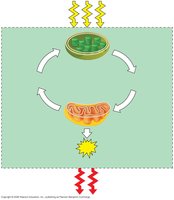
ATP Production and Utilization
ATP Synthesis: Plants synthesize ATP during photosynthesis and use it to produce glucose and other carbohydrates. Both plants and animals generate ATP by breaking down glucose, lipids, and proteins.
ATP Function: ATP stores chemical energy and releases it upon hydrolysis to ADP, powering cellular work. The typical ATP:ADP ratio in cells is about 10:1.
Summary Equation for Cellular Respiration
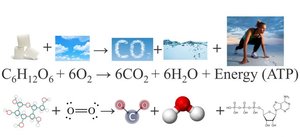
The overall chemical equation for aerobic cellular respiration is:
Redox Reactions in Cellular Respiration
Definitions and Importance
Redox (reduction-oxidation) reactions involve the transfer of electrons between molecules, releasing energy stored in organic compounds. This energy is harnessed to synthesize ATP.
Oxidation: Loss of electrons (e.g., glucose is oxidized during respiration).
Reduction: Gain of electrons (e.g., oxygen is reduced to water).
NAD+: Acts as an electron carrier, accepting electrons to become NADH.
ATP and NAD+ in Energy Transfer
ATP (Adenosine Triphosphate): A nucleotide composed of adenine, ribose, and three phosphate groups. It is synthesized from ADP and releases energy upon hydrolysis.
NAD+ (Nicotinamide Adenine Dinucleotide): A coenzyme that exists in oxidized (NAD+) and reduced (NADH) forms, facilitating electron transfer in metabolic reactions.
Stages of Cellular Respiration
Overview of the Three Main Stages
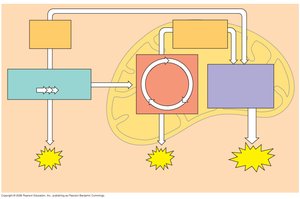
Cellular respiration occurs in three main stages, each with distinct locations and functions:
Glycolysis: Occurs in the cytoplasm; breaks down glucose into two molecules of pyruvate, producing a small amount of ATP and NADH.
Citric Acid Cycle (Krebs Cycle): Takes place in the mitochondrion; completes the breakdown of glucose, generating NADH and FADH2 for the next stage.
Oxidative Phosphorylation: Also in the mitochondrion; uses electrons from NADH and FADH2 to produce the majority of ATP via the electron transport chain and chemiosmosis.

Detailed Steps
Glycolysis: Converts glucose to pyruvate in the cytosol, producing ATP and NADH.
Citric Acid Cycle: Processes pyruvate in the mitochondrial matrix, generating CO2, ATP, NADH, and FADH2.
Oxidative Phosphorylation: Involves the electron transport chain and chemiosmosis, producing the bulk of ATP.
Key Molecules and Their Roles
Molecule | Role in Respiration |
|---|---|
Glucose | Primary fuel; oxidized to release energy |
Oxygen (O2) | Final electron acceptor in the electron transport chain |
ATP | Main energy currency of the cell |
NAD+/NADH | Electron carrier; transfers electrons between reactions |
FAD/FADH2 | Electron carrier in the citric acid cycle |
CO2 | Waste product of glucose oxidation |
H2O | Formed when oxygen accepts electrons and protons |
Summary
Cellular respiration is a multi-step process that converts biochemical energy from nutrients into ATP, with the release of CO2 and H2O.
It involves glycolysis, the citric acid cycle, and oxidative phosphorylation, with key roles for ATP, NAD+, and electron transport.
Understanding these chemical principles is essential for grasping how cells harness and utilize energy.
