 Back
BackChapter 5: Solutions – Properties, Types, and Calculations
Study Guide - Smart Notes
 Tailored notes based on your materials, expanded with key definitions, examples, and context.
Solutions and Mixtures
Types of Mixtures
Mixtures are combinations of two or more pure substances. They can be classified based on their uniformity:
Homogeneous mixtures: Uniform throughout; components are evenly distributed. Examples include air and salt dissolved in water.
Heterogeneous mixtures: Non-uniform; components are not evenly distributed. Examples include soup, milk, and blood.
Solutions
A solution is a homogeneous mixture where one substance (solute) is dissolved in another (solvent). Solutions can exist in various phases:
Gas in gas (e.g., air)
Solid in solid (e.g., alloys)
Liquid in liquid (e.g., alcohol in water)
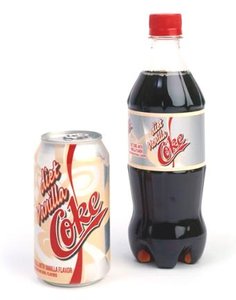
Gas in liquid (e.g., carbon dioxide in soda)
Solid in liquid (e.g., sugar in water)
Key properties of solutions:
Well-mixed (uniform), single phase
Transparent
Cannot be separated by filtration or by standing
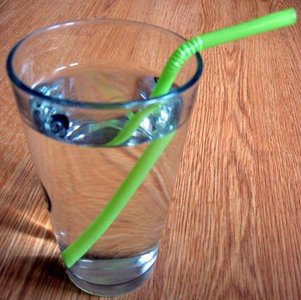
Solvent and Solute
In a solution, the solvent is present in greater quantity, while the solute is present in lesser quantity. For example, in a sugar-water solution, water is the solvent and sugar is the solute.
Miscibility
When mixing liquids, they may be:
Miscible: Two liquids that mix in any proportion (e.g., alcohol and water).
Immiscible: Two liquids that do not mix (e.g., oil and water).
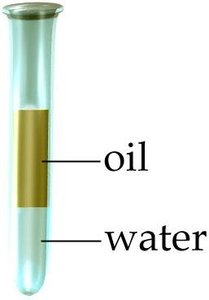
Solubility Principles
Solubility depends on the nature of the solute and solvent:
"Like dissolves like": Polar solvents dissolve polar solutes; nonpolar solvents dissolve nonpolar solutes.
Saturation and Solubility
Types of Solutions Based on Solubility
Saturated solution: Contains the maximum amount of solute that can dissolve at a given temperature (equilibrium).
Unsaturated solution: Contains less solute than the maximum amount; more solute can dissolve.
Supersaturated solution: Contains more solute than is normally possible at a given temperature; unstable and can crystallize easily.
Temperature and Solubility
For most solids in liquids, solubility increases with temperature. For gases in liquids, solubility decreases as temperature increases.
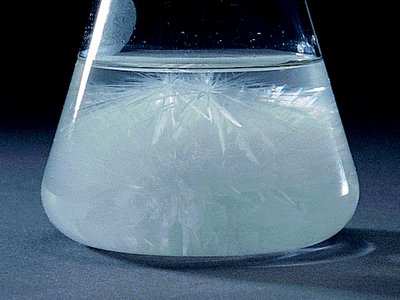
Seeding and Crystallization
Seeding provides a surface for crystallization to begin in a supersaturated solution. As the solution cools, crystals form, such as in the preparation of rock candy.
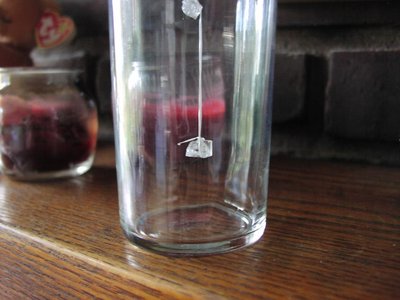
Gas Solubility and Pressure
Temperature Effects
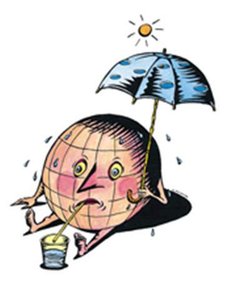
As temperature increases, the solubility of gases in liquids decreases. This is important in environmental contexts, such as the effect of global warming on dissolved oxygen in water.

Pressure Effects (Henry's Law)
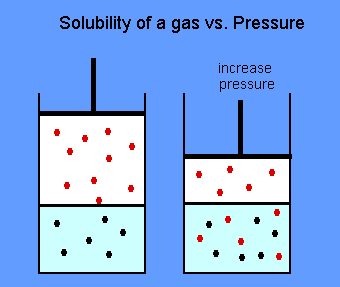
Increasing the pressure above a liquid increases the solubility of gases in that liquid. This is described by Henry's Law:
"The solubility of a gas in a liquid is directly proportional to the pressure of that gas above the liquid."
Concentration of Solutions
Definitions and Units
Concentrated solution: Contains a large amount of solute.
Dilute solution: Contains a small amount of solute.
Concentration: Amount of solute in a given quantity of solvent or solution.
Common Units of Concentration
Percent concentration:
Weight/Volume (W/V)%:
Weight/Weight (W/W)%:
Volume/Volume (V/V)%:
Molarity (M): Number of moles of solute per liter of solution.
To prepare a solution: Calculate moles needed, convert to grams, and dissolve in the appropriate volume.
Parts per million (ppm):
Parts per billion (ppb):
Dilution Calculations
To dilute a solution, use the equation:
(where is molarity and is volume)
The number of moles of solute remains constant during dilution.
Example: If 25.0 mL of a 1.00 M acid solution is diluted to 100.0 mL, the new concentration is:
M
Ion Concentration in Solution
For ionic compounds, the concentration of each ion depends on the formula. For example, in 1.50 M Na3PO4:
Na+ concentration: M
PO43- concentration: M
Solution Stoichiometry
Stoichiometry involving solutions uses molarity and volume to relate reactants and products in chemical reactions.
Use balanced equations to determine mole ratios.
Convert volumes to moles using molarity, apply stoichiometry, then convert back to volume if needed.
Example: How much 0.115 M KI solution is needed to react with 0.104 L of 0.225 M Pb(NO3)2?
Calculate moles of Pb(NO3)2, use stoichiometry to find moles of KI, then use molarity to find volume of KI solution.
Colloids and Suspensions
Colloids
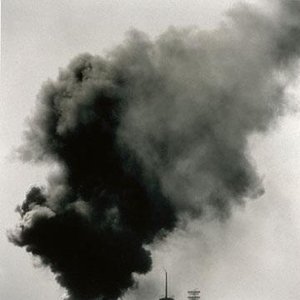
Colloids are mixtures where the solute particle size is between 1 and 1000 nm. They are non-transparent, non-uniform, and appear cloudy but are stable systems.
Examples: Milk, paint, dust in air

Tyndall Effect
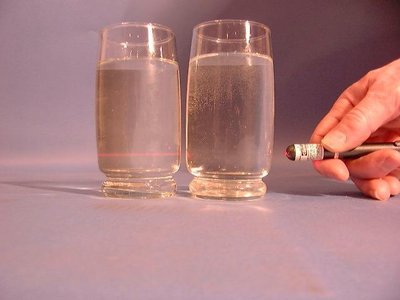
The Tyndall effect is the scattering of light by colloidal particles, making the light beam visible as it passes through the mixture.
Emulsions and Brownian Motion
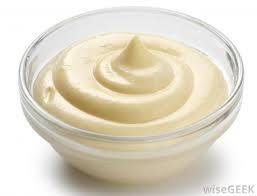
Emulsion: A colloid of two immiscible liquids (e.g., milk, mayonnaise).
Brownian motion: Random movement of colloidal particles due to collisions with solvent molecules.
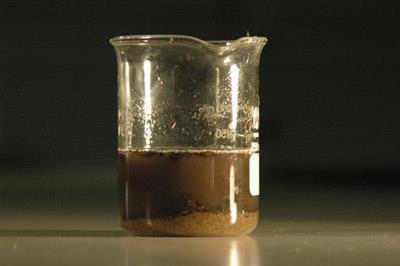
Suspensions
Suspensions contain particles larger than 1000 nm that settle out over time and are not stable.
Colligative Properties: Freezing and Boiling Point Changes
Effect of Solute on Freezing and Boiling Points
Dissolving a solute in a solvent raises the boiling point and lowers the freezing point of the solvent. The change in temperature is given by:
= molality =
= constant (specific to the solvent; for boiling, for freezing)
Example: If 13.7 g of glucose (C6H12O6) is dissolved in 0.86 kg of water, and for water is 0.512 °C·kg/mol:
Moles of glucose: mol
Molality: m
Boiling point elevation: °C
New boiling point: °C
