 Back
BackChemical Bonding I: Basic Concepts – Study Notes
Study Guide - Smart Notes
 Tailored notes based on your materials, expanded with key definitions, examples, and context.
Chemical Bonding I: Basic Concepts
Introduction
Chemical bonding is a fundamental concept in chemistry that explains how atoms combine to form molecules and compounds. This chapter introduces the basic principles of chemical bonding, focusing on Lewis theory, covalent and ionic bonds, resonance, exceptions to the octet rule, molecular shapes, bond order, bond length, and bond energies.
Lewis Theory: An Overview
Valence Electrons and Bonding
Valence electrons are the outermost electrons of an atom and play a key role in chemical bonding.
Atoms achieve stability by attaining a noble gas configuration, often an octet (eight electrons) in their valence shell.
Ionic bonds form by the transfer of electrons from one atom to another, resulting in oppositely charged ions.
Covalent bonds form by the sharing of electrons between atoms.
Lewis Symbols and Lewis Structures
A Lewis symbol represents the nucleus and core electrons of an atom with its chemical symbol, and valence electrons as dots around it.
Lewis structures show how valence electrons are arranged among atoms in a molecule or ion.

Ionic and Covalent Bonding Examples
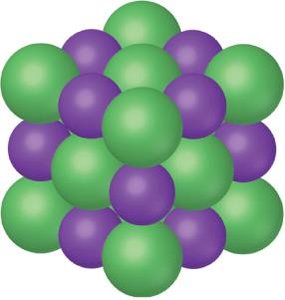
Ionic bonding: Electron transfer from Na to Cl forms Na+ and Cl- ions.
Covalent bonding: Electron sharing between H and Cl forms HCl.
Covalent Bonding: An Introduction
Single, Double, and Triple Bonds
A single bond involves one shared pair of electrons (e.g., H2).
A double bond involves two shared pairs (e.g., O2).
A triple bond involves three shared pairs (e.g., N2).

Coordinate Covalent Bonds
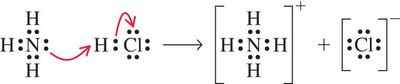
A coordinate covalent bond (dative bond) forms when both electrons in a shared pair come from the same atom.
Example: Formation of the ammonium ion (NH4+).
Polar Covalent Bonds and Electrostatic Potential Maps
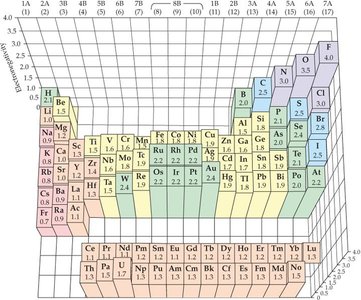
Bond Polarity and Electronegativity
Electronegativity is the ability of an atom to attract shared electrons in a bond.
A polar covalent bond has unequal sharing of electrons, resulting in partial charges (δ+ and δ−).
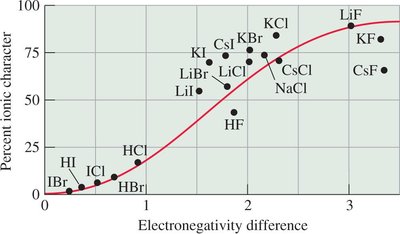
The greater the difference in electronegativity, the more polar the bond.
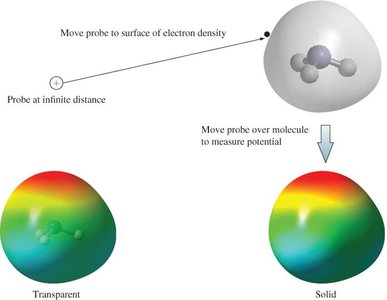
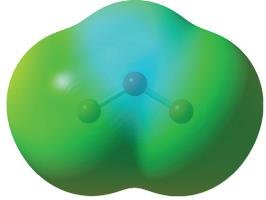
Electrostatic Potential Maps
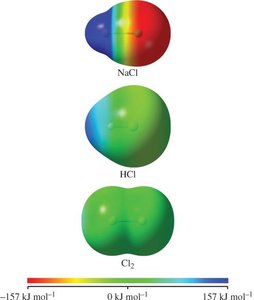
These maps visually represent the distribution of electron density and partial charges in molecules.
Red regions indicate electron-rich (negative potential), blue regions indicate electron-poor (positive potential).
Electronegativity Trends
Electronegativity increases across a period and decreases down a group in the periodic table.
Ionic Character and Bond Polarity
The percent ionic character of a bond increases with the difference in electronegativity between the bonded atoms.
Writing Lewis Structures
General Rules
All valence electrons must be shown.
Usually, electrons are paired, and each atom (except H) achieves an octet.
Hydrogen requires only 2 electrons.
Multiple bonds may be needed for some atoms (C, N, O, S, P).
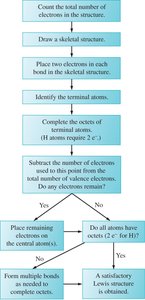
Steps for Drawing Lewis Structures
Count total valence electrons.
Draw a skeletal structure, placing the least electronegative atom in the center (except H, which is always terminal).
Complete octets for terminal atoms, then central atom.
Form multiple bonds if necessary to complete octets.
Formal Charge
Formal charge (FC) helps determine the most stable Lewis structure.
FC = (valence electrons) − (lone pair electrons) − (1/2 × bonding electrons)
The sum of formal charges equals the overall charge of the molecule or ion.
Structures with the smallest formal charges and negative charges on the most electronegative atoms are preferred.
Resonance
Resonance Structures
Some molecules cannot be represented by a single Lewis structure; instead, they have resonance structures.
The actual structure is a resonance hybrid, an average of all possible resonance forms.
Exceptions to the Octet Rule
Odd-Electron Species
Some molecules have an odd number of electrons and cannot achieve octets for all atoms (e.g., NO).
Incomplete Octets
Some atoms (e.g., B, Be) are stable with fewer than 8 electrons.
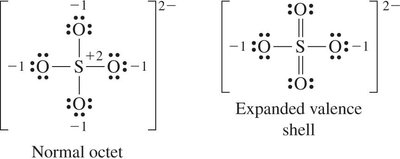
Expanded Valence Shells
Atoms in period 3 or beyond can have more than 8 electrons (e.g., SF6, PCl5).
Shapes of Molecules
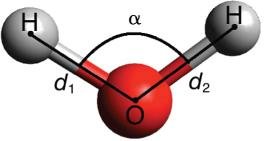
Bond Length and Bond Angle
Bond length is the distance between the nuclei of two bonded atoms.
Bond angle is the angle between adjacent bonds.
Valence-Shell Electron Pair Repulsion (VSEPR) Theory
Electron pairs (bonding and lone pairs) repel each other and arrange themselves to minimize repulsion.
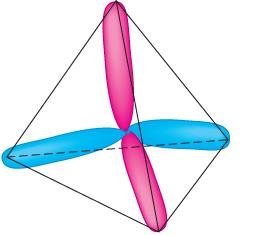
Electron group geometry describes the arrangement of electron groups around a central atom.
Molecular geometry describes the arrangement of atoms (nuclei) in a molecule.
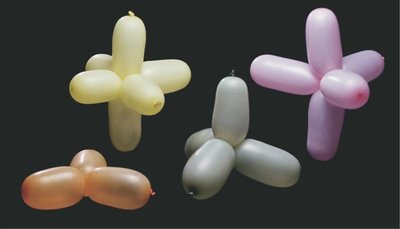
Common Electron-Group Geometries
2 groups: Linear (180°)
3 groups: Trigonal planar (120°)
4 groups: Tetrahedral (109.5°)
5 groups: Trigonal bipyramidal (90°, 120°)
6 groups: Octahedral (90°)
Molecular Shapes and Dipole Moments
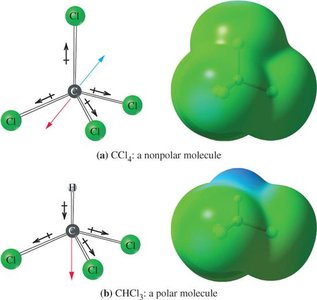
The shape of a molecule affects its polarity and dipole moment.
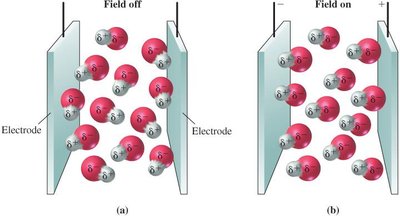
Polar molecules align in an electric field due to their dipole moments.
Bond Order and Bond Length
Bond Order
Bond order is the number of shared electron pairs between two atoms.
Single bond: bond order = 1; double bond: bond order = 2; triple bond: bond order = 3.
For resonance structures, bond order is averaged over all structures.
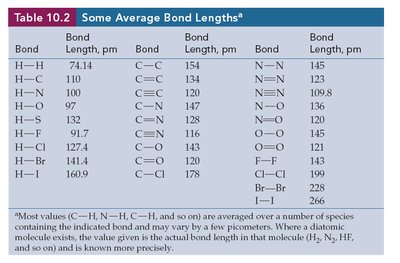
Bond Length
Bond length decreases as bond order increases.
Bond length can be estimated as the sum of the covalent radii of the two atoms.
Bond Energies
Bond Dissociation Energy
Bond energy is the energy required to break one mole of a specific bond in a molecule in the gas phase.
Bond energies can be used to estimate the enthalpy change (ΔH) of a reaction:
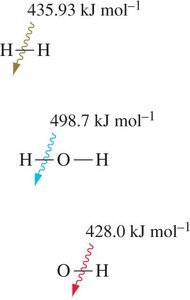
Predicting Reaction Enthalpy
If more energy is released in forming bonds than is required to break bonds, the reaction is exothermic.
If more energy is required to break bonds than is released in forming bonds, the reaction is endothermic.
Additional info: These notes cover the essential concepts of chemical bonding, including Lewis structures, resonance, exceptions to the octet rule, molecular geometry, bond order, bond length, and bond energies, as outlined in a standard general chemistry curriculum.
