 Back
BackChemical Bonding I: Lewis Structures, Bonding Types, and Molecular Geometry
Study Guide - Smart Notes
 Tailored notes based on your materials, expanded with key definitions, examples, and context.
Lewis Dot Symbols
Definition and Construction
Lewis Dot Symbols (also known as Electron Dot Diagrams) are visual representations of the valence electrons in an atom or ion. These diagrams help predict bonding behavior and the arrangement of electrons around atoms.
Valence electrons are the electrons in the outermost shell of an atom and are involved in chemical bonding.
For Main Group Elements, the number of valence electrons equals the group number (for representative elements).
For Transition Metals, the number of valence electrons is the sum of the ns and (n-1)d electrons.
Steps to Draw Lewis Dot Symbols:
Identify if the element is a main group element or a transition metal.
Write the element symbol to represent the nucleus and inner electrons.
Place one valence electron at a time on the four sides of the symbol, starting from the top and moving clockwise.
Pair up electrons as needed until all valence electrons are placed.
For ions, place the symbol in brackets and indicate the charge at the upper right corner. Remove electrons for cations and add for anions.
Example: Draw the Lewis Dot Symbol for Te (Tellurium).
Practice: Draw the Lewis Dot symbol for Co+, Cd2+, and P3–.
Chemical Bonds
Types of Chemical Bonds
Chemical bonds are the attractive forces that hold atoms or ions together in compounds. Atoms bond to achieve a stable electron configuration, often resembling that of noble gases.
Ionic Bonding: Involves the transfer of electrons from metals (which lose electrons to become cations) to nonmetals (which gain electrons to become anions). The resulting electrostatic attraction forms the ionic bond.
Covalent Bonding: Involves the sharing of valence electrons between nonmetal atoms to achieve stability.
Metallic Bonding: Involves a 'sea' of delocalized valence electrons moving freely among a lattice of metal cations, giving rise to properties such as conductivity, malleability, and luster.
Example: Which species has the most ionic character? (Practice with SO3, NBr3, SnO2, P2O5, AsCl5).
Practice: Identify the main source of strength in an ionic bond and which elements are unlikely to form covalent bonds.
Formal Charge
Definition and Calculation
Formal charge is a bookkeeping tool used to estimate the distribution of electrons in a molecule, assuming electrons in bonds are shared equally.
Bonding electrons: Electrons shared between atoms.
Nonbonding electrons: Electrons not involved in bonding (lone pairs).
Net charge: The sum of all formal charges in a molecule or ion.
Formal Charge Formula:
Example: Calculate the formal charge of nitrogen in NH3.
Practice: Calculate formal charges for oxygen in NO2– and carbon in CO.
Lewis Dot Structures: Neutral Compounds
Rules for Drawing Lewis Structures
Lewis structures represent the arrangement of valence electrons in molecules. The goal is to satisfy the octet rule for each atom (except hydrogen, which follows the duet rule).
Count the total number of valence electrons.
Place the least electronegative atom in the center (except hydrogen and halogens, which are usually terminal).
Connect atoms with single bonds.
Complete octets for surrounding atoms, then place remaining electrons on the central atom.
If central atom lacks an octet, form double or triple bonds as needed.
Check formal charges; the best structure minimizes formal charges and places negative charges on more electronegative atoms.
Example: Draw the Lewis structure for CH2O (formaldehyde).
Practice: Draw structures for S2Cl2, SiBr4, N2H2.
Lone Pairs
Lone pairs are pairs of nonbonding electrons localized on a single atom. They influence molecular shape and reactivity.
Example: How many lone pairs does sulfur have in H2S?
Practice: Count lone pairs in AsH3, NOCl, and bonding electrons in CO2.
Sigma and Pi Bonds
Types of Covalent Bonds
Covalent bonds can be classified as sigma (σ) or pi (π) bonds:
Sigma (σ) bond: The first bond formed between two atoms; it is the strongest and results from head-on orbital overlap.
Pi (π) bond: Additional bonds formed from side-to-side overlap of p orbitals; present in double and triple bonds.
As the number of pi bonds increases, bond strength increases and bond length decreases.
Example: Relationship between bond length and strength for multiple bonds between the same atoms.
Practice: Count sigma and pi bonds in SO3 and compare bond strength in C2Cl2 vs. C2Cl6.
Lewis Dot Structures: Ions
Drawing Ionic Compounds
Ionic compounds consist of cations and anions held together by electrostatic attraction. Lewis structures for polyatomic ions follow the same rules as for neutral molecules, with brackets and charges indicated.
Break the compound into its ionic components.
Draw the Lewis structure for each ion.
Place ions near each other to indicate attraction.
Practice: Draw Lewis structures for KClO, Ca(CN)2, O22–, SCl42+, NH4Cl.
Lewis Dot Structures: Exceptions
Octet Rule Exceptions
Some elements can have fewer or more than eight electrons (octet) and still be stable:
Incomplete octet: Group 2A (4 electrons), Group 3A (6 electrons).
Expanded octet: Elements in period 3 or higher (e.g., Group 5A: 10 electrons, Group 6A: 12 electrons, etc.).
Radicals: Molecules or ions with an unpaired electron (odd number of total valence electrons). Place the unpaired electron to minimize formal charge.
Practice: Draw structures for XeBr2, SOCl2, OH radical, POCl3, SiF62–.
Lewis Dot Structures: Acids
Drawing Lewis Structures for Acids
Acids are covalent compounds that release H+ ions in solution. Their Lewis structures are drawn by separating the H+ and the anion, then connecting the H+ to the site with a negative formal charge.
Example: Draw the Lewis structure for HNO3 (nitric acid).
Practice: Draw structures for H2SO4, HCN, HClO3, H3PO4.
Resonance Structures
Definition and Drawing
Resonance structures are two or more valid Lewis structures for a molecule or ion that differ only in the placement of electrons (not atoms). The actual structure is a resonance hybrid, an average of all resonance forms.
Resonance involves the movement of pi bonds or lone pairs.
Double-sided arrows indicate resonance between structures.
Dashed lines in resonance hybrids show delocalized bonds.
Example: Draw resonance structures for CO32– (carbonate ion).
Practice: Draw resonance structures for ClO3–, RbIO2, and determine the best structure for N2O and PO43–.
Average Charge
The average charge on an atom in a resonance hybrid is calculated by averaging the formal charges across all resonance structures.
Draw all resonance structures.
Calculate the formal charge for the atom in each structure.
Average the charges.
Practice: Calculate the average charge for oxygen in ClO2– and phosphate ions.
Average Bond Order
Definition and Calculation
Bond order is the average number of bonds between a pair of atoms. It is calculated by dividing the total number of bonds by the number of bonding positions.
Single bond: Bond order = 1
Double bond: Bond order = 2
Triple bond: Bond order = 3
Higher bond order means stronger, shorter bonds.
Practice: Calculate bond order for S–O in SO32– and P–O in PO43–.
Bond Energy
Definition and Application
Bond energy (bond enthalpy) is the energy required to break one mole of a bond in a molecule. It is used to estimate the enthalpy change (ΔH) of reactions.
Endothermic: Energy is absorbed to break bonds (ΔH > 0).
Exothermic: Energy is released when bonds form (ΔH < 0).
Calculation:
Practice: Calculate ΔH for reactions using given bond energies.
Coulomb’s Law
Electrostatic Forces in Ionic Compounds
Coulomb’s Law quantifies the force and potential energy between two charged particles:
E = energy or force (N)
ε = permittivity constant (N·m2/C2)
Q1, Q2 = charges (C)
r = distance between centers (m)
Potential energy increases with charge magnitude and decreases with distance. Stronger ionic bonds result from higher charges and shorter distances.
Practice: Calculate force or unknown charge using Coulomb’s Law.
Equatorial and Axial Positions
Electron Group Arrangements
Molecules with five or six electron groups have distinct equatorial and axial positions, affecting molecular geometry and minimizing electron repulsion.
Equatorial positions: Located around the central plane of the molecule.
Axial positions: Located above and below the equatorial plane.
Lone pairs prefer equatorial positions in five-group systems and axial in six-group systems to minimize repulsion.

Practice: Draw shapes for XeF4, Br2CO, and determine lone pairs in KrCl5+.
Electron Geometry
Determining Electron Geometry
Electron geometry describes the spatial arrangement of all electron groups (bonding and lone pairs) around a central atom.
2 groups: Linear
3 groups: Trigonal planar
4 groups: Tetrahedral
5 groups: Trigonal bipyramidal
6 groups: Octahedral
Practice: Determine electron geometry for H2S, CS2, CH2O, AsBr2+, TeBr4, CH3NH2.
Molecular Geometry
True Shape of Molecules
Molecular geometry considers both bonding pairs and lone pairs to describe the actual shape of a molecule.
2 electron groups: Linear
3 electron groups: Trigonal planar (0 lone pairs), Bent (1 lone pair)
4 electron groups: Tetrahedral (0 lone pairs), Trigonal pyramidal (1 lone pair), Bent (2 lone pairs)
5 electron groups: Trigonal bipyramidal, Seesaw, T-shaped, Linear
6 electron groups: Octahedral, Square pyramidal, Square planar
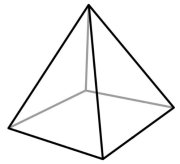
Practice: Determine molecular geometry for SOCl4, KrCl5+, SeH2Cl2, CHClO, FSSF, IF4–.
Bond Angles
Definition and Trends
Bond angles are the angles between adjacent bonds from the same atom. Ideal bond angles are determined by electron group geometry and are reduced by the presence of lone pairs due to increased repulsion.
2 groups: 180° (linear)
3 groups: 120° (trigonal planar)
4 groups: 109.5° (tetrahedral)
5 groups: 120° (equatorial), 90° (axial)
6 groups: 90°
Practice: Predict bond angles for NH3, IF4–, SCN–, PCl3F2, N2O4.
