Back
BackLesson 4.3: Electronegativity and Bond Polarity
Study Guide - Smart Notes
 Tailored notes based on your materials, expanded with key definitions, examples, and context.
Electronegativity and Bond Polarity
Introduction to Bond Polarity
Chemical bonds can be classified as ionic or covalent based on how electrons are distributed between atoms. In ionic bonding, electrons are transferred from a metal to a non-metal, resulting in the formation of oppositely charged ions. In covalent bonding, atoms share pairs of electrons. The sharing can be equal or unequal, leading to different types of covalent bonds.
Non-polar covalent bond: Electrons are shared equally, usually between identical atoms (e.g., H2, N2, Cl2).
Polar covalent bond: Electrons are shared unequally because one atom attracts the shared electrons more strongly than the other (e.g., H–F, H2O).
When a polar covalent bond forms, the molecule has a partial positive charge (δ+) on one end and a partial negative charge (δ−) on the other, creating a dipole.
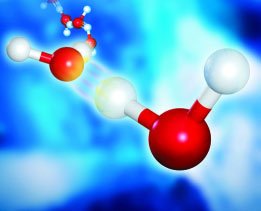
Electronegativity
Electronegativity is the ability of an atom in a molecule to attract shared electrons to itself. Different elements have different electronegativities, which can be used to predict the type and polarity of bonds formed between atoms.
Electronegativity generally increases across a period (left to right) and decreases down a group (top to bottom) in the periodic table.
The most electronegative element is fluorine (F) with a value of 4.0, while the least is cesium (Cs) and francium (Fr) with values of 0.7.
The difference in electronegativity (ΔEN) between two atoms determines the bond type:
ΔEN < 0.5: Non-polar covalent bond
0.5 ≤ ΔEN ≤ 1.7: Polar covalent bond
ΔEN > 1.7: Ionic bond
For example, in hydrogen chloride (HCl):
This value indicates a polar covalent bond.
Electronegativity Table
The following table summarizes the relationship between electronegativity difference and bond type:
ΔEN | Bond Type | Character |
|---|---|---|
< 0.5 | Non-polar covalent | Covalent |
0.5 – 1.7 | Polar covalent | Covalent and ionic |
> 1.7 | Ionic | Ionic |
Bond Polarity and Dipoles in Diatomic Molecules
A dipole is a separation of positive and negative charges in a molecule. In a polar molecule like hydrogen fluoride (HF), the dipole is represented by an arrow pointing toward the more electronegative atom (negative region), with the tail at the positive region. The presence of a dipole can be demonstrated by the orientation of molecules in an electric field.
Predicting Bond Polarity Using Electronegativity Values
To predict bond polarity:
Find the electronegativity values for each atom.
Calculate the difference (ΔEN).
Classify the bond using the table above.
Example: Classify the bond in K–Br.
Since ΔEN > 1.7, the bond is ionic.
Order of Bond Polarity
The polarity of a bond increases as the electronegativity difference increases. For example, the order of increasing bond polarity for the following molecules is:
H–H < S–H < Cl–H < O–H < F–H
Summary of Key Points
Electronegativity is the relative ability of an atom to attract shared electrons.
Bond polarity increases with increasing electronegativity difference.
A dipole is a region of separated positive and negative charge in a molecule.
The electronegativity difference can be used to predict bond type: non-polar covalent, polar covalent, or ionic.
Practice Problems
Arrange the following in order of increasing electronegativity: (a) C, N, O; (b) S, Se, Cl; (c) Si, Ge, Sn; (d) Tl, S, Ge.
Without electronegativity values, how could you use the periodic table to estimate bond polarity?
Determine the bond type between the following atoms: (a) C–O; (b) F–I; (c) Li–F; (d) Ge–Sn; (e) Al–Cl.
Predict which bond in each group is most polar: (a) C–F, Si–F, Ge–F; (b) P–Cl or S–Cl; (c) S–F, S–Cl, S–Br; (d) Be–Cl, Mg–Cl, Ca–Cl.
Describe how the bonds K–Br, C–Br, and Br–Br differ in terms of electronegativity.
Show the bond polarity for the following molecules by indicating partial charges: (a) O–F; (b) Br–Br; (c) C–Br; (d) C–O.
State whether the bond polarity is shown correctly for the following: (a) δH–Brδ; (b) δCl–Iδ; (c) δSi–Sδ; (d) δF–Fδ; (e) δO–Pδ.
Calculate the electronegativity difference between C and F, classify the bond, and explain the behavior of CF4 in an electric field.
For a polar covalent bond with nitrogen having a partial positive charge, list possible atoms, the most polar bond, and atoms that would result in a non-polar covalent bond with nitrogen.
Predict the bond type for the following pairs: (a) Rb and Cl; (b) S and S; (c) C and F; (d) Ba and C; (e) B and Se; (f) Cs and Br.