 Back
BackElectrons in Atoms: Quantum Theory, Energy Levels, and Atomic Spectra
Study Guide - Smart Notes
 Tailored notes based on your materials, expanded with key definitions, examples, and context.
Electromagnetic Radiation and Light
Nature of Light and Electromagnetic Spectrum
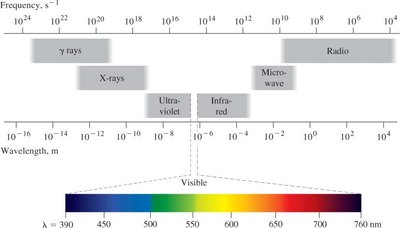
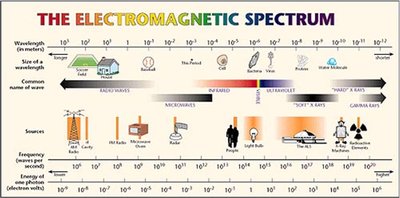
Electromagnetic radiation is a form of energy that travels through space as waves. It includes visible light, ultraviolet, infrared, radio waves, X-rays, and gamma rays. The electromagnetic spectrum is classified by wavelength and frequency, with visible light occupying a small portion.
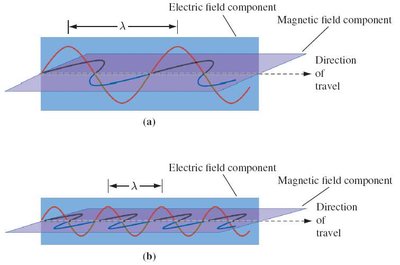
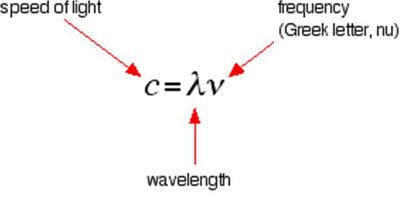
Wavelength (\lambda): The distance between two consecutive peaks of a wave.
Frequency (\nu): The number of wave cycles that pass a point per second (measured in Hz).
Speed of Light (c): The constant speed at which light travels in a vacuum, m/s.
Key Equation:
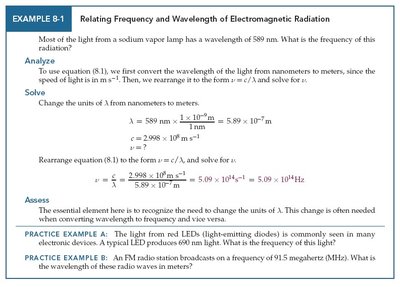
Example: If the wavelength of yellow light is 589 nm, its frequency can be calculated using the above equation.
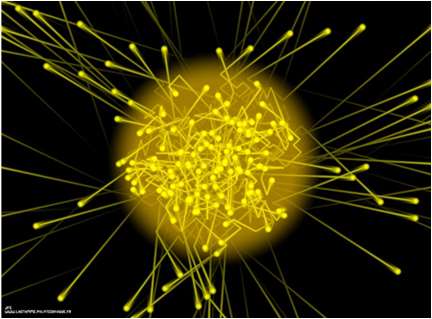
Properties of Waves
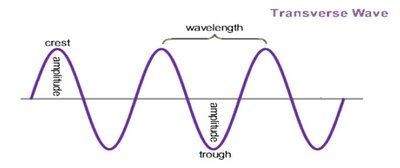
Waves are characterized by amplitude, wavelength, frequency, and speed. The amplitude determines the brightness or intensity, while wavelength and frequency determine the color of light.
Transverse Wave: A wave in which the oscillation is perpendicular to the direction of travel.
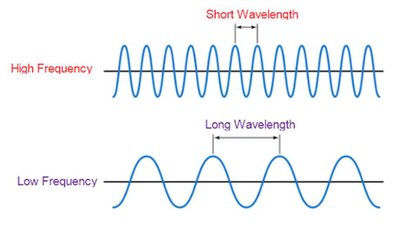
Relationship: Shorter wavelength means higher frequency and energy.
Quantum Theory and Photons
Light as Photons
Quantum theory describes light as both a wave and a particle. Photons are the particle aspect of light, each carrying a quantum of energy.
Planck's Constant (h): J·s
Photon Energy:
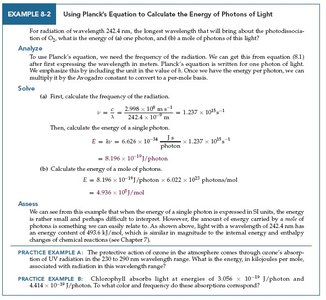
Example: Calculate the energy of a photon with frequency Hz.
Bohr Model and Energy Levels
Bohr's Model of the Atom
The Bohr model proposes that electrons orbit the nucleus in distinct energy levels. Electrons can absorb energy and move to higher levels (excited state), or release energy and return to lower levels (ground state).
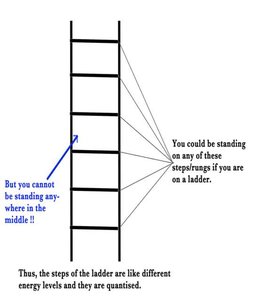
Energy Levels: Quantized, labeled by principal quantum number n (n = 1, 2, 3, ...).
Absorption: Electron moves to higher energy level.
Emission: Electron returns to lower energy level, emitting a photon.
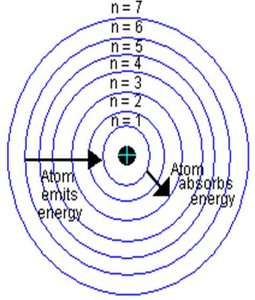
Example: When an electron in hydrogen absorbs energy, it jumps from n=1 to n=2. When it returns, it emits energy as light.
Atomic Spectra and Flame Tests
Emission Spectra
Each element emits light at specific wavelengths, producing a unique line spectrum. This is observed in emission spectra and flame tests.
Line Spectrum: Discrete lines corresponding to electron transitions between energy levels.
Flame Test: Different elements produce characteristic colors when heated in a flame.
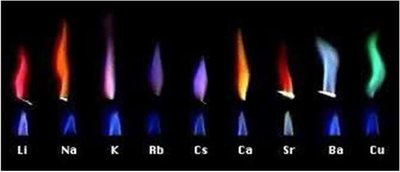
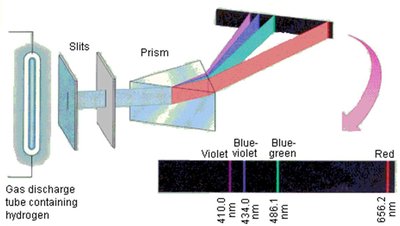
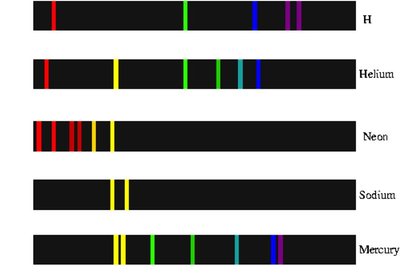
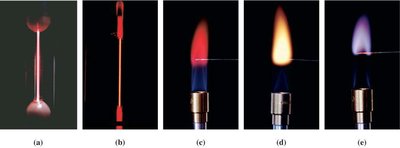
Example: Sodium produces a bright yellow flame, while copper produces a green flame.
Quantum Numbers and Orbitals
Quantum Numbers
Quantum numbers describe the arrangement and properties of electrons in atoms:
Principal Quantum Number (n): Energy level
Angular Quantum Number (l): Sublevel/shape (s, p, d, f)
Magnetic Quantum Number (ml): Orbital orientation
Spin Quantum Number (ms): Electron spin direction
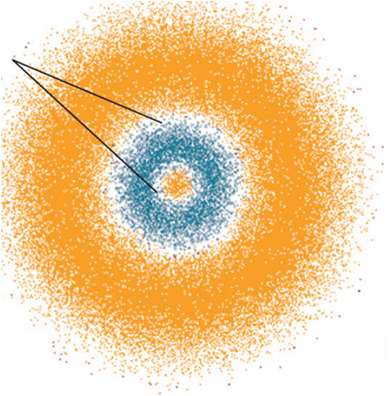
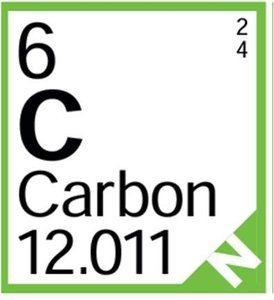
Example: The electron configuration of carbon (6 electrons) is 1s2 2s2 2p2.
Electron Configurations and the Periodic Table
Rules for Electron Filling
Electrons fill orbitals according to three main rules:
Aufbau Principle: Electrons fill the lowest energy orbitals first.
Hund's Rule: Electrons occupy orbitals singly before pairing.
Pauli Exclusion Principle: No two electrons in an atom can have the same set of quantum numbers.
Periodic Table: The order of electron filling is reflected in the structure of the periodic table.
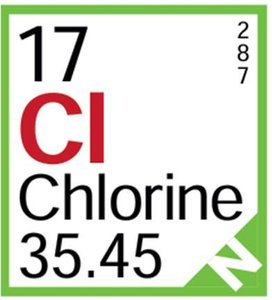
Example: Sodium (Na) has electron configuration 1s2 2s2 2p6 3s1.
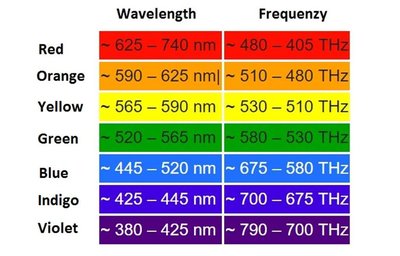
Summary Table: Electromagnetic Spectrum
The electromagnetic spectrum covers a wide range of wavelengths and frequencies. The visible region is only a small part.
Color | Wavelength (nm) | Frequency (THz) |
|---|---|---|
Red | 625–740 | 480–405 |
Orange | 590–625 | 510–480 |
Yellow | 565–590 | 530–510 |
Green | 520–565 | 580–530 |
Blue | 445–520 | 675–580 |
Indigo | 425–445 | 700–675 |
Violet | 380–425 | 790–700 |
Additional info:
These notes expand on the original slides by providing full academic explanations, examples, and relevant equations. All images included directly reinforce the concepts discussed in each section.
