 Back
BackEquilibria, Precipitation, and Acid-Base Chemistry: Study Notes
Study Guide - Smart Notes
 Tailored notes based on your materials, expanded with key definitions, examples, and context.
Equilibria: Precipitation, Acid-Base Chemistry
Introduction to Equilibria and Precipitation
Equilibrium concepts are central to understanding precipitation reactions and acid-base chemistry. In aqueous solutions, the extent to which compounds dissolve or react is governed by equilibrium constants, which allow us to predict concentrations of ions and the direction of chemical change.
Solubility Product Constant (Ksp) and Selective Precipitation
The solubility product constant (Ksp) quantifies the equilibrium between a solid and its ions in solution. Selective precipitation uses differences in Ksp values to separate ions from mixtures by adding a reagent that causes one ion to precipitate before another.
Ksp Expression: For a salt AB that dissociates as AB(s) → A+(aq) + B-(aq),
Selective Precipitation: The minimum concentration of a reagent (e.g., OH-) needed to begin precipitating one ion can be calculated using Ksp and the ion concentrations.
Application Example: To separate Mg2+ and Ca2+ by adding OH-, calculate the [OH-] at which Mg(OH)2 begins to precipitate but Ca(OH)2 does not.

Acid-Base Theories and Definitions
Arrhenius, Brønsted-Lowry, and Lewis Definitions
Acids and bases can be defined in several ways, each broadening the scope of what substances qualify as acids or bases:
Arrhenius: Acids produce H+ in water; bases produce OH-.
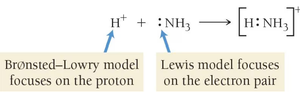
Brønsted-Lowry: Acids donate protons (H+); bases accept protons.
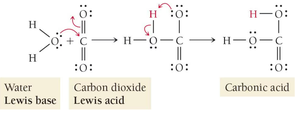
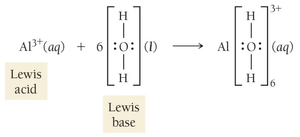
Lewis: Acids accept electron pairs; bases donate electron pairs. This definition includes more substances, such as metal ions and molecules without hydrogen.
Amphiprotic Substances and Autoionization of Water
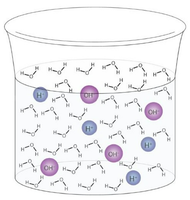
Some substances, like water, can act as either acids or bases. These are called amphiprotic substances. Water undergoes autoionization, producing both H+ and OH- ions:
Autoionization Reaction:
Equilibrium Constant for Water: at 25°C
Strong and Weak Acids and Bases
Definitions and Examples
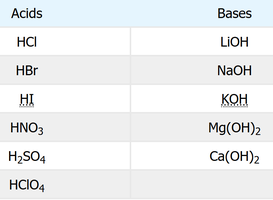
Strong acids and bases dissociate completely in water, while weak acids and bases only partially ionize. The strength of an acid or base is related to the stability of its conjugate base or acid.
Strong Acids: HCl, HBr, HI, HNO3, H2SO4, HClO4
Strong Bases: LiOH, NaOH, KOH, Ca(OH)2, Sr(OH)2, Ba(OH)2
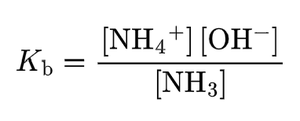
Ionization Constants: Ka and Kb
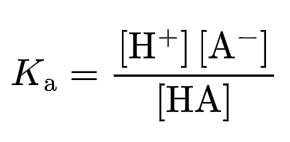
The acid ionization constant (Ka) and base ionization constant (Kb) quantify the extent of ionization for weak acids and bases:
Water Equilibria and the pH Scale
pH, pOH, and the p-Scale
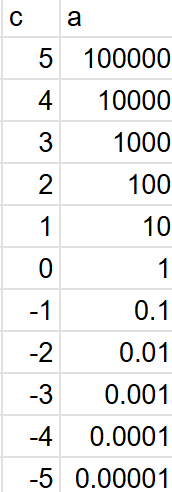
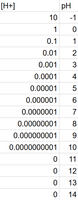
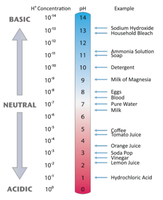
The pH scale is a logarithmic measure of hydrogen ion concentration. It is defined as:
(at 25°C)
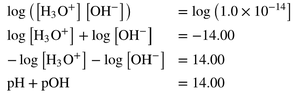
Calculating pH from Molarity
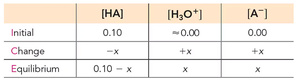
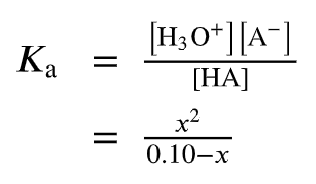
To determine the pH of a weak acid or base solution, use an ICE table to solve for equilibrium concentrations, then apply the pH formula:
Write the balanced equation and Ka or Kb expression.
Set up an ICE table (Initial, Change, Equilibrium).
Solve for [H+] or [OH-], then calculate pH or pOH.
Percent Ionization and Le Chatelier's Principle
Percent Ionization
Percent ionization measures the fraction of acid molecules that ionize in solution:
Lower initial concentration increases percent ionization due to Le Chatelier's Principle.

Conjugate Acid-Base Pairs
Relationship Between Strengths
Strong acids have weak conjugate bases, and weak acids have relatively stronger conjugate bases. The effect of dissolving salts of conjugate bases on pH depends on their strength:
Dissolving a strong acid affects pH; dissolving its conjugate base's salt does not (e.g., HCl vs NaCl).
Dissolving a weak acid or its conjugate base's salt both affect pH (e.g., HF vs NaF).
Buffers
Definition and Function
A buffer is a solution that resists changes in pH when small amounts of acid or base are added. Buffers are made from a weak acid and its conjugate base, or a weak base and its conjugate acid.
Example: Acetic acid and sodium acetate; ammonia and ammonium chloride.
Buffers work by neutralizing added H+ or OH- through equilibrium shifts.
Buffers can be overwhelmed if too much strong acid or base is added.
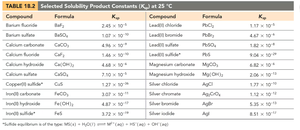
Summary Table: Selected Solubility Product Constants (Ksp)
Compound | Formula | Ksp |
|---|---|---|
Barium fluoride | BaF2 | 2.45 × 10⁻⁵ |
Barium sulfate | BaSO4 | 1.08 × 10⁻¹⁰ |
Calcium carbonate | CaCO3 | 4.7 × 10⁻⁹ |
Calcium hydroxide | Ca(OH)2 | 5.5 × 10⁻⁶ |
Calcium sulfate | CaSO4 | 2.4 × 10⁻⁵ |
Copper(II) sulfate | CuSO4 | 1.27 × 10⁻³ |
Iron(II) hydroxide | Fe(OH)2 | 8.0 × 10⁻¹⁶ |
Iron(III) hydroxide | Fe(OH)3 | 2.79 × 10-39 |
Lead(II) chloride | PbCl2 | 1.7 × 10⁻⁵ |
Lead(II) bromide | PbBr2 | 4.6 × 10⁻⁶ |
Lead(II) sulfate | PbSO4 | 1.6 × 10⁻⁸ |
Magnesium hydroxide | Mg(OH)2 | 5.6 × 10⁻¹² |
Silver chromate | Ag2CrO4 | 1.1 × 10⁻¹² |
Silver bromide | AgBr | 5.0 × 10⁻¹³ |
Silver chloride | AgCl | 1.8 × 10⁻¹⁰ |
Silver iodide | AgI | 8.5 × 10⁻¹⁷ |
