 Back
BackMatter, Measurement, and Problem Solving: Structured Study Notes
Study Guide - Smart Notes
 Tailored notes based on your materials, expanded with key definitions, examples, and context.
Chapter 1: Matter, Measurement, and Problem Solving
Chemistry and Its Importance
Chemistry is the science that seeks to understand the behavior of matter by studying the behavior of atoms and molecules. It is fundamental to many aspects of modern life, including medicine, energy, agriculture, environmental monitoring, and the development of new materials.
Key Point 1: Chemistry enables the development of drugs and procedures to cure diseases.
Key Point 2: Chemistry is essential for energy storage (e.g., batteries, fuel cells), agriculture, and environmental monitoring.
Example: Chemists develop alternative ways to synthesize chemicals to reduce pollution and mitigate carbon dioxide production.

The Scientific Method
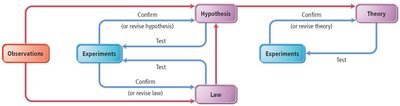
The scientific method is an empirical approach to scientific knowledge, based on observation and experiment. It is a systematic process used to investigate phenomena, acquire new knowledge, or correct and integrate previous knowledge.
Key Point 1: Observations (data) often lead scientists to formulate a hypothesis.
Key Point 2: A hypothesis is a tentative interpretation or explanation of the observations and must be falsifiable.
Key Point 3: Laws summarize past observations and predict future ones (e.g., Law of Conservation of Mass).
Key Point 4: Theories provide general explanations for the characteristics and behavior of nature and are validated by experiments.
Example: Antoine Lavoisier observed no change in total mass during combustion, leading to the Law of Conservation of Mass.
Atoms and Molecules
Atomic and Molecular Structure
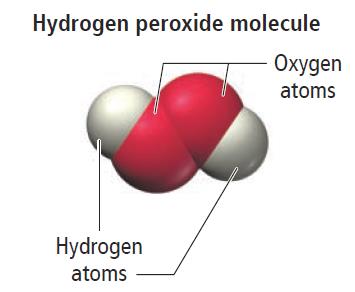
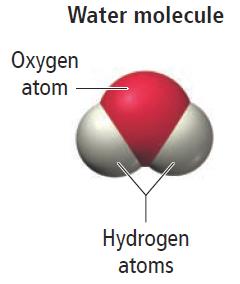
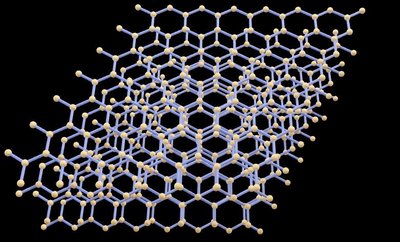
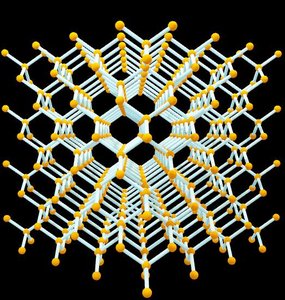
Atoms are the submicroscopic particles that constitute the fundamental building blocks of matter. Free atoms are rare in nature; they tend to bind together in specific geometrical arrangements to form molecules.
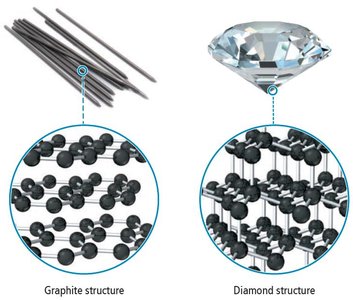
Key Point 1: Small differences in the arrangement of atoms and molecules can result in large differences in the substances they compose.
Example: Graphite and diamond are both made of carbon, but their atomic arrangements differ, resulting in distinct properties.
The Classification of Matter
States of Matter
Matter is anything that occupies space and has mass. It can be classified according to its state (physical form) and composition (basic components).
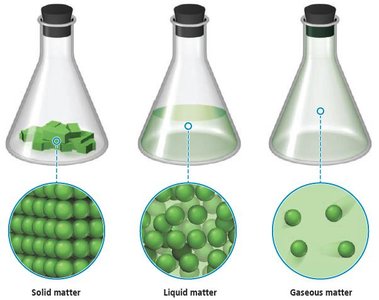
Key Point 1: The state of matter changes from solid to liquid to gas with increasing temperature.
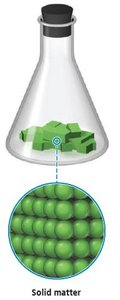
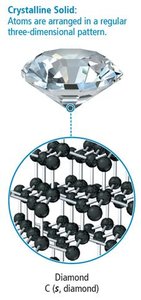
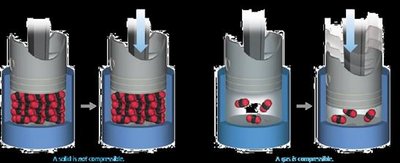
Key Point 2: In solid matter, atoms or molecules pack closely in fixed locations and may be crystalline (long-range order) or amorphous (no long-range order).
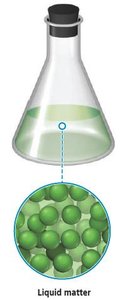
Key Point 3: In liquid matter, atoms or molecules are close but free to move relative to each other; liquids have fixed volume but not fixed shape.
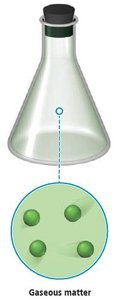
Key Point 4: In gaseous matter, atoms or molecules have much space between them, are free to move, and are compressible.
Classification by Composition
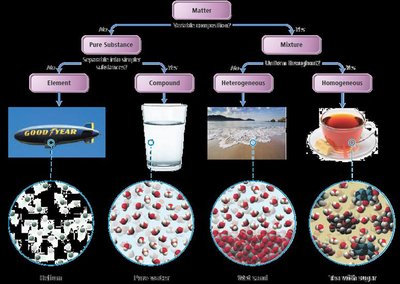
Matter can also be classified as elements, compounds, or mixtures based on its composition.
Key Point 1: A pure substance is made up of only one component and has a fixed composition.
Key Point 2: A mixture is composed of two or more components in variable proportions.
Key Point 3: Elements cannot be separated into simpler substances; compounds can be separated into elements.
Key Point 4: Mixtures can be heterogeneous (unevenly distributed) or homogeneous (uniformly distributed).
Identifying Pure Substances
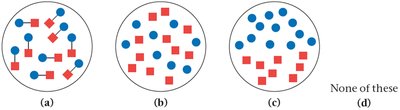
Visual representations can help distinguish between pure substances and mixtures based on atomic and molecular arrangements.
Key Point 1: Pure substances contain only one type of atom or molecule.
Key Point 2: Mixtures contain more than one type of atom or molecule.
Separating Mixtures
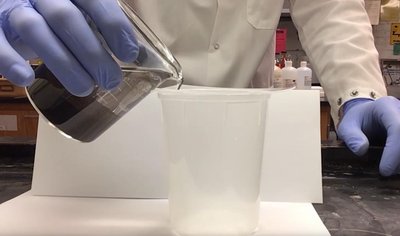
Decanting
Decanting is a simple technique used to separate a mixture of sand and water by carefully pouring off the water into another container.
Key Point 1: Decanting relies on differences in physical properties such as density and solubility.
Filtration
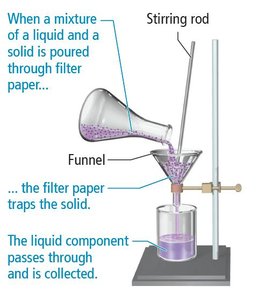
Filtration is used to separate an insoluble solid from a liquid by passing the mixture through filter paper in a funnel.
Key Point 1: The filter paper traps the solid, while the liquid passes through and is collected.
Example: Sand and water can be separated by filtration.

Distillation
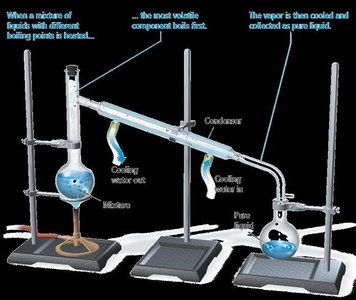
Distillation separates mixtures of liquids with different boiling points by heating the mixture. The most volatile component boils first, and the vapor is cooled and collected as pure liquid.
Key Point 1: Distillation is widely used in chemical laboratories and industry.


Physical and Chemical Changes
Physical Changes
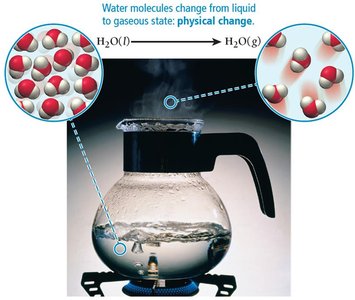
Physical changes alter only the state (solid, liquid, gas) of a substance; atoms or molecules do not change their identity.
Key Point 1: Examples include melting, boiling, and dissolving.
Example: Melting metal:

Chemical Changes
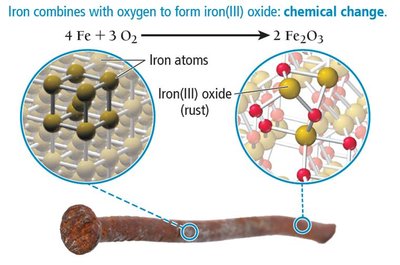
Chemical changes alter the composition of matter, resulting in the formation of new substances. These changes are called chemical reactions.
Key Point 1: Chemical reactions change the original substance into something new.
Example:
Physical and Chemical Properties
Types of Properties
Properties of substances can be classified as physical or chemical, and as intensive or extensive.
Key Point 1: Physical properties are displayed without changing composition (e.g., odor, color, melting point).
Key Point 2: Chemical properties are displayed only by changing composition via a chemical change (e.g., flammability, reactivity).
Key Point 3: Intensive properties do not depend on the amount of substance (e.g., boiling point, density).
Key Point 4: Extensive properties depend on the amount of substance (e.g., weight, volume).
Energy: A Currency of Chemistry
Forms of Energy
Energy is the capacity to do work, defined as the action of a force through a distance (). It is always conserved in physical or chemical changes.
Key Point 1: Kinetic energy is associated with motion.
Key Point 2: Potential energy is associated with position or composition (e.g., chemical energy stored in bonds).
Key Point 3: Thermal energy is associated with temperature.
Key Point 4: Law of conservation of energy: energy is neither created nor destroyed.
The Units of Measurement
SI Units and Prefix Multipliers
Scientists use the International System of Units (SI), which is based on the metric system. Prefix multipliers change the value of the unit by powers of 10.
Key Point 1: SI base units include meter (m), kilogram (kg), second (s), kelvin (K), mole (mol), ampere (A), candela (cd).
Key Point 2: Prefixes such as kilo (k, ), milli (m, ), micro (µ, ), and nano (n, ) are commonly used.
Derived Units
Derived units are combinations of base units, such as volume (), density (), speed (), and energy ().
Key Point 1: Volume:
Key Point 2: Density:
Significant Figures and Scientific Notation
Significant Figures
Scientific measurements are reported so that every digit is certain except the last, which is estimated. The precision of a measurement depends on the instrument used.
Key Point 1: All nonzero digits are significant; zeroes between nonzero digits are significant.
Key Point 2: Leading zeroes are not significant; trailing zeroes after a decimal point are significant.
Key Point 3: Use scientific notation to avoid ambiguity with trailing zeroes.
Scientific Notation
Scientific notation is a way of writing very large or very small numbers, including only significant figures. The exponent designates the position of the decimal point.
Key Point 1: Format:
Example:
Solving Chemical Problems: Dimensional Analysis
Unit Conversion and Dimensional Analysis
Many problems in chemistry involve unit conversion. Dimensional analysis uses units as a guide to solving problems, multiplying, dividing, and canceling units like algebraic quantities.
Key Point 1: Conversion factors are fractional quantities derived from unit equations.
Key Point 2: General form: Information given × conversion factor(s) = information sought.
Example:
Interpreting Data and Graphs
Data Patterns
Analyzing experimental data can reveal patterns, such as the conservation of mass and constant ratios in chemical reactions.
Key Point 1: The sum of the masses of reactants equals the mass of products.
Key Point 2: Ratios of elements in compounds are consistent, with small variations due to experimental error.
Graph Interpretation
Graphs are essential tools for visualizing data trends. Examine axes, ranges, and slopes to understand the information presented.
Key Point 1: The y-axis range can affect the visual representation of changes.
Key Point 2: The slope of the line represents the rate of change.
State of Matter | Arrangement | Properties |
|---|---|---|
Solid | Close-packed, fixed positions | Fixed volume, rigid shape |
Liquid | Close-packed, free to move | Fixed volume, variable shape |
Gas | Widely spaced, free to move | Compressible, variable shape and volume |
Type | Definition | Example |
|---|---|---|
Element | Cannot be separated into simpler substances | Gold, Iron |
Compound | Can be separated into elements | Water, Sugar |
Heterogeneous Mixture | Components unevenly distributed | Chocolate chip cookies |
Homogeneous Mixture | Uniformly distributed | Chocolate milk |
Property Type | Depends on Amount? | Example |
|---|---|---|
Intensive | No | Boiling point, color, density |
Extensive | Yes | Weight, volume, moles |
Additional info: Academic context and explanations have been expanded for clarity and completeness. All images included are directly relevant to the adjacent paragraphs and reinforce the educational content.
