 Back
BackLesson 4.8: The Structure and Properties of Solids
Study Guide - Smart Notes
 Tailored notes based on your materials, expanded with key definitions, examples, and context.
The Structure and Properties of Solids
Introduction to Solids and Composite Materials
Solids are materials characterized by closely packed particles and strong intermolecular or interatomic forces. The properties of solids are determined by the nature of their bonding and structure. Composite materials, which are made from two or more distinct substances, are engineered to combine desirable properties such as strength, lightness, and resistance to corrosion. For example, the Boeing 787 Dreamliner uses composite materials to achieve a high strength-to-weight ratio, making it more fuel-efficient than traditional aircraft.

Types of Crystalline Solids
Crystalline solids are classified based on the nature of their constituent particles and the forces holding them together. The four main types are ionic crystals, metallic crystals, molecular crystals, and covalent network crystals.
Ionic Crystals
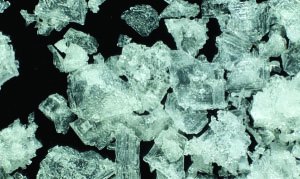
Ionic crystals are formed from the electrostatic attraction between oppositely charged ions, typically resulting from the reaction of metals with non-metals. The ions arrange in a regular, repeating pattern known as a crystal lattice.
Key Properties:
Hard and brittle
High melting points (e.g., NaCl, MgO)
Conduct electricity when dissolved in water (as ions are mobile), but not as solids
Example: Sodium chloride (NaCl)
Metallic Crystals
Metallic crystals consist of closely packed atoms held together by a 'sea' of delocalized valence electrons. This electron sea allows for unique properties such as electrical conductivity and malleability. The electron sea theory explains that the mobile electrons move freely around fixed positive nuclei, holding the structure together through electrostatic attraction.
Key Properties:
Shiny (sheen)
Malleable and ductile
Good conductors of heat and electricity
Variable hardness and melting points
Example: Gold, aluminum
Table 1: Properties of Metallic Solids
Property | Explanation |
|---|---|
Sheen | Mobile valence electrons absorb and emit light energy of many wavelengths. |
Malleability | The electron sea allows atoms to slide over each other. |
Electrical conductivity | Mobile electrons produce an electric current when a metal is connected to a battery. |
Hardness | Strong electrostatic attractions hold the nuclei together. |
Molecular Crystals
Molecular crystals are composed of neutral molecules held together by intermolecular forces such as London dispersion, dipole–dipole, and hydrogen bonding. These forces are weaker than ionic or covalent bonds, resulting in lower melting points and softer structures.
Key Properties:
Low melting points
Soft or brittle
Poor conductors of electricity
Example: Ice (solid H2O), iodine (I2), carbon dioxide (CO2)

Table 2: Properties of Molecular Crystals
Property | Reason |
|---|---|
Low melting point | Weak intermolecular interactions |
Little hardness | Weak intermolecular interactions |
Electrical non-conductor | Composed of neutral molecules |
Covalent Network Crystals
Covalent network crystals are solids in which atoms are bonded together in a continuous network by covalent bonds. These structures are extremely hard and have very high melting points due to the strength of the covalent bonds throughout the lattice.
Key Properties:
Very high melting points
Extreme hardness
Poor electrical conductivity (except for graphite)
Example: Diamond (tetrahedral carbon network), quartz (SiO2)

Allotropes of Carbon
Carbon can form several different covalent network structures, known as allotropes:
Diamond: Each carbon atom forms four single covalent bonds in a tetrahedral arrangement, resulting in extreme hardness.
Graphite: Carbon atoms form sheets of hexagonal rings with delocalized electrons, making graphite slippery and electrically conductive.
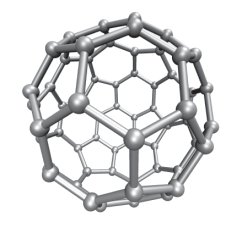
Buckyballs (Buckminsterfullerene): Spherical molecules of 60 carbon atoms arranged in a soccer ball-like structure, used in various applications.
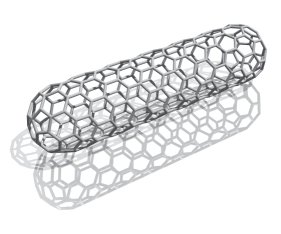
Carbon Nanotubes: Cylindrical tubes of carbon atoms with unique electrical and mechanical properties.
Semiconductors
Semiconductors are covalent network crystals, typically of silicon or germanium, that conduct a small electric current at room temperature. Their conductivity increases with temperature or by doping with other elements. Doping introduces impurities such as arsenic (n-type, adds electrons) or boron (p-type, creates holes), allowing engineers to tailor the electrical properties for use in electronic devices like transistors and microchips.

Summary Table: Properties of the Four Types of Solids
Type of Solid | Particles Involved | Primary Force of Attraction | Melting/Boiling Point | Electrical Conductivity | Other Physical Properties | Examples |
|---|---|---|---|---|---|---|
Ionic Crystal | Cations & Anions | Electrostatic (ionic) bonds | High | Conducts in solution, not as solid | Hard, brittle | NaCl, MgO |
Metallic Crystal | Metal atoms | Metallic bonding (electron sea) | Variable | Conducts as solid and liquid | Malleable, ductile, shiny | Al, Au, Fe |
Molecular Crystal | Molecules | Intermolecular forces | Low | Poor conductor | Soft, volatile | Ice, I2, CO2 |
Covalent Network Crystal | Atoms | Covalent bonds | Very high | Poor conductor (except graphite) | Very hard, rigid | Diamond, SiO2 |
Key Equations and Concepts
Ionic Bond Formation:
Metallic Bonding (Electron Sea Model):
Covalent Network Structure (Diamond):
Summary
The four main types of solids are ionic, metallic, molecular, and covalent network crystals.
Their properties are determined by the nature of the particles and the forces holding them together.
Semiconductors are modified covalent network crystals with tunable electrical properties, essential for modern electronics.
