Ch.1 - Introduction: Matter, Energy, and Measurement
Brown - Chemistry: The Central Science 14th Edition
Brown14th EditionChemistry: The Central ScienceISBN: 9780134414232Not the one you use?Change textbook
Chapter 1, Problem 20b

(b) Which properties of zinc can you describe from the photo? Are these physical or chemical properties?

Verified step by step guidance
1
Identify the properties of zinc that can be observed from the photo, such as color, luster, and texture.
Determine if these properties are physical or chemical. Physical properties are those that can be observed without changing the substance's chemical identity, such as color, density, and state of matter.
Consider if any chemical properties are visible, which would involve the substance's ability to undergo a chemical change, such as reactivity with acids or oxygen.
Classify the observed properties: for example, color and luster are physical properties because they do not involve a change in the chemical composition of zinc.
Summarize the properties identified and their classification as either physical or chemical, based on the observations from the photo.

Verified video answer for a similar problem:

This video solution was recommended by our tutors as helpful for the problem above.
Video duration:
2m
Was this helpful?

Key Concepts

Here are the essential concepts you must grasp in order to answer the question correctly.

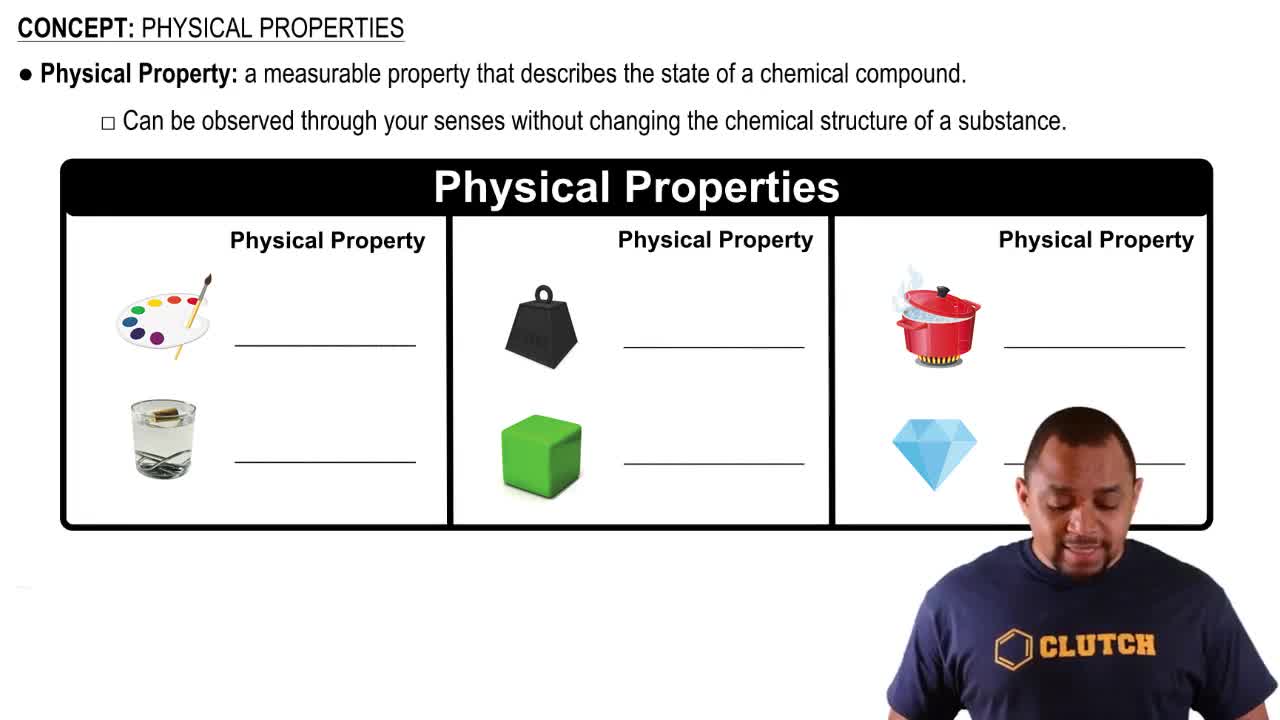
Physical Properties

Physical properties are characteristics of a substance that can be observed or measured without changing its chemical identity. Examples include color, melting point, boiling point, density, and conductivity. These properties help in identifying and describing materials based on their appearance and behavior under various conditions.
Recommended video:
Guided course
02:54
Physical Properties

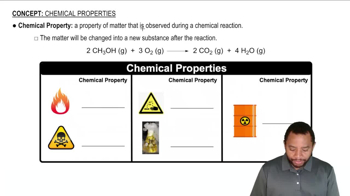
Chemical Properties

Chemical properties refer to a substance's ability to undergo chemical changes and transform into different substances. These properties include reactivity with acids, bases, or other chemicals, flammability, and oxidation states. Understanding chemical properties is essential for predicting how a substance will interact in chemical reactions.
Recommended video:
Guided course
03:37
Chemical Properties

Zinc Characteristics

Zinc is a transition metal known for its lustrous appearance, malleability, and resistance to corrosion. It exhibits both physical properties, such as a shiny, silver-gray color and a relatively low melting point, and chemical properties, such as reactivity with acids to produce hydrogen gas. Analyzing zinc's properties helps in applications ranging from galvanization to alloy production.
Recommended video:
Guided course
02:59
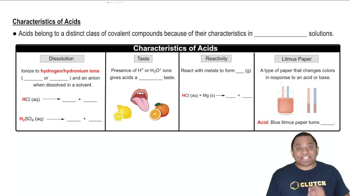
Acid Characteristics
Related Practice
Textbook Question

Label each of the following as either a physical process or a chemical process: (a) crushing a metal can (b) production of urine in the kidneys

699
views

Textbook Question

Label each of the following as either a physical process or a chemical process: (c) melting a piece of chocolate (d) burning fossil fuel (e) discharging a battery.

625
views
Textbook Question

Zirconia, an oxide of zirconium, is often used as an affordable diamond substitute. Just like diamond, it is a colorless crystal which sparkles under sunlight. Which of the following physical properties do you think would help in differentiating between diamond and Zirconia—melting point, density, or physical state?

983
views
Textbook Question

The radius of an atom of tungsten (W) is about 2.10 Å. (b) How many tungsten atoms would have to be lined up to create a wire of 2.0 mm?

809
views
Textbook Question

In the process of attempting to characterize a substance, a chemist makes the following observations: The substance is a silvery white, lustrous metal. It melts at 649 °C and boils at 1105 °C. Its density at 20 °C is 1.738 g/cm3. The substance burns in air, producing an intense white light. It reacts with chlorine to give a brittle white solid. The substance can be pounded into thin sheets or drawn into wires. It is a good conductor of electricity. Which of these characteristics are physical properties, and which are chemical properties?

1161
views
1
rank
Textbook Question

A match is lit and held under a cold piece of metal. The following observations are made: (a) The match burns. (b) The metal gets warmer. (c) Water condenses on the metal. (d) Soot (carbon) is deposited on the metal. Which of these occurrences are due to physical changes, and which are due to chemical changes?

870
views