Potassium nitrate has a lattice energy of -163.8 kcal/mol and a heat of hydration of -155.5 kcal/mol. How much potassium nitrate has to dissolve in water to absorb 1.00⨉102 kJ of heat?
Ch.14 - Solutions
Chapter 14, Problem 46
Why do fish die when placed in a tank filled with water that has been boiled and then cooled?
Verified step by step guidance1
Understand that boiling water removes dissolved gases, including oxygen, which is essential for fish survival.
Recognize that when water is boiled, the dissolved oxygen is driven out of the water as the temperature increases.
Note that even after the water is cooled, the dissolved oxygen levels remain low because the gases do not readily re-dissolve back into the water.
Consider that fish rely on dissolved oxygen in the water to breathe through their gills.
Conclude that without sufficient dissolved oxygen, fish cannot survive, leading to their death in such an environment.
Key Concepts
Here are the essential concepts you must grasp in order to answer the question correctly.
Dissolved Oxygen
Dissolved oxygen is crucial for aquatic life, as fish rely on it for respiration. When water is boiled, the heat causes a significant reduction in the amount of dissolved oxygen, which can lead to hypoxia (low oxygen levels) when the water cools. If the oxygen levels are insufficient, fish cannot survive.
Temperature Effects on Solubility
The solubility of gases in liquids is affected by temperature; generally, warmer water holds less dissolved gas than cooler water. When water is boiled, it loses most of its dissolved gases, including oxygen. As the water cools, it does not regain the same levels of dissolved oxygen, making it unsuitable for fish.
Recommended video:
Guided course
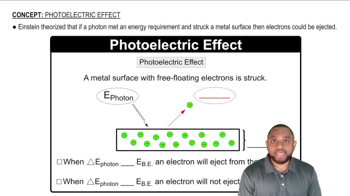
Photoelectric Effect
Water Quality and Chemical Composition
Water quality encompasses various factors, including pH, hardness, and the presence of harmful substances. Boiling water can alter its chemical composition, potentially removing beneficial minerals and introducing harmful compounds. This change can create an inhospitable environment for fish, contributing to their death.
Recommended video:
Guided course
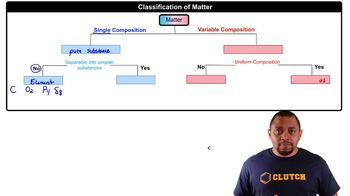
Matter Composition
Related Practice
Textbook Question
2383
views
Textbook Question
Scuba divers breathing air at increased pressure can suffer from oxygen toxicity—too much oxygen in their bloodstream— when the partial pressure of oxygen exceeds about 1.4 atm. What happens to the amount of oxygen in a diver's bloodstream when he or she breathes oxygen at elevated pressures? How can this be reversed?
1102
views
Textbook Question
A solution contains 32 g of KNO3 per 100.0 g of water at 25 °C. Is the solution unsaturated, saturated, or supersaturated? (Use Figure 13.11.)
1501
views
Textbook Question
A KCl solution containing 42 g of KCl per 100.0 g of water is cooled from 60 °C to 0 °C. What happens during cooling? (Use Figure 14.11.)