 Back
BackCH4: Extensions of Mendelian Genetics: Complex Patterns of Inheritance
Study Guide - Smart Notes
 Tailored notes based on your materials, expanded with key definitions, examples, and context.
Extensions of Mendelian Genetics
Alleles and Mutation
Alleles are alternative forms of a gene, and mutation is the primary source of new alleles. The wild-type allele is the most common allele in a population and serves as the standard for comparison. Mutations can alter phenotypes in various ways, including loss-of-function (LOF) and gain-of-function (GOF) mutations. LOF mutations may result in a null allele if the loss is complete.
Hemoglobin Structure and Sickle-Cell Mutation
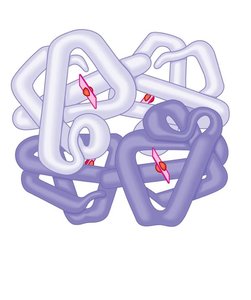
Hemoglobin is a protein with quaternary structure, composed of two α and two β polypeptide chains. Each chain contains a heme group, an iron-containing pigment that binds oxygen. The sickle-cell mutation alters the β chain, changing a glutamic acid (Glu) to valine (Val), exposing a hydrophobic region and causing hemoglobin molecules to aggregate, reducing oxygen-carrying capacity.
Genetic Symbols and Dominance
Dominant alleles are denoted by italic uppercase letters (e.g., D), while recessive alleles use italic lowercase letters (e.g., d). If no dominance exists, superscripts are used (e.g., R1, R2). For example, in fruit flies, the ebony mutant is e, and wild-type is e+.
Complex Inheritance Patterns
Inheritance patterns can be more complex than simple Mendelian genetics. These include cases where alleles are not completely dominant or recessive, genes have more than two alleles, or a gene produces multiple phenotypes. The principles of segregation and independent assortment still apply.
Degrees of Dominance
Complete, Incomplete, and Codominance
Complete dominance occurs when the heterozygote and dominant homozygote have identical phenotypes. Incomplete dominance results in an intermediate phenotype in F1 hybrids. Codominance is when both alleles are expressed distinctly in the heterozygote.

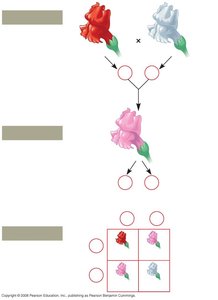
In incomplete dominance, the phenotypic ratio matches the genotypic ratio.
Codominance Example: MN Blood Group
In the MN blood group, both LM and LN alleles are expressed in the heterozygote, resulting in the MN phenotype.
Multiple Alleles
ABO Blood Groups
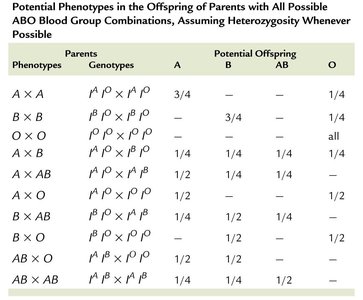
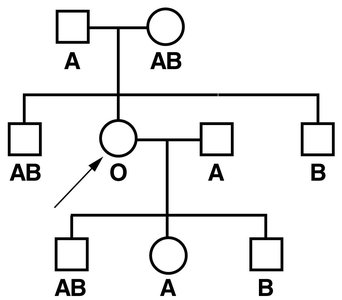
Multiple alleles (>2) can exist in a population, but individuals have at most two alleles per gene. The ABO blood group system is a classic example, with three alleles: IA, IB, and i. IA and IB are dominant to i and codominant to each other.
White Locus in Drosophila
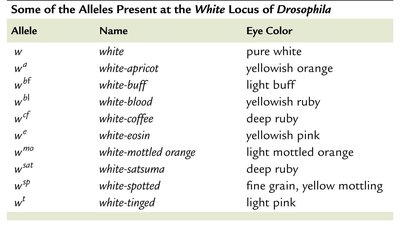
The white locus in Drosophila demonstrates multiple alleles, each producing a distinct eye color phenotype.
Gene Interaction and Epistasis
Epistasis
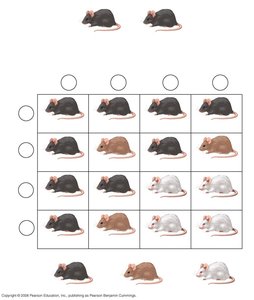
Epistasis occurs when one gene masks or modifies the effect of another gene. For example, in mice, coat color is determined by two genes: B (black/brown) and C (color/no color). The C gene is required for pigment deposition; without it, the coat is white regardless of the B gene.
Bombay Phenotype
The Bombay phenotype is an example of epistasis in humans, where a mutation at the FUT1 locus prevents the formation of the H substance, masking the expression of ABO blood group antigens.
Lethal Alleles
Recessive and Dominant Lethal Alleles
Lethal alleles are those that cause death when present in a certain genotype. Recessive lethal alleles are tolerated in heterozygotes but lethal in homozygotes. Dominant lethal alleles, such as those causing Huntington disease, are lethal even in heterozygotes, often manifesting later in life.
Polygenic Traits and Quantitative Inheritance
Polygenic Inheritance
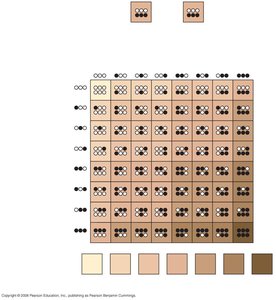
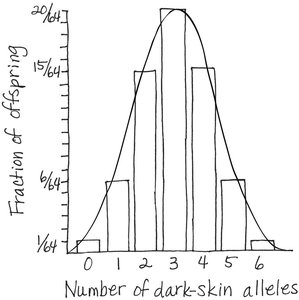
Polygenic traits are controlled by multiple genes and exhibit quantitative variation. Human skin color is an example, likely controlled by three or four genes, each contributing additively to the phenotype.
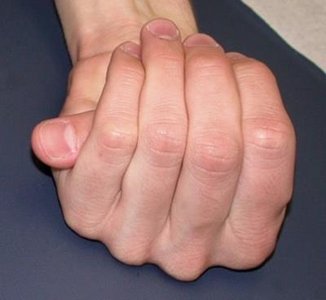
Pleiotropy
Marfan Syndrome
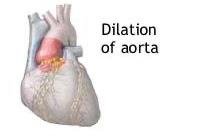
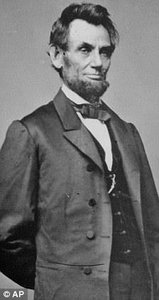
Pleiotropy occurs when a single gene affects multiple phenotypic traits. Marfan syndrome is an autosomal dominant disorder caused by mutations in the fibrillin gene, affecting the eye, skeleton, and cardiovascular system.
Genotypic Background and Environmental Effects
Penetrance and Expressivity
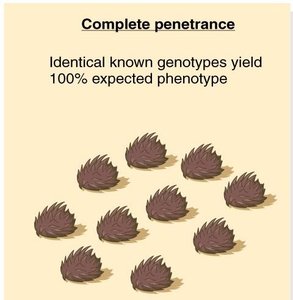
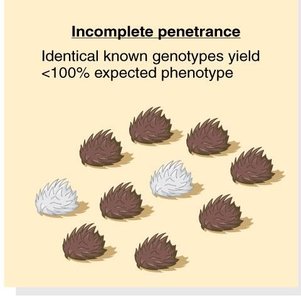
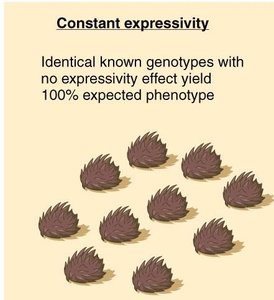
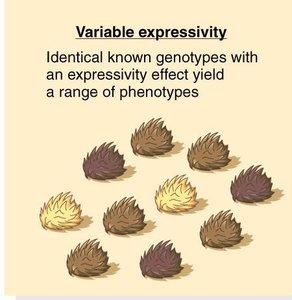
Penetrance is the percentage of individuals with a mutant genotype who express the phenotype. Expressivity is the range of phenotypic expression among individuals with the same genotype. Penetrance is all-or-none, while expressivity can vary in severity.
Reduced Penetrance: Retinoblastoma
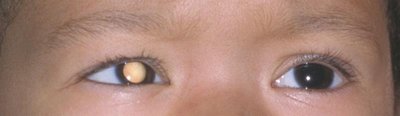
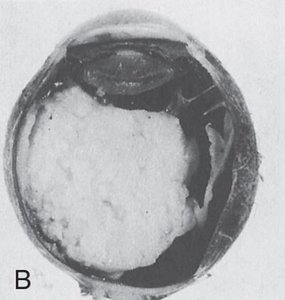
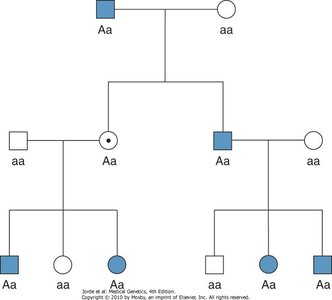
Retinoblastoma, a malignant eye tumor, is an example of reduced penetrance in autosomal dominant disorders. Not all obligate carriers express the disease phenotype.
Variable Expressivity
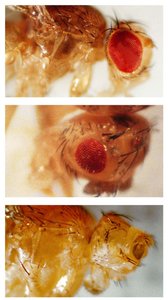
Variable expressivity is illustrated by the eyeless mutation in Drosophila, where individuals with the same genotype show a range of eye phenotypes from normal to absent.
Neurofibromatosis Type 1
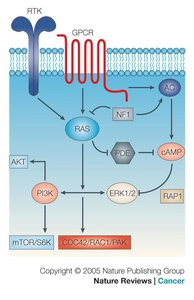
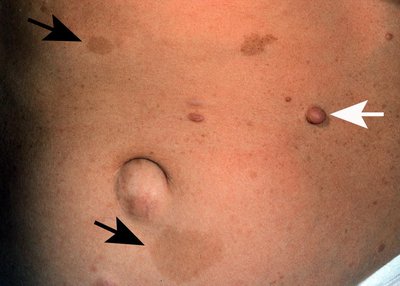
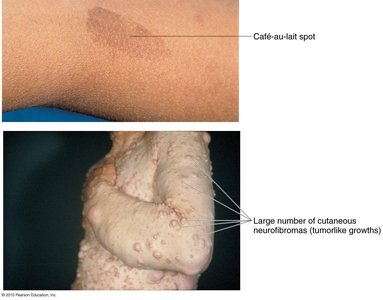
Neurofibromatosis Type 1 is an autosomal dominant disease with variable expressivity, characterized by benign neurofibromas and café-au-lait spots. Mutations in the NF1 gene affect neurofibromin, which regulates cell proliferation.
Position Effect and Nutritional Effects
Position Effect
Position effect occurs when the location of a gene in the genome affects its expression, such as translocation of the white gene in Drosophila.
Nutritional Effects
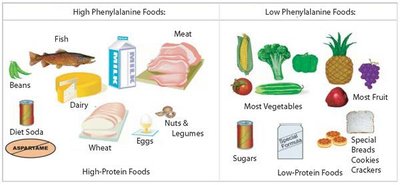
Mutations in metabolic enzymes can affect phenotypic expression, as seen in phenylketonuria (PKU) and galactosemia. Dietary management can reduce or eliminate the associated phenotype.
Modification of Mendelian Ratios: Sex-Linked and Sex-Influenced Traits
Dosage Compensation and X-Inactivation
Genes on the X chromosome exhibit unique inheritance patterns due to dosage differences between males and females. Dosage compensation balances gene expression, and in females, one X chromosome is randomly inactivated, forming a Barr body.

X-Linkage in Drosophila
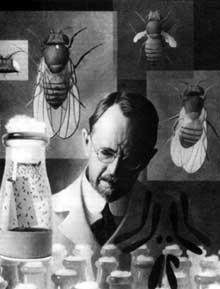
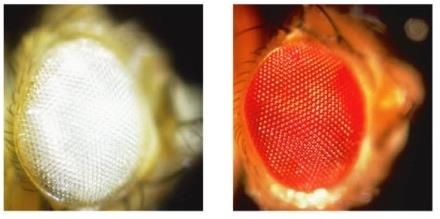
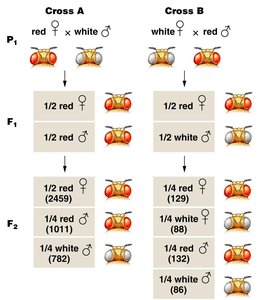
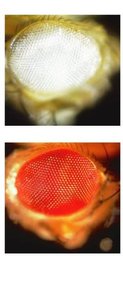
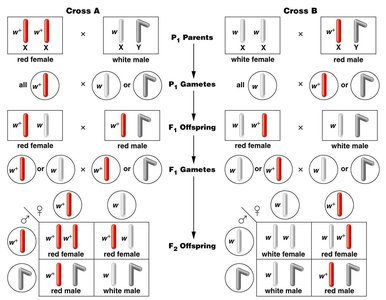
X-linked traits were first described in Drosophila by Thomas H. Morgan. Reciprocal crosses between white-eyed and red-eyed flies revealed different results, confirming X-linkage.
X-Linkage in Humans
X-linked traits are recognizable in pedigrees, with mothers passing traits to all sons but not daughters. Recessive X-linked disorders often occur exclusively in males if the disorder is lethal before reproductive age.
Sex-Limited and Sex-Influenced Inheritance
Sex-Limited Inheritance
Sex-limited inheritance occurs when a phenotype is expressed only in one sex, such as feather differences in domestic fowl. The gene is autosomal but modified by sex hormones.
Sex-Influenced Inheritance
Sex-influenced inheritance occurs when the expression of a phenotype is affected by the individual's sex, such as pattern baldness. Both sexes can display the phenotype, but expression depends on hormone composition.
Summary Table: Extensions of Mendelian Genetics
Concept | Description | Example |
|---|---|---|
Complete dominance | Heterozygote phenotype same as homozygous dominant | PP, Pp |
Incomplete dominance | Heterozygote phenotype intermediate | CRCR, CRCW, CWCW |
Codominance | Both phenotypes expressed in heterozygotes | MN blood group |
Multiple alleles | More than two alleles in population | ABO blood group |
Pleiotropy | One gene affects multiple traits | Sickle-cell disease, Marfan syndrome |
Epistasis | One gene affects expression of another | Mouse coat color, Bombay phenotype |
Polygenic inheritance | Trait affected by two or more genes | Human skin color |
