 Back
BackGene Interactions: Mechanisms and Phenotypic Outcomes
Study Guide - Smart Notes
 Tailored notes based on your materials, expanded with key definitions, examples, and context.
Gene Interactions and Phenotypic Expression
Overview of Gene Interactions
Gene interactions describe how different genes and their alleles combine to produce observable traits (phenotypes). While Mendel's single gene-single phenotype model is foundational, most traits are influenced by multiple genes, alleles, and environmental factors.
Multiple alleles: More than two alleles often exist for a gene in a population.
Dominance relationships: Dominance may not be complete; other patterns include incomplete dominance and codominance.
Polygenic traits: Traits may be influenced by several genes.
Non-genic factors: Environmental and developmental factors can affect gene expression.
Dominance and Allelic Functionality
Haplosufficiency vs. Haploinsufficiency
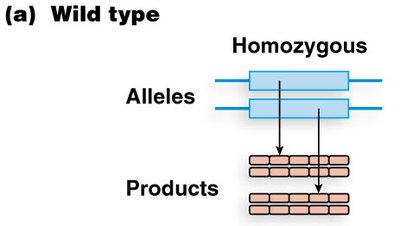
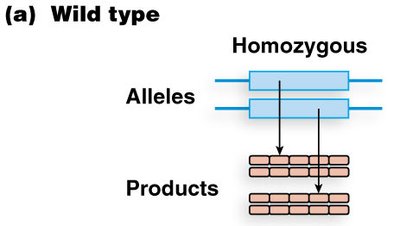
Dominance is determined by the functional products of alleles. The concepts of haplosufficiency and haploinsufficiency explain how many functional alleles are needed for a normal phenotype.
Haplosufficient: One functional allele is enough to produce the wild-type phenotype.
Haploinsufficient: Neither allele alone produces enough product for the phenotype; both are required.
Example: If the wild-type allele produces 50 units of enzyme and 40 units are needed for the phenotype, a single allele is haplosufficient.
Mutation Types and Their Effects
Mutations alter gene function and can be classified as loss-of-function or gain-of-function.
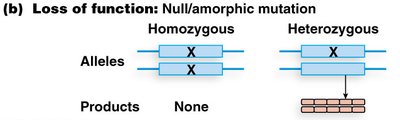
Loss-of-function: Decrease or loss of gene product activity.
Gain-of-function: New or increased activity of the gene product.
Loss-of-Function Mutations
Null/amorphic mutations: Complete loss of gene product.
Leaky/hypomorphic mutations: Reduced, but not eliminated, gene product.
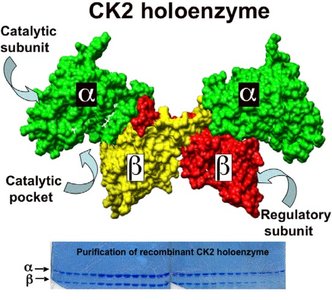
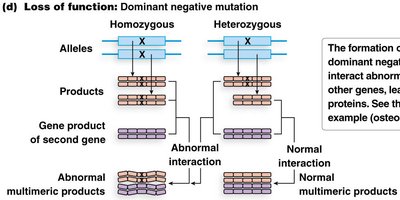
Dominant negative mutations: Mutant gene product interferes with normal function, often in multimeric proteins.
Gain-of-Function Mutations
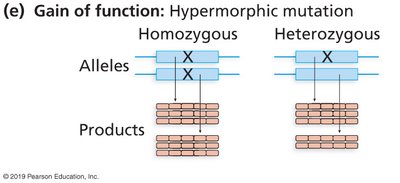
Hypermorphic mutations: Excessive expression of gene product.
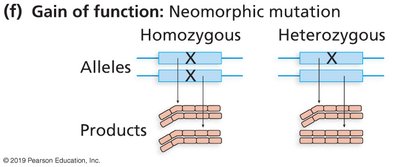
Neomorphic mutations: Novel activities not found in wild type.
Patterns of Dominance
Incomplete Dominance
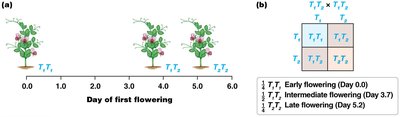
In incomplete dominance, heterozygotes display intermediate phenotypes between the two homozygotes. Both alleles contribute to the phenotype, resulting in blending effects.
Example: Flowering time in plants, where heterozygotes flower at an intermediate time.
Codominance
Codominance occurs when heterozygotes display a phenotype distinct from either homozygote, with both alleles fully expressed.
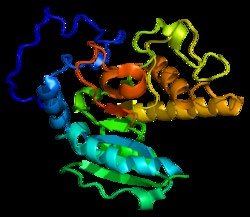
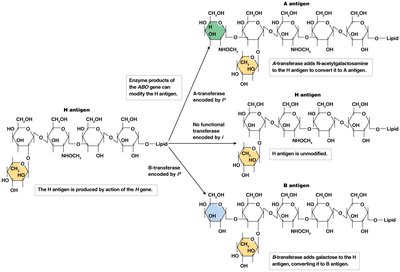
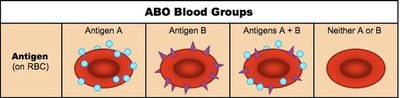
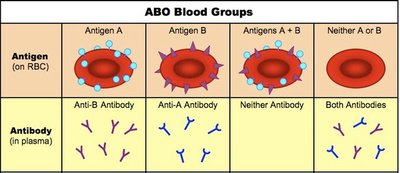
Example: ABO blood groups in humans.
Alleles: IA, IB, and i (null mutant).
Phenotypes: Type A (IAIA or IAi), Type B (IBIB or IBi), Type AB (IAIB), Type O (ii).
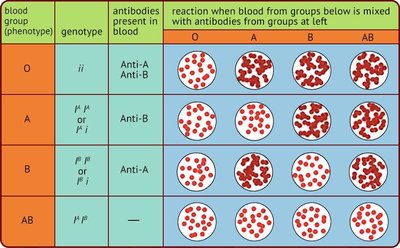
Allelic Series and Multiple Alleles
Allelic Series
Populations often contain more than two alleles for a gene, resulting in an allelic series with a hierarchy of dominance.
Example: Mammalian coat color determined by the C gene, with multiple alleles (C, cch, ch, c).
Types: Wild-type (C), hypomorphic (cch, ch), amorphic (c).
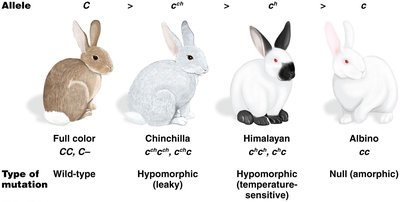
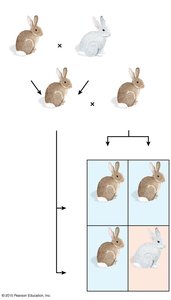
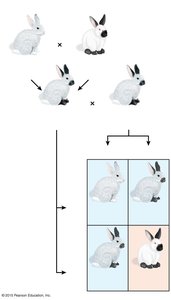
Lethal Alleles
Lethal Alleles and Segregation Distortion
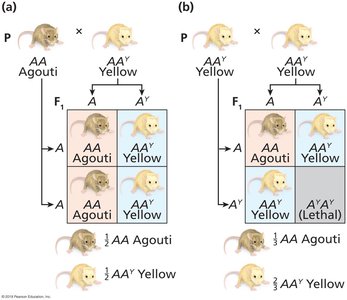
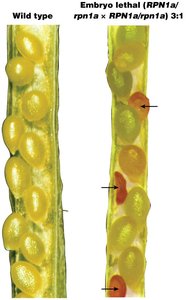
Lethal alleles are mutations that prevent development, often detected by distorted segregation ratios.
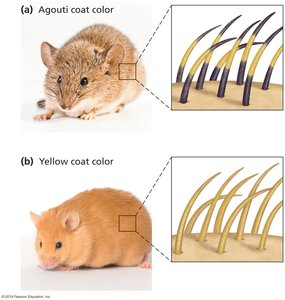
Example: Agouti coat color in mice, where the AY allele is lethal in homozygotes.
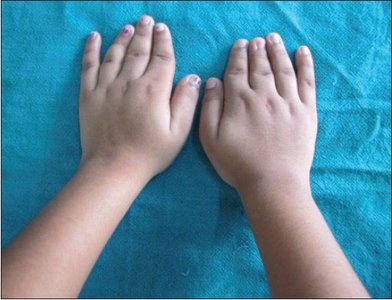
Example: Brachydactyly in humans, lethal in homozygotes.
Example: Lethal alleles in plants, such as the RPN1a gene.
Sex-Limited and Sex-Influenced Traits
Sex-Limited Expression
Some genes are present in both sexes but only expressed in one due to hormonal regulation.
Examples: Breast development in mammals, horns in male hoofed mammals.
Sex-Influenced Expression
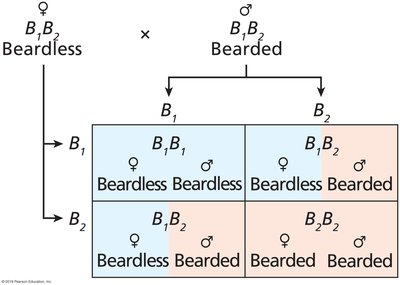
Phenotype is influenced by sex, but not limited to one sex.
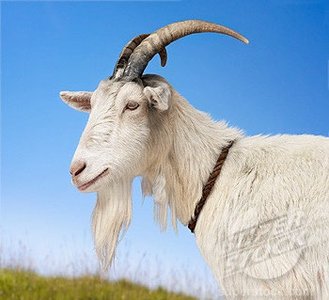
Example: Bearding in goats, where dominance relationships differ between males and females.
Delayed Age of Onset, Penetrance, and Expressivity
Delayed Age of Onset
Some alleles cause phenotypes that appear only after reproduction, allowing them to persist in populations.
Example: Huntington disease, dominant allele with symptoms appearing in adulthood.
Penetrance
Penetrance is the proportion of individuals with a genotype who express the expected phenotype.
Complete penetrance: All carriers show the phenotype.
Incomplete penetrance: Not all carriers show the phenotype.
Example: Polydactyly, autosomal dominant with incomplete penetrance.
Variable Expressivity
Variable expressivity refers to differences in phenotype among individuals with the same genotype.
Example: Waardenburg syndrome, autosomal dominant with variable features.
Gene-Environment Interactions
Environmental Effects on Gene Expression
Environmental factors can modify gene expression and phenotypic outcomes.
Example: Tall vs. short plants, flowering time, Himalayan rabbits (temperature-sensitive coat color).
Example: Phenylketonuria (PKU), where dietary restriction prevents disease symptoms.
Pleiotropy
Pleiotropy
Pleiotropy occurs when a single gene affects multiple, seemingly unrelated phenotypic traits.
Example: Mendel's purple flowers and gray seeds, sickle cell disease.
One Gene-One Enzyme Hypothesis and Genetic Dissection
One Gene-One Enzyme Hypothesis
Each gene produces an enzyme with a specific role in a biosynthetic pathway. Mutations in these genes disrupt the pathway and produce mutant phenotypes.
Prototroph: Wild-type organism.
Auxotroph: Mutant organism requiring supplementation.
Genetic Dissection
Genetic dissection is used to identify genes responsible for steps in a pathway by analyzing mutants and their requirements.
Example: Methionine synthesis pathway in Neurospora crassa, with mutants accumulating different precursors.
Epistasis and Gene Interaction Ratios
Epistasis
Epistasis occurs when an allele of one gene interferes with the expression of alleles of another gene, resulting in altered phenotypic ratios.
Null hypothesis: No epistasis yields a 9:3:3:1 ratio in dihybrid crosses.
Epistatic interactions: Deviations from the 9:3:3:1 ratio.
Types of Epistasis
Complementary gene interaction: Both genes must be functional for the phenotype.
Duplicate gene action: Two genes do the same job; redundancy.
Dominant gene interaction: Two dominant alleles have similar effects separately, but a different effect together.
Recessive epistasis: Recessive alleles of one gene mask the phenotype of another.
Dominant epistasis: Dominant alleles of one gene mask the phenotype of another.
Dominant suppression: Dominant allele of one gene suppresses the effect of another.
Complementation Analysis
Complementation Analysis
Complementation analysis determines whether mutations with similar phenotypes are in the same gene or different genes by crossing organisms and observing offspring phenotypes.
Same gene: All offspring show mutant phenotype.
Different genes: Offspring show wild-type phenotype due to complementation.
Summary
Gene interactions are complex and involve multiple mechanisms, including dominance, allelic series, lethal alleles, sex-limited and sex-influenced traits, delayed onset, penetrance, expressivity, gene-environment interactions, pleiotropy, and epistasis. Understanding these concepts is essential for interpreting genetic inheritance and phenotypic variation.
