 Back
BackGenetic Variation, Evolution, and Evidence for Evolution: A Genetics Study Guide
Study Guide - Smart Notes
 Tailored notes based on your materials, expanded with key definitions, examples, and context.
Genetic Variation
What Causes Genetic Variation?
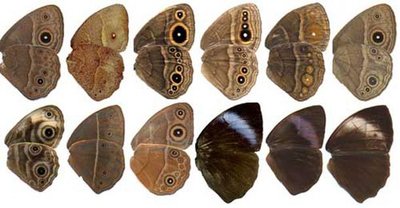
Genetic variation is the foundation of evolutionary change and is essential for the adaptation and survival of populations. It arises primarily through mutations, which are changes in the genetic material (DNA) of an organism.
Mutations: These are changes in the DNA sequence that can have immediate effects on individuals and, if heritable, can influence future generations.
Types of Mutations:
Neutral Mutations: Do not affect survival or reproduction; not selected by natural selection (e.g., receding hairline, webbed toes).
Harmful Mutations: Reduce reproductive success and are selected against (e.g., cystic fibrosis, Huntington's disease).
Beneficial Mutations: Increase reproductive success, are favored by natural selection, and accumulate over time (e.g., sickle cell anemia carrier, lactose tolerance).
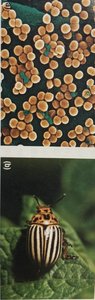
Consequences of Mutations: Can lead to significant changes, such as antibiotic resistance in bacteria, pesticide resistance in insects, and rapid evolution in viruses like influenza.
The Modern Evolutionary Synthesis
Gene Pool and Evolution
The modern theory of evolution integrates genetics with Darwinian natural selection. Evolution is defined as changes in the gene pool—the total collection of alleles in a population—over time. Variation in traits arises from different combinations of inherited alleles.
Artificial Selection and Selective Breeding
Domestication and Artificial Selection
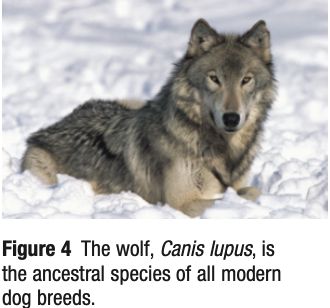
Artificial selection is the process by which humans breed plants and animals for particular traits. This process has led to the domestication of species, such as the transformation of wolves (Canis lupus) into modern dog breeds.
Procedure:
Choose a species that can be bred in captivity.
Breed a large number of individuals.
Select individuals with desirable traits.
Breed only those individuals.
Repeat over many generations.
Mass-produce successful individuals by cloning if necessary.
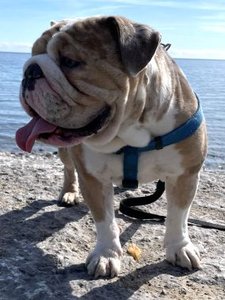
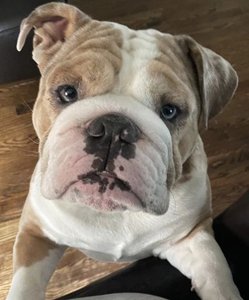
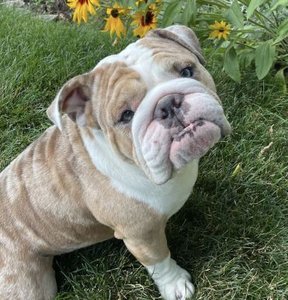
Consequences: Can produce traits far beyond the original population, but may reduce genetic diversity and link beneficial traits with detrimental alleles (e.g., respiratory problems in English bulldogs).
Limitations: Only existing traits can be selected unless genetic engineering is used; undesirable traits may accompany beneficial ones.
Evolutionary Thought: Historical Perspectives
Early Ideas and the Evolution of an Idea
Historically, species were thought to be immutable. Early scientists like Buffon, Linnaeus, and Erasmus Darwin proposed that life changes over time, but lacked mechanisms for how this occurred.
Lamarck's Principles
Use and Disuse: Structures used become stronger; unused structures weaken.
Inheritance of Acquired Characters: Traits acquired during an organism's life are passed to offspring (now known to be incorrect).
Although flawed, Lamarck's ideas contributed to the foundation of evolutionary theory by emphasizing adaptation and change over generations.
Fossil Evidence and Patterns of Change
Fossil Formation and Interpretation
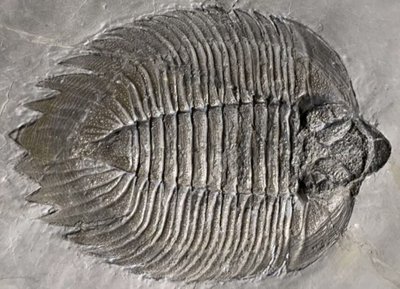
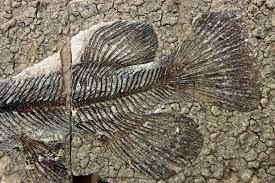
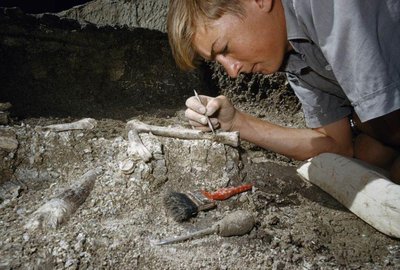
Fossils are the preserved remains or impressions of ancient organisms, formed under specific conditions such as rapid burial and low oxygen. Fossil records reveal patterns of increasing complexity over time and the existence of extinct species.
Theories of Geological Change
Catastrophism (Cuvier): Species replaced after catastrophic events; does not explain increasing complexity.
Uniformitarianism (Lyell): Geological change is slow and uniform; Earth is very old, allowing time for evolution.
Evidence for Evolution
Sources of Evidence
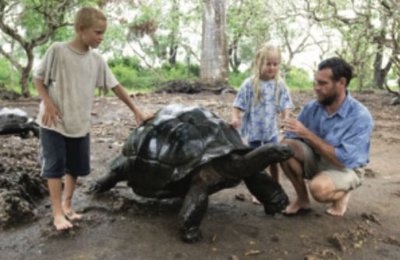
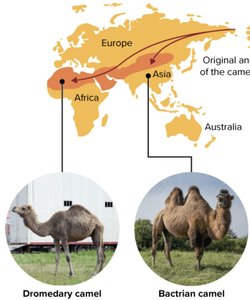
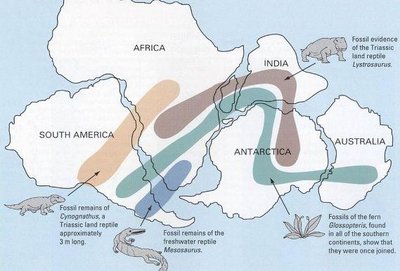
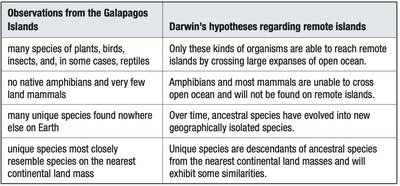
Biogeography: Study of the distribution of species across the globe. Closely related species are found in geographically close areas; remote islands have unique species that resemble those on the nearest continent.
Fossil Record: Shows progression and extinction of species over time.
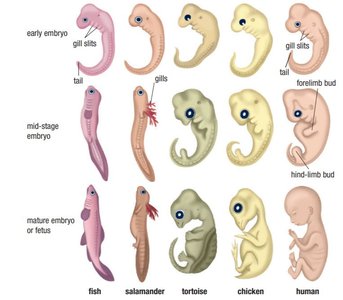
Embryology: Early embryos of vertebrates share common features, indicating common ancestry.
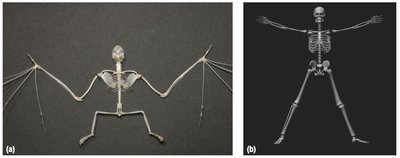
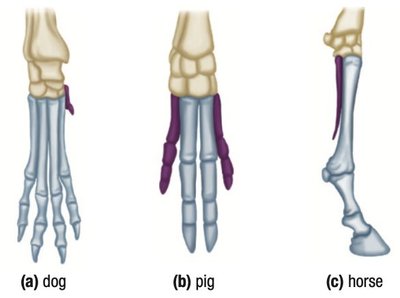
Anatomy: Homologous structures (similar origin, different function) and vestigial features (reduced or non-functional structures) provide evidence for evolution.
DNA: Genetic similarities and pseudogenes (non-functional genes) support evolutionary relationships.
Homologous and Analogous Features
Homologous Features: Similar structure and origin, different function (e.g., bat wing and human arm).
Analogous Features: Similar function, different origin (e.g., wings of insects and birds).
Vestigial Features and Pseudogenes
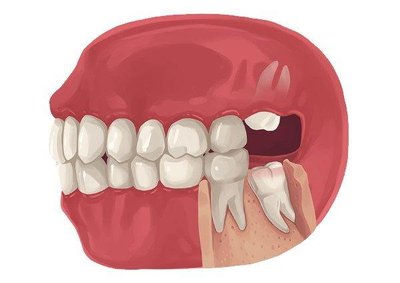
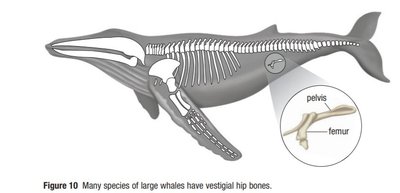
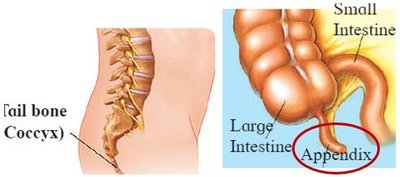
Vestigial Features: Structures that have lost their original function (e.g., human appendix, whale hip bones, wisdom teeth).
Pseudogenes: Genes that have lost their function due to mutations (e.g., GULO gene in humans for vitamin C synthesis).
Natural Selection and Darwin's Theory
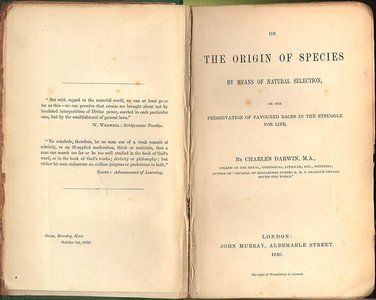
Darwin's Theory of Evolution by Natural Selection
Darwin proposed that species evolve through natural selection, where individuals with traits better suited to their environment have higher reproductive success. Over generations, these traits become more common in the population.
Organisms produce more offspring than can survive, leading to competition for resources.
Variation exists within populations, and much of it is heritable.
Individuals better suited to local conditions survive and reproduce more successfully.
Favorable traits become more common in subsequent generations.
Key Concepts
Adaptation: A characteristic that increases an organism's fitness in its environment.
Survival of the Fittest: Refers to reproductive success, not just physical strength.
Testability: Darwin's theory is scientific because it is testable and falsifiable; no evidence has been found to contradict it.
Example: Evolution of Large-Billed Finches
Variation in bill size allows some finches to exploit different food sources.
Environmental changes favor larger bills, leading to an increase in average bill size over generations.
Summary Table: Types of Evidence for Evolution
Type of Evidence | Description | Example |
|---|---|---|
Biogeography | Distribution of species across the globe | Galapagos finches, camels |
Fossil Record | Progression of life forms in rock layers | Trilobites, fish fossils |
Embryology | Similarities in early development | Gill slits in vertebrate embryos |
Anatomy | Homologous and vestigial structures | Bat wing/human arm, whale hip bones |
DNA | Genetic similarities and pseudogenes | GULO gene in humans |
Additional info: This guide integrates foundational genetics and evolutionary biology concepts, providing a comprehensive overview suitable for college-level genetics students.
