 Back
BackIntroduction to Genetics: Foundations, History, and Modern Applications
Study Guide - Smart Notes
 Tailored notes based on your materials, expanded with key definitions, examples, and context.
Introduction to Genetics
What is Genetics?
Genetics is the scientific study of heredity and variation in living organisms. It explores how biological information is stored, transmitted, translated, and expressed from one generation to the next. In the modern era, genetics is central to understanding life, evolution, and the molecular mechanisms underlying traits and diseases.
Definition: Genetics investigates the structure, function, and inheritance of genes—the fundamental units of heredity.
Scope: Genetics spans from molecular mechanisms (DNA, RNA, proteins) to the inheritance of traits in populations.
Applications: Genetics impacts medicine, agriculture, biotechnology, forensics, and evolutionary biology.
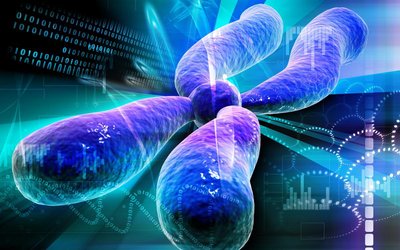
Branches of Genetics
Genetics is divided into several interrelated branches, each focusing on different aspects of heredity and variation:
Transmission Genetics: Studies how traits are passed from parents to offspring, often using Mendelian principles.
Molecular Genetics: Examines the structure and function of genes at a molecular level, including DNA replication, transcription, and translation.
Population Genetics: Investigates genetic variation within populations and how evolutionary forces (e.g., selection, drift) shape this variation.
Quantitative Genetics: Analyzes traits controlled by multiple genes and environmental factors, often using statistical methods.
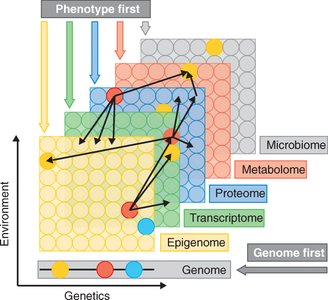
Genomics and 'Omics: Involves large-scale analysis of genomes, transcriptomes, proteomes, and other molecular datasets.
Biotechnology: Applies genetic knowledge to manipulate organisms for practical purposes, such as gene editing and cloning.
History of Genetics
Prehistory and Early Ideas
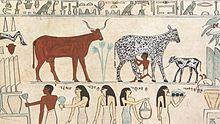
The understanding of heredity began in prehistory, with the domestication of plants and animals during the Neolithic Revolution (~10,000 years ago). Ancient civilizations practiced selective breeding, but lacked scientific explanations for inheritance.
Ancient Greek Philosophy
Greek philosophers proposed early theories of inheritance. Hippocrates suggested 'active humors' carried hereditary information, while Aristotle introduced the concept of 'vital heat.' These ideas, though incorrect, laid the groundwork for later scientific inquiry.
17th to 19th Century Developments
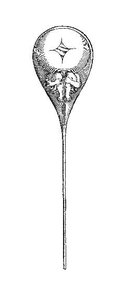
Theory of Epigenesis: Proposed that organisms develop from undifferentiated substances, refuting the earlier theory of preformation (the idea that organisms develop from miniature versions of themselves).
Cell Theory: Established that all living things are composed of cells, which are the basic units of life.
Disproof of Spontaneous Generation: Experiments showed that life does not arise spontaneously but from pre-existing life.
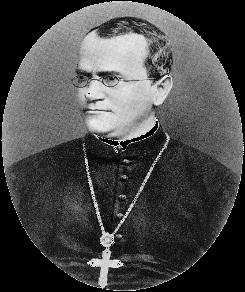
Mendel’s Postulates: Gregor Mendel’s experiments with pea plants established the laws of inheritance, forming the foundation of classical genetics.
Darwin’s Theory of Natural Selection: Charles Darwin described evolution by natural selection, though he was unaware of Mendel’s work.
Chromosomal Theory of Inheritance
Key Concepts
The chromosomal theory of inheritance connects Mendelian genetics with cytology (the study of cells):
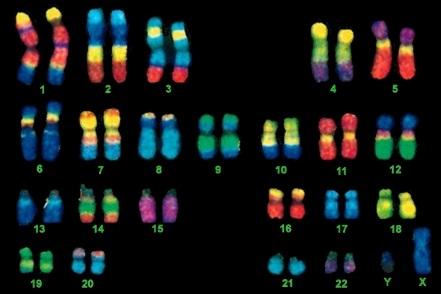
Diploid Number (2n): Each species has a characteristic number of chromosomes, typically in pairs (homologous chromosomes).
Meiosis: Reduces chromosome number by half, producing haploid (n) gametes.
Chromosome Behavior: The movement of chromosomes during meiosis and mitosis explains Mendel’s laws of segregation and independent assortment.
Genetic Variation
Sources and Consequences
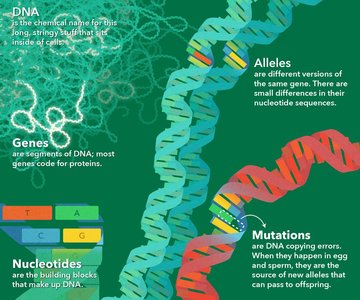
Mutation: Changes in DNA sequence create new versions of genes, called alleles.
Alleles: Different alleles can produce different phenotypes (observable traits).
Genotype: The combination of alleles at a specific locus constitutes an organism’s genotype.
The Chemical Nature of Heredity
DNA and the Central Dogma
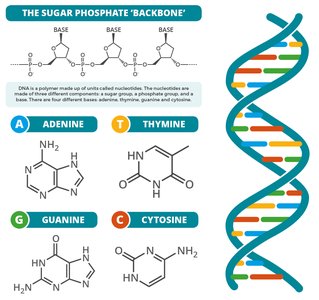
Genetic information is encoded in DNA, which is replicated and expressed through the processes of transcription and translation. The central dogma of molecular biology describes the flow of genetic information:
Replication: DNA makes exact copies of itself, ensuring genetic continuity.
Transcription: DNA is transcribed into RNA.
Translation: RNA is translated into proteins, which determine phenotypes.
Mutations: Errors in replication can introduce new genetic variation.
Modern Evolutionary Synthesis
Integration of Mendelian and Darwinian Principles
The modern evolutionary synthesis unified Mendelian genetics with Darwinian evolution, forming the basis of population and quantitative genetics. This synthesis underpins much of modern biological research.
Rediscovery of Mendel’s Work: Early 20th-century scientists recognized the importance of Mendel’s laws.
Population Genetics: Studies how allele frequencies change under evolutionary forces.
Quantitative Genetics: Explains traits influenced by multiple genes and environmental factors.
Genetics Today
Cloning, Gene Transfer, and Gene Editing
Modern genetics employs advanced technologies such as cloning, gene transfer, and gene editing (e.g., CRISPR-Cas9) to manipulate genetic material for research and practical applications.
The 'Omics Revolution
High-throughput technologies enable the study of entire genomes (genomics), transcriptomes (transcriptomics), proteomes (proteomics), and more, revolutionizing our understanding of biology.
Approaches in Genetic Research
Forward Genetics: Starts with a known phenotype and seeks to identify the underlying gene(s).
Reverse Genetics: Begins with a known gene and investigates the resulting phenotype after manipulation.
Model Organisms: Commonly used species (e.g., Drosophila, C. elegans, Mus musculus, Arabidopsis, yeast) facilitate genetic studies due to their well-characterized genomes and ease of manipulation.
Impact on Society
Genetics has profound implications for food security, medicine, environmental sustainability, forensics, biotechnology, and raises important ethical, legal, and social issues. We live in the genetics era, where understanding heredity is central to biology and society.
