 Back
BackMeiosis: Mechanisms and Stages of Chromosome Heredity
Study Guide - Smart Notes
 Tailored notes based on your materials, expanded with key definitions, examples, and context.
Meiosis: The Basis of Sexual Reproduction
Overview of Meiosis
Meiosis is a specialized form of cell division that occurs in germ line cells, resulting in the production of four genetically distinct haploid gametes or spores from a single diploid cell. This process is fundamental to sexual reproduction and ensures genetic diversity through the reduction of chromosome number and recombination events.
Purpose: To reduce the genetic material by half, producing haploid cells from diploid precursors.
Location: Occurs in germ-line cells (e.g., spermatocytes and oocytes in animals).
Outcome: Four haploid gametes, each with one chromosome from each homologous pair.
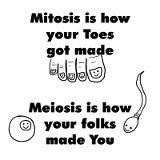
Phases of Meiosis
General Structure
Meiosis consists of two successive nuclear divisions: Meiosis I (reductional division) and Meiosis II (equational division). Each division is further subdivided into prophase, metaphase, anaphase, and telophase stages.
Meiosis I: Homologous chromosomes separate, reducing the chromosome number by half.
Meiosis II: Sister chromatids separate, similar to mitosis, resulting in four haploid cells.
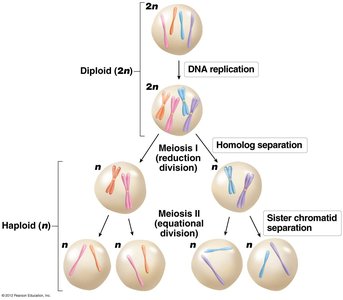
Meiosis I: Reductional Division
Meiosis I is characterized by the separation of homologous chromosomes and is subdivided into four main stages. The hallmark events are homologous chromosome pairing, crossing over, and segregation.
Prophase I: Substages and Key Events
Prophase I is the most complex stage of meiosis and is further divided into five substages:
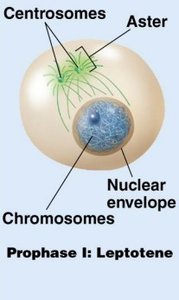
Leptotene: Chromosome condensation begins; chromosomes are still diffuse. Centrosomes start migrating to opposite poles.
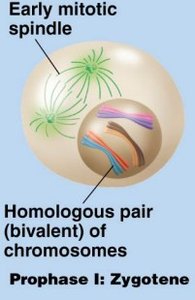
Zygotene: Chromosome condensation continues; homologous chromosomes undergo synapsis, forming bivalents. The synaptonemal complex forms between homologs.
Pachytene: Chromosome condensation is nearly complete; homologs are fully synapsed as tetrads. Crossing over (genetic recombination) occurs between non-sister chromatids.
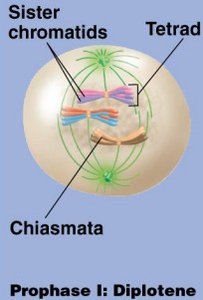
Diplotene: Crossing over is complete; the synaptonemal complex dissolves. Tetrads are visible, and chiasmata (sites of crossover) are apparent.
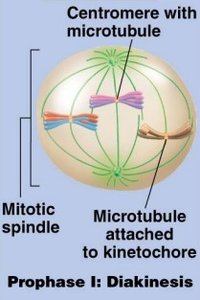
Diakinesis: Chromosomes are maximally condensed; nuclear envelope breaks down, and kinetochores attach to spindle microtubules.
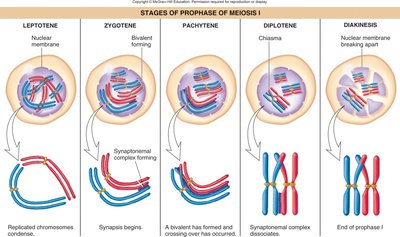
Visualizing Prophase I Substages
Leptotene:
Zygotene:
Diplotene:
Diakinesis:
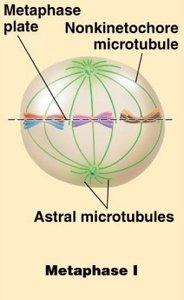
Metaphase I
Homologous chromosomes (tetrads) align on opposite sides of the metaphase plate. Chiasmata are resolved, completing crossing over. Kinetochore microtubules attach to each homolog from opposite poles.
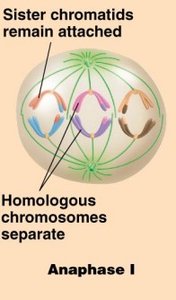
Anaphase I
Homologous chromosomes are separated and pulled to opposite poles. Sister chromatids remain attached at their centromeres due to cohesin proteins.
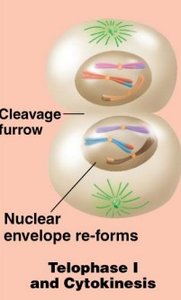
Telophase I and Cytokinesis
Nuclear membranes reform around the separated haploid sets of chromosomes. Cytokinesis divides the cytoplasm, resulting in two haploid cells. This division is called reductional because the chromosome number is halved.
Meiosis II: Equational Division
Meiosis II resembles mitosis, where sister chromatids are separated, resulting in four haploid cells from the two produced in Meiosis I.
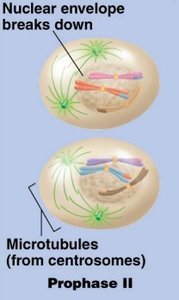
Prophase II: Nuclear envelope breaks down, centrosomes duplicate, and microtubules form.
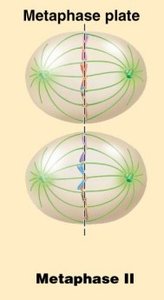
Metaphase II: Chromosomes align along the metaphase plate, attached to spindle fibers.
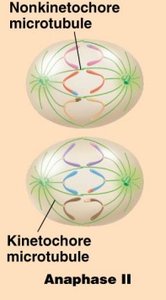
Anaphase II: Sister chromatids are separated and move to opposite poles.
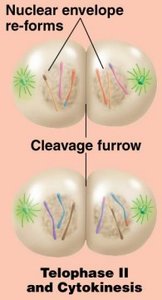
Telophase II and Cytokinesis: Chromosomes decondense, nuclear envelopes reform, and cytokinesis produces four haploid cells.
Comparison of Mitosis and Meiosis
Key Differences and Similarities
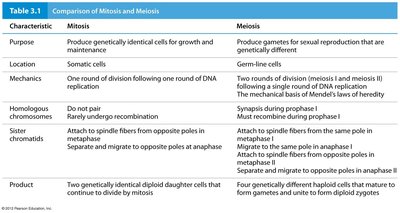
Mitosis and meiosis are both processes of cell division, but they serve different purposes and have distinct outcomes. The following tables summarize their main differences:
Characteristic | Mitosis | Meiosis |
|---|---|---|
Purpose | Produce genetically identical cells for growth and maintenance | Produce gametes for sexual reproduction that are genetically different |
Location | Somatic cells | Germ-line cells |
Mechanics | One round of division following one round of DNA replication | Two rounds of division (meiosis I and II) following a single round of DNA replication |
Homologous chromosomes | Do not pair | Synapsis during prophase I |
Sister chromatids | Attach to spindle fibers from opposite poles in metaphase; separate at anaphase | Attach to spindle fibers from the same pole in metaphase I; separate at anaphase II |
Product | Two genetically identical diploid daughter cells | Four genetically different haploid cells |
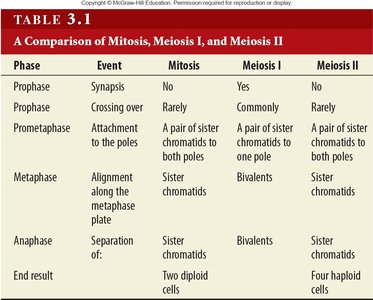
Phase | Event | Mitosis | Meiosis I | Meiosis II |
|---|---|---|---|---|
Prophase | Synapsis | No | Yes | No |
Prophase | Crossing over | Rarely | Commonly | Rarely |
Prometaphase | Attachment to poles | A pair of sister chromatids to both poles | A pair of sister chromatids to one pole | A pair of sister chromatids to both poles |
Metaphase | Alignment | Sister chromatids | Bivalents | Sister chromatids |
Anaphase | Separation of | Sister chromatids | Bivalents | Sister chromatids |
End result | Two diploid cells | Two haploid cells | Four haploid cells |
Key Terms and Concepts
Homologous Chromosomes: Chromosome pairs, one from each parent, that are similar in shape, size, and genetic content.
Sister Chromatids: Identical copies of a chromosome, connected by a centromere, formed during DNA replication.
Synapsis: The pairing of homologous chromosomes during prophase I of meiosis.
Chiasma (plural: Chiasmata): The site where crossing over occurs between non-sister chromatids.
Synaptonemal Complex: Protein structure that forms between homologous chromosomes during synapsis, facilitating recombination.
Tetrad: Structure containing four chromatids (two homologous chromosomes, each with two sister chromatids) visible during prophase I.
Cohesin: Protein complex that holds sister chromatids together until anaphase.
Summary of Meiosis
Meiosis ensures genetic diversity through independent assortment and crossing over.
It is essential for the formation of gametes and the maintenance of chromosome number across generations.
Errors in meiosis can lead to aneuploidy and genetic disorders.
