 Back
BackSex Determination and Sex Chromosomes: Mechanisms and Variations
Study Guide - Smart Notes
 Tailored notes based on your materials, expanded with key definitions, examples, and context.
Sex Determination and Sex Chromosomes
Introduction to Sex Determination
Sex determination refers to the biological system that establishes the development of sexual characteristics in an organism. In most diploid eukaryotes, sexual reproduction is the primary mechanism for generating genetic diversity. Sexual differentiation, which can be subtle or overt, is essential for the formation of gametes and successful fertilization. In many species, sex is determined by specific chromosomes known as sex chromosomes, but the underlying basis is ultimately genetic, involving both sex chromosomes and autosomes.
Mechanisms of Sex Determination
Heteromorphic Chromosomes: Chromosomes that differ in size or shape between the sexes, such as the XY pair in mammals, are called heteromorphic chromosomes and are typically involved in sex determination.
Homogametic and Heterogametic Sex: The sex that produces identical gametes (e.g., XX females in humans) is termed homogametic, while the sex producing different gametes (e.g., XY males in humans) is heterogametic.
Sex Chromosome Systems: Various systems exist, including XX/XY (humans, Drosophila), XX/XO (some insects), and ZZ/ZW (birds, some reptiles and fish).
Historical Discoveries in Sex Chromosome Research
Early studies by Henking, McClung, and Wilson established the link between specific chromosomes and sex determination. For example, in the butterfly Protenor, the presence or absence of an X chromosome in sperm determines the sex of the offspring. In the milkweed bug Lygaeus turcicus, the presence of X and Y chromosomes in males and two X chromosomes in females leads to a 1:1 sex ratio.
Heterogametic Sex: The sex that produces two types of gametes with respect to sex chromosomes (e.g., XY males in humans).
Homogametic Sex: The sex that produces only one type of gamete (e.g., XX females in humans).
Human Sex Chromosome Aneuploidies
Abnormal numbers of sex chromosomes can lead to distinctive syndromes:
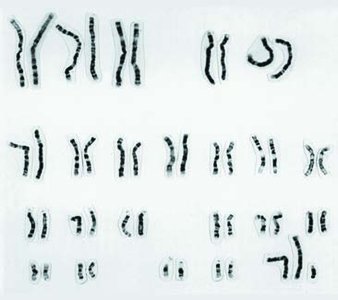
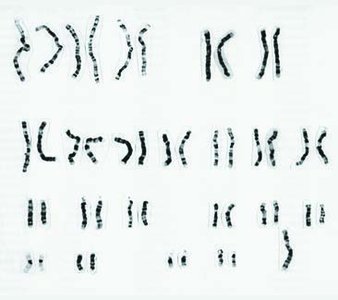
Klinefelter Syndrome (47,XXY): Individuals are phenotypically male but have some female characteristics, such as gynecomastia and reduced fertility.
Turner Syndrome (45,X): Individuals are phenotypically female but have underdeveloped ovaries, short stature, and other physical abnormalities.
47,XXX Syndrome: Females with three X chromosomes may be phenotypically normal or show mild developmental delays.
47,XYY Condition: Males with an extra Y chromosome are often taller than average and may have learning difficulties, but most lead normal lives.
Syndrome | Karyotype | Sex Chromosome Composition | Phenotype |
|---|---|---|---|
Klinefelter | 47,XXY | XXY | Male, some female traits, infertility |
Turner | 45,X | X | Female, short stature, infertility |
Triple X | 47,XXX | XXX | Female, often normal |
XYY | 47,XYY | XYY | Male, tall, variable traits |
The Y Chromosome and Maleness in Humans
The presence of the Y chromosome, specifically the SRY (Sex-determining Region Y) gene, is responsible for initiating male development. The SRY gene encodes the testis-determining factor (TDF), which triggers the formation of testes from undifferentiated gonadal tissue. The Y chromosome contains pseudoautosomal regions (PARs) that pair with the X chromosome during meiosis, but the majority of the Y chromosome is male-specific (MSY).
SRY Gene: Critical for male sex determination; its presence leads to testis development.
MSY Region: Contains genes essential for male fertility and development.

Sexual Differentiation in Humans
During early embryonic development, humans are initially sexually indifferent. The presence of the SRY gene on the Y chromosome initiates testis development, which then produces hormones that drive male differentiation. In the absence of SRY, ovarian development occurs, and female differentiation proceeds.
Sex Ratios in Humans
The primary sex ratio (at conception) and secondary sex ratio (at birth) are used to assess the proportion of males to females. Although theory predicts a 1:1 ratio, more males are typically born than females, likely due to differential mortality during development.
Dosage Compensation and X-Inactivation
Females have two X chromosomes, while males have one. To balance gene expression, one X chromosome in each female somatic cell is inactivated, forming a Barr body. This process, known as dosage compensation, ensures equal expression of X-linked genes in both sexes.
Barr Body: A condensed, inactivated X chromosome visible in interphase cells of females.
Lyon Hypothesis: X-inactivation occurs randomly in early embryonic development, and all descendant cells maintain the same inactive X.
N-1 Rule: The number of Barr bodies is always one less than the total number of X chromosomes (N-1).
Karyotype | Number of X Chromosomes | Barr Bodies |
|---|---|---|
46,XX | 2 | 1 |
47,XXX | 3 | 2 |
47,XXY | 2 | 1 |
45,X | 1 | 0 |

Mosaicism and X-Inactivation
Because X-inactivation is random, females heterozygous for X-linked genes are mosaics, with different cells expressing different alleles. This phenomenon is visible in the coat color patterns of calico and tortoiseshell cats, where patches of fur express different X-linked color alleles.


Mechanism of X-Inactivation
The X inactivation center (Xic) on the X chromosome contains the XIST gene, which produces a noncoding RNA that coats and inactivates the X chromosome from which it is transcribed. This process is an example of epigenetic regulation, where gene expression is modified without altering the DNA sequence.
Sex Determination in Drosophila and C. elegans
Drosophila melanogaster
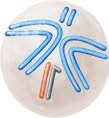
In fruit flies, sex is determined by the ratio of X chromosomes to sets of autosomes (X:A ratio), not by the presence of a Y chromosome. A ratio of 1.0 (e.g., XX:2A) produces females, while a ratio of 0.5 (e.g., XY:2A) produces males. The Y chromosome is required for male fertility but not for sex determination.
Chromosome Composition | X:A Ratio | Sex |
|---|---|---|
XX:2A | 1.0 | Female |
XY:2A | 0.5 | Male |
3X:2A | 1.5 | Metafemale |
X:2A | 0.5 | Male |
2X:3A | 0.67 | Intersex |
Caenorhabditis elegans
In the nematode worm C. elegans, sex is also determined by the X:A ratio. Hermaphrodites have two X chromosomes (XX), while males have one (XO). There is no Y chromosome in this species.
Environmental Sex Determination in Reptiles
In some reptiles, sex is determined not by chromosomes but by the temperature at which eggs are incubated during a critical period of embryonic development. This is known as temperature-dependent sex determination (TSD). Different species exhibit distinct patterns, with pivotal temperatures producing either males or females.

Case I: Low temperatures yield females, high temperatures yield males.
Case II: Low temperatures yield males, high temperatures yield females.
Case III: Both low and high temperatures yield females, intermediate temperatures yield males.
The enzyme aromatase, which converts androgens to estrogens, is thought to play a key role in TSD, with its activity regulated by temperature.
Summary Table: Modes of Sex Determination
Organism | System | Sex Chromosomes | Key Determinant |
|---|---|---|---|
Humans | XX/XY | XX (female), XY (male) | SRY gene on Y chromosome |
Drosophila | X:A Ratio | XX (female), XY (male) | X:A ratio |
C. elegans | X:A Ratio | XX (hermaphrodite), XO (male) | X:A ratio |
Birds | ZZ/ZW | ZZ (male), ZW (female) | DMRT1 gene on Z chromosome |
Reptiles | TSD | Varies | Incubation temperature |
Key Terms and Concepts
Sex Chromosomes: Chromosomes involved in determining the sex of an organism (e.g., X and Y in humans).
Autosomes: Chromosomes not involved in sex determination.
Dosage Compensation: Mechanism that balances the expression of X-linked genes between males and females.
Barr Body: Inactivated X chromosome in female somatic cells.
Lyon Hypothesis: Random inactivation of one X chromosome in female mammals.
SRY Gene: Sex-determining region on the Y chromosome responsible for male development in humans.
X:A Ratio: Ratio of X chromosomes to sets of autosomes, critical in sex determination in Drosophila and C. elegans.
Temperature-Dependent Sex Determination (TSD): Environmental mechanism of sex determination in some reptiles.
