 Back
BackSex Determination and Sex Chromosomes: Principles, Mechanisms, and Human Disorders
Study Guide - Smart Notes
 Tailored notes based on your materials, expanded with key definitions, examples, and context.
Sex Determination and Sex Chromosomes
The Chromosome Theory of Inheritance and Sex Chromosomes
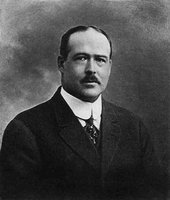
The chromosome theory of inheritance explains how the behavior of chromosomes during meiosis accounts for Mendelian patterns of inheritance. This theory was developed through the pioneering work of Walter Sutton and Theodor Boveri, who demonstrated that chromosomes are the carriers of genetic material and that their segregation and independent assortment during gamete formation underlie the inheritance of traits.

Chromosomes contain genes, the units of heredity.
Chromosomes are replicated and passed from parent to offspring.
Most eukaryotic cells are diploid, containing homologous pairs of chromosomes.
During meiosis, homologous chromosomes segregate into different gametes, and nonhomologous chromosomes assort independently.
Each parent contributes one set of chromosomes, and these sets are functionally equivalent, each carrying a full complement of genes.
Morgan’s Cross with White-Eyed Mutation in Drosophila
Thomas Hunt Morgan's experiments with Drosophila melanogaster (fruit flies) provided the first evidence that specific genes are located on specific chromosomes. He studied a mutation causing white eyes and discovered that the inheritance pattern was linked to the sex chromosomes.
The first cross yielded no white-eyed females in the F2 generation, indicating that the gene for eye color is located on the X chromosome.
Punnett squares can be used to predict the outcomes of such crosses, confirming the absence of white-eyed females in the F2 generation.
Testcrosses further supported the X-linked inheritance pattern, as both red- and white-eyed males and females appeared in equal numbers.
Sex Determination Mechanisms
Sex determination refers to the biological system that determines the development of sexual characteristics in an organism. In many animals, including humans, chromosomes play a central role in this process.
Humans have 46 chromosomes: 44 autosomes and 2 sex chromosomes.
Males are heterogametic (XY), while females are homogametic (XX).
The presence of the Y chromosome, specifically the SRY gene, determines maleness.
Human Sex Determination: The X-Y System
In mammals, the X-Y system determines sex. Males have one X and one Y chromosome, while females have two X chromosomes. The Y chromosome carries the SRY gene, which triggers male development.
Sex Chromosome Aneuploidies and Syndromes
Abnormal numbers of sex chromosomes can lead to various syndromes with distinct phenotypic effects.
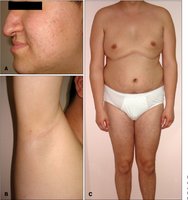
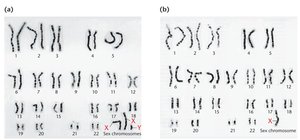
Klinefelter Syndrome (47,XXY)
Individuals have an extra X chromosome (XXY).
Characteristics include tall stature, long limbs, rudimentary testes, infertility, and sometimes breast development.
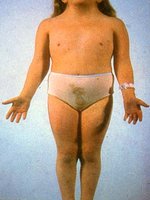
Turner Syndrome (45,X)
Individuals have only one X chromosome (45,X).
Features include short stature, webbed neck, underdeveloped breasts, broad chest, and nonfunctional ovaries.
Hormone therapy is often required for puberty development.
Other Sex Chromosome Aneuploidies
47,XXX (Triple X Syndrome): Three X chromosomes; most women are phenotypically normal, but some may have underdeveloped secondary sex characteristics, sterility, or intellectual disability.
48,XXXX (Tetra-X) and 49,XXXXX (Penta-X): Rare, with more severe symptoms.
47,XYY: Males are typically tall and may have subnormal intelligence or personality disorders.
Sexual Differentiation in Humans
The Y chromosome contains genes essential for male development. The SRY gene encodes the testis-determining factor (TDF), which initiates the formation of testes from the bipotential gonadal ridge during embryogenesis. In the absence of a Y chromosome, the gonadal ridge develops into ovaries, and the Müllerian ducts form female reproductive structures.
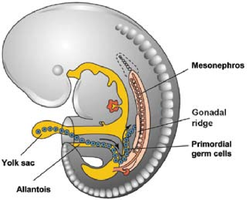
The Y chromosome has about 75 genes; the X chromosome has 900–1400 genes.
Pseudoautosomal regions (PARs) on the Y chromosome allow pairing and recombination with the X chromosome during meiosis.
The SRY gene is the primary determinant of male development.
Dosage Compensation and Barr Bodies
Because females have two X chromosomes, they have the potential to produce twice as much gene product from X-linked genes as males. Dosage compensation mechanisms equalize gene expression between sexes. In mammals, one X chromosome in females becomes highly condensed and inactive, forming a Barr body (sex chromatin), which lies against the nuclear envelope in interphase cells.

The inactivation of the X chromosome is random in each cell, as described by the Lyon hypothesis.
All descendant cells maintain the same X inactivation pattern.
Calico cats are a classic example, displaying patches of different fur colors due to X inactivation.
Alternative Sex Determination Systems
Not all organisms use the X-Y system. Some insects use the X-0 system, where males have a single X chromosome (X0) and females have two (XX). In Drosophila, sex is determined by the ratio of X chromosomes to sets of autosomes (X/A), not by the presence of a Y chromosome.
X-0 system: Males are X0, females are XX.
X/A ratio system: Sex is determined by the ratio of X chromosomes to autosome sets.
Solving X-Linked Genetic Problems: Example with Hemophilia
Hemophilia is a classic example of an X-linked recessive disorder. To solve inheritance problems:
Construct a pedigree based on the problem description.
Assign genotypes to each individual (e.g., XHXh for a carrier female, XHY for a normal male).
Calculate the probability of affected offspring using Punnett squares or probability rules.
Example: A normal woman whose father had hemophilia marries a normal man. What is the chance their first child will have hemophilia?
The woman must be a carrier (XHXh), the man is normal (XHY).
Each son has a 50% chance of having hemophilia; each daughter has a 0% chance (but a 50% chance of being a carrier).
Formula:
