

Pearson+ LogoPearson+ Logo
Ch. 18 - Genomics, Bioinformatics, and Proteomics
Klug - Essentials of Genetics 10th Edition
Klug10th EditionEssentials of GeneticsISBN: 9780135588789Not the one you use?Change textbook
Chapter 18, Problem 21

Researchers have compared candidate loci in humans and rats in search of loci in the human genome that are likely to contribute to the constellation of factors leading to hypertension [Stoll, M., et al. (2000). Genome Res. 10:473–482]. Through this research, they identified 26 chromosomal regions that they consider likely to contain hypertension genes. How can comparative genomics aid in the identification of genes responsible for such a complex human disease? The researchers state that comparisons of rat and human candidate loci to those in the mouse may help validate their studies. Why might this be so?

Verified step by step guidance
1
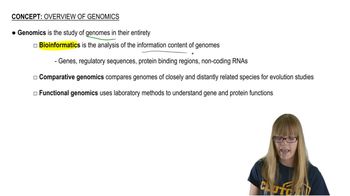
Understand the concept of comparative genomics: it involves comparing the genomes of different species to identify similarities and differences in gene sequences and chromosomal regions. This approach helps to pinpoint conserved genetic elements that may have important biological functions.
Recognize that hypertension is a complex disease likely influenced by multiple genes (polygenic) and environmental factors. Identifying candidate loci in humans can be challenging due to this complexity and genetic variability.
Use the rat genome as a model because rats share physiological and genetic similarities with humans, especially in traits related to hypertension. By comparing candidate loci between humans and rats, researchers can identify conserved regions that are more likely to contain genes influencing hypertension.
Incorporate the mouse genome into the comparison as an additional reference. If candidate loci are conserved across humans, rats, and mice, this cross-species conservation strengthens the evidence that these loci are functionally important and relevant to hypertension.
Summarize that comparative genomics aids gene identification by leveraging evolutionary conservation across species, which helps narrow down candidate genes and validate findings through multiple model organisms, increasing confidence in the results.

Verified video answer for a similar problem:

This video solution was recommended by our tutors as helpful for the problem above.
Video duration:
2m
Was this helpful?

Key Concepts

Here are the essential concepts you must grasp in order to answer the question correctly.

Comparative Genomics

Comparative genomics involves analyzing and comparing the genomes of different species to identify similarities and differences. This approach helps locate conserved genetic regions that may have important biological functions, such as genes linked to diseases. By comparing human and rat genomes, researchers can pinpoint candidate loci associated with hypertension that are evolutionarily conserved.
Recommended video:
Guided course
02:48
Genomics Overview

Candidate Loci and Complex Disease Genetics

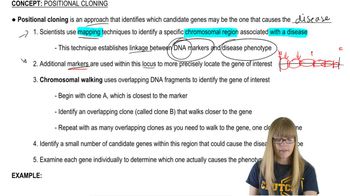
Candidate loci are specific chromosomal regions suspected to contain genes influencing a trait or disease. Complex diseases like hypertension involve multiple genes and environmental factors, making it challenging to identify causative genes. Studying candidate loci helps narrow down regions for further genetic and functional analysis to understand disease mechanisms.
Recommended video:
Guided course
07:
Positional Cloning

Use of Multiple Model Organisms for Validation

Using multiple model organisms, such as rats and mice, allows researchers to cross-validate findings by checking if candidate loci are conserved and functionally relevant across species. This strengthens evidence that these loci contribute to disease, as conserved genetic regions across species often indicate important biological roles, improving confidence in gene identification.
Recommended video:
Guided course
06:14
Multiple Cross Overs and Interference
Related Practice
Textbook Question

An interactive Web site for the Human Proteome Map (HPM) is available at http://www.humanproteomemap.org. Visit this site, and then answer the question.

How many proteins were identified in this project?

434
views
Textbook Question

An interactive Web site for the Human Proteome Map (HPM) is available at http://www.humanproteomemap.org. Visit this site, and then answer the question.

How many fetal tissues were analyzed?

485
views
Textbook Question

An interactive Web site for the Human Proteome Map (HPM) is available at http://www.humanproteomemap.org. Visit this site, and then answer the question.

Use the 'Query' tab and select the 'Gene family' dropdown menu to do a search on the distribution of proteins encoded by a pathway of interest to you. Search in fetal tissues, adult tissues, or both.

536
views
Textbook Question

Whole-exome sequencing (WES) is helping physicians diagnose a genetic condition that has defied diagnosis by traditional means. The implication here is that exons in the nuclear genome are sequenced in the hopes that, by comparison with the genomes of nonaffected individuals, a diagnosis might be revealed.

What are the strengths and weaknesses of this approach?

519
views
Textbook Question

Whole-exome sequencing (WES) is helping physicians diagnose a genetic condition that has defied diagnosis by traditional means. The implication here is that exons in the nuclear genome are sequenced in the hopes that, by comparison with the genomes of nonaffected individuals, a diagnosis might be revealed.

If you were ordering WES for a patient, would you also include an analysis of the patient's mitochondrial genome?

656
views