Back
BackCarbohydrates: Life's Sweet Molecules – Comprehensive Study Notes
Study Guide - Smart Notes
 Tailored notes based on your materials, expanded with key definitions, examples, and context.
Ch.6 Carbohydrates: Life's Sweet Molecules
Introduction to Carbohydrates
Carbohydrates, also known as sugars or saccharides, are organic molecules composed primarily of carbon, hydrogen, and oxygen. They are rich in hydroxyl (–OH) groups and serve as the primary source of energy for living organisms.
Monosaccharide: The simplest form of carbohydrate, with the general formula , where . Monosaccharides can exist as straight chains or rings.
Primary Function: Carbohydrates provide energy and structural support in cells.
Monosaccharide Generic Names
Monosaccharides are named based on their functional group and the number of carbon atoms present.
Step 1: The name starts with 'aldo-' (for aldehyde group) or 'keto-' (for ketone group).
Step 2: Prefixes indicate the number of carbons: tri- (3), tetra- (4), penta- (5), hexa- (6), hepta- (7).
Step 3: The name ends with '-ose'.
Example: Glucose is an aldohexose (an aldehyde with six carbons).
Classification of Carbohydrates
Carbohydrates are classified based on the number of monosaccharide units they contain.
Monosaccharide: Single sugar unit (e.g., glucose, fructose).
Disaccharide: Two monosaccharide units (e.g., sucrose, lactose).
Oligosaccharide: 3–10 monosaccharide units (e.g., raffinose).
Polysaccharide: More than 10 monosaccharide units, up to thousands (e.g., starch, glycogen, cellulose).
Class | Description | Examples |
|---|---|---|
Monosaccharide | Simplest carbohydrate; cannot be broken down further | Glucose, Fructose |
Disaccharide | Two monosaccharide units | Sucrose, Lactose |
Oligosaccharide | 3–10 monosaccharide units | Raffinose |
Polysaccharide | Many monosaccharide units (up to 10,000) | Starch, Glycogen, Cellulose |
Fischer Projections
Fischer projections are two-dimensional representations of chiral molecules, where the intersection of two lines indicates a chiral center.
Solid wedges: Bonds coming out of the plane.
Dashed wedges: Bonds going behind the plane.
Aldehyde and ketone groups are always drawn at the top of the Fischer projection.
Stereoisomers: Enantiomers vs Diastereomers
Stereoisomers have the same molecular formula and connectivity but differ in spatial orientation.
Enantiomers: Non-superimposable mirror images of each other.
Diastereomers: Stereoisomers that are not mirror images.
Number of stereoisomers: , where is the number of chiral centers.
D vs L Enantiomers and Epimers
Monosaccharides can exist as D- or L-enantiomers, determined by the configuration of the penultimate (last) chiral carbon.
D-enantiomer: Penultimate –OH group on the right.
L-enantiomer: Penultimate –OH group on the left.
Most naturally occurring sugars are D-sugars.
Epimers: Diastereomers that differ at only one chiral center.
Cyclic Hemiacetals
Monosaccharides can cyclize to form stable five- or six-membered rings (cyclic hemiacetals) via intramolecular reactions between an alcohol and an aldehyde or ketone group.
Acyclic hemiacetals are unstable and revert to reactants.
Cyclic hemiacetals are stable and commonly found in solution.
Haworth Projections
Haworth projections are side-view representations of cyclic monosaccharides, showing the ring structure and the orientation of substituents.
Groups on solid wedges point above the ring; dashed wedges point below.
Formation of a cyclic hemiacetal creates a new chiral center (the anomeric carbon).
Cyclic Structures of Monosaccharides and Anomers
In aqueous solutions, monosaccharides exist mainly as cyclic hemiacetals. Cyclization occurs when the penultimate alcohol reacts with the carbonyl group at C1.
Anomers: Epimers formed by cyclization, differing at the anomeric carbon.
α-anomer: Anomeric –OH and C6 CH2OH on opposite sides.
β-anomer: Anomeric –OH and C6 CH2OH on the same side.
Mutarotation
Mutarotation is the interconversion between α and β anomers of a monosaccharide in aqueous solution, involving ring opening and closing. The β anomer of D-glucose is more stable than the α anomer.
Reduction of Monosaccharides
Monosaccharides can be reduced to sugar alcohols by converting the carbonyl group to a hydroxyl group using a reducing agent (e.g., H2 with Ni, Pd, or Pt catalysts).
Sugar alcohol: All carbons are connected to –OH groups.
Naming: Change the ending from '-ose' to '-itol' (e.g., glucose → glucitol).
Oxidation of Monosaccharides
Monosaccharides with an aldehyde group can be oxidized to carboxylic acids (sugar acids), producing a brick-red precipitate in Benedict’s test. Both aldoses and ketoses are reducing sugars in basic solutions due to tautomerization.
Reducing sugar: A carbohydrate that forms a sugar acid upon oxidation.
Glycosidic Linkage
A glycosidic linkage is a covalent bond formed between the anomeric carbon of one monosaccharide and a hydroxyl group of another, via dehydration (loss of water). Hydrolysis of this bond yields two monosaccharide units.
Alpha (α) and Beta (β) Linkages: Defined by the configuration of the anomeric hydroxyl group.
Exception: Sucrose has both anomeric carbons linked, so both must be named.
Disaccharides
Common disaccharides include maltose, cellobiose, lactose, and sucrose. They differ in their monosaccharide components and the type of glycosidic linkage.
Sugar 1 | Sugar 2 | Linkage Type | Disaccharide Example |
|---|---|---|---|
D-Glucose | D-Glucose | α-1,4 | Maltose |
D-Glucose | D-Glucose | β-1,4 | Cellobiose |
D-Glucose | D-Galactose | β-1,4 | Lactose |
D-Glucose | D-Fructose | α-1,β-2 | Sucrose |
Polysaccharides
Polysaccharides (glycans) are large polymers of monosaccharides, often composed of only one or two types of sugars. They serve structural or energy-storage functions.
Amylose: Unbranched, α-1,4 linkages (plant starch).
Amylopectin: Branched, α-1,4 and α-1,6 linkages (plant starch).
Glycogen: Highly branched, α-1,4 and α-1,6 linkages (animal storage).
Cellulose: Unbranched, β-1,4 linkages (plant cell walls).
Chitin: Similar to cellulose, found in fungal cell walls and exoskeletons.
Polysaccharide | Source | Linkage Type | Description |
|---|---|---|---|
Glycogen | Animals | α-1,4 and α-1,6 | Highly branched, energy storage |
Amylose | Plants | α-1,4 | Unbranched, makes up 20–30% of starch |
Amylopectin | Plants | α-1,4 and α-1,6 | Branched, makes up 70–80% of starch |
Cellulose | Plants | β-1,4 | Structural, plant cell walls |
Chitin | Fungi, Arthropods | β-1,4 | Structural, fungal cell walls, exoskeletons |
Relevant Images
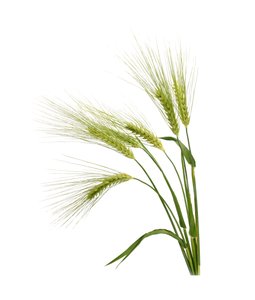
The following images are directly relevant to the explanation of polysaccharide structure and sources: