 Back
BackCarbohydrates: Structure, Function, and Classification
Study Guide - Smart Notes
 Tailored notes based on your materials, expanded with key definitions, examples, and context.
Carbohydrates: Structure, Function, and Classification
Introduction to Carbohydrates
Carbohydrates are essential biomolecules that play a central role in energy storage, structural integrity, and cellular communication in living organisms. They are the primary source of energy for many organisms and are especially critical for brain function.
Definition: Carbohydrates are organic compounds composed of carbon, hydrogen, and oxygen, typically in a ratio of Cn(H2O)n.
Major Functions: Energy source, structural components, and involvement in cell recognition and signaling.
Brain Energy: The human brain, though only about 2% of body weight, consumes approximately 25% of the body's glucose.
Carbohydrates in Metabolic Pathways
Carbohydrates are central to metabolic pathways such as photosynthesis and cellular respiration. Glucose, a simple carbohydrate, is both a product of photosynthesis and a substrate for cellular respiration.
Photosynthesis: Plants convert carbon dioxide and water into glucose and oxygen using sunlight energy.
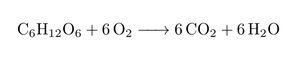
Cellular Respiration: Organisms break down glucose to produce energy, carbon dioxide, and water.
General Equation for Cellular Respiration:
Structural Role of Carbohydrates
Beyond energy, carbohydrates form many of the solid structures in living things, such as the cell walls in plants (cellulose) and exoskeletons in some animals (chitin).
Classification of Carbohydrates
Carbohydrates are classified based on the number of sugar units and the type of functional group present.
Monosaccharides: The simplest carbohydrates, consisting of a single sugar unit (e.g., glucose, fructose).
Disaccharides: Composed of two monosaccharide units linked by a glycosidic bond (e.g., sucrose, lactose).
Polysaccharides: Large polymers made of many monosaccharide units (e.g., starch, glycogen, cellulose).
Monosaccharide Structure and Classification
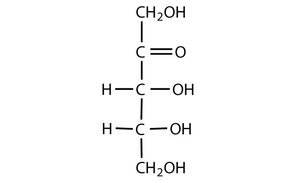
Monosaccharides are classified by their functional group and the number of carbon atoms:
Aldose: Contains an aldehyde group.
Ketose: Contains a ketone group.
Number of Carbons: Triose (3C), Tetrose (4C), Pentose (5C), Hexose (6C), Heptose (7C), Octose (8C).
Empirical Formula of Carbohydrates
Most carbohydrates have the empirical formula Cn(H2O)n, but they are not true hydrates of carbon. Instead, they are polyhydroxy aldehydes or ketones.
Examples of Monosaccharides
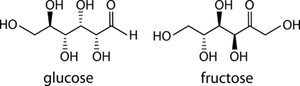
Glucose: A hexose aldose, primary energy source for cells.
Fructose: A hexose ketose, found in fruits and honey.
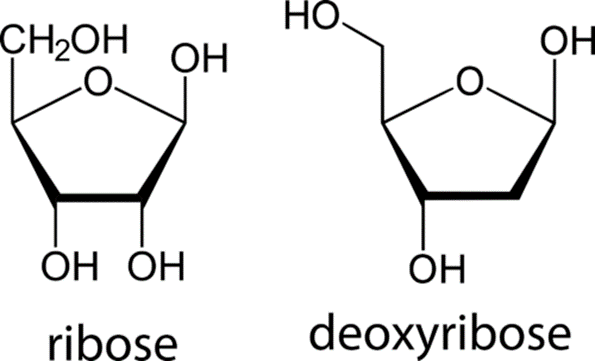
Ribose and Deoxyribose: Pentoses found in RNA and DNA, respectively.
Cyclic Structures of Monosaccharides
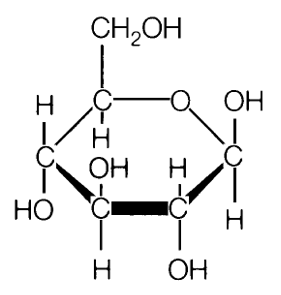
In aqueous solutions, monosaccharides like glucose predominantly exist in cyclic forms rather than open-chain structures.
Oxidation of Monosaccharides: Benedict's Test
Benedict's test is used to detect reducing sugars (aldoses). The test involves the selective oxidation of the aldehyde group by Cu2+ ions, resulting in a color change from blue to red.
Formation of Disaccharides
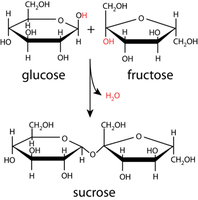
Disaccharides are formed by a condensation reaction (dehydration synthesis) between two monosaccharides, resulting in a glycosidic bond and the release of water.
Common Disaccharides: Sucrose (glucose + fructose), lactose (glucose + galactose), maltose (glucose + glucose).
Linkage Types: The orientation of the glycosidic bond (alpha or beta) determines the properties of the disaccharide.
Alpha and Beta Linkages
The geometric orientation of the glycosidic bond (alpha or beta) is crucial for the structure and digestibility of carbohydrates.
Alpha Linkage: Found in maltose and starch; easily digested by humans.
Beta Linkage: Found in lactose and cellulose; humans lack enzymes to digest beta linkages in cellulose.
Formation and Examples of Polysaccharides
Polysaccharides are formed by repeated condensation reactions of monosaccharides, resulting in long chains or branched structures.
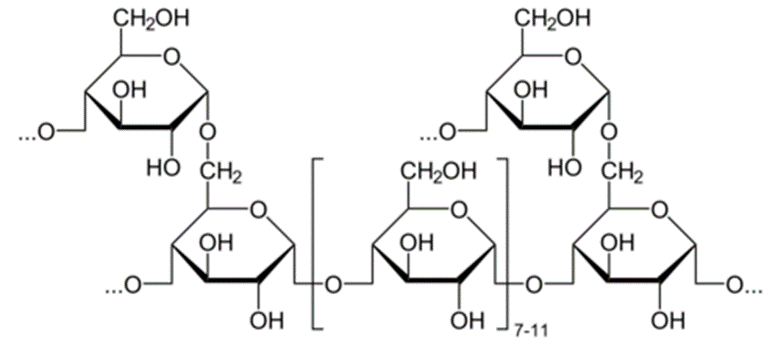
Glycogen: Energy storage in animals; highly branched with alpha 1-4 and 1-6 linkages.
Starch: Energy storage in plants; consists of amylose (straight chain, alpha 1-4) and amylopectin (branched, alpha 1-4 and 1-6).
Cellulose: Structural component in plants; straight chains with beta 1-4 linkages, indigestible by humans.
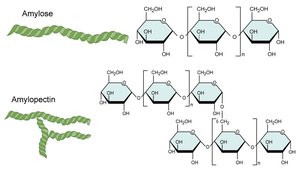

Digestibility of Polysaccharides
Humans: Can digest alpha linkages (starch, glycogen) but not beta linkages (cellulose).
Herbivores: Some animals can digest cellulose due to symbiotic bacteria producing cellulase.
Summary Table: Types of Carbohydrates
Type | Structure | Examples | Function |
|---|---|---|---|
Monosaccharide | Single sugar unit | Glucose, Fructose, Ribose | Energy source, building block |
Disaccharide | Two monosaccharides | Sucrose, Lactose, Maltose | Energy transport, storage |
Polysaccharide | Many monosaccharides | Starch, Glycogen, Cellulose | Energy storage, structure |
Additional info: Carbohydrates are also involved in cell recognition processes (e.g., glycoproteins and glycolipids on cell membranes), and their structural diversity allows for a wide range of biological functions.
