Back
BackChapter 1: Chemistry in Our Lives – Study Notes
Study Guide - Smart Notes
 Tailored notes based on your materials, expanded with key definitions, examples, and context.
Chemistry in Our Lives
Introduction to Chemistry
Chemistry is the study of the composition, structure, properties, and reactions of matter. It is a central science that connects physical sciences with life and applied sciences. Chemistry is present in everyday life, from the food we eat to the products we use and the processes that sustain life.
Matter: Anything that has mass and occupies space. Examples include water, air, glass, and antacid tablets.
Chemicals: Substances with a definite composition and properties, whether naturally occurring or synthesized. Everyday products like toothpaste are mixtures of chemicals.
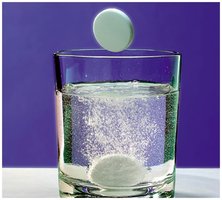
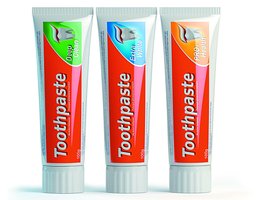
Chemicals in Toothpaste
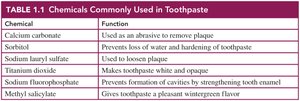
Toothpaste is a common example of a product containing multiple chemicals, each serving a specific function.
Chemical | Function |
|---|---|
Calcium carbonate | Used as an abrasive to remove plaque |
Sorbitol | Prevents loss of water and hardening of toothpaste |
Sodium lauryl sulfate | Used to loosen plaque |
Titanium dioxide | Makes toothpaste white and opaque |
Sodium fluorophosphate | Prevents formation of cavities by strengthening tooth enamel |
Methyl salicylate | Gives toothpaste a pleasant wintergreen flavor |
1.1 Chemistry and Chemicals
What Is Chemistry?
Chemistry explores the substances that make up our world and the changes they undergo. It is essential for understanding biological processes, environmental issues, and technological advancements.
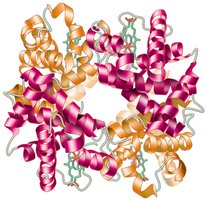
Example: Hemoglobin in blood transports oxygen and carbon dioxide, demonstrating chemistry's role in physiology.
1.2 Scientific Method: Thinking Like a Scientist
The Scientific Method
The scientific method is a systematic approach used by scientists to explore observations, answer questions, and solve problems. It involves several key steps:
Observation: Gathering information about phenomena.
Hypothesis: Proposing a tentative explanation for the observation.
Experiment: Testing the hypothesis through controlled investigation.
Conclusion/Theory: Analyzing results to support or refute the hypothesis. If necessary, the hypothesis is modified and retested.
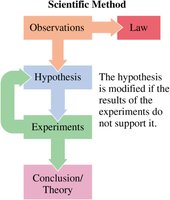
Example: If you sneeze when visiting a friend with a new cat, you might hypothesize you are allergic to cats. Testing this by visiting other homes with cats and observing your reaction helps confirm or refute your hypothesis.

1.3 Studying and Learning Chemistry
Effective Study Strategies
Success in chemistry requires active learning and effective study habits. Strategies include:
Connecting new information to prior knowledge
Self-testing and quizzing yourself
Studying regularly rather than cramming
Working in study groups
Practicing problem-solving and applying concepts

Making a Study Plan
A comprehensive study plan for chemistry should include:
Reading the chapter before class
Attending class and review sessions
Reviewing learning goals and key concepts
Keeping a problem notebook
Working through sample and practice problems
Forming study groups
Seeking help from instructors during office hours

1.4 Key Math Skills for Chemistry
Identifying Place Values
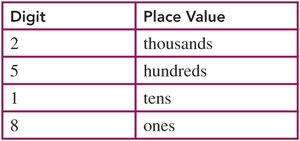
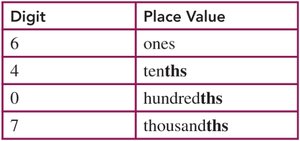
Understanding place values is essential for interpreting measurements and performing calculations in chemistry.
Digit | Place Value |
|---|---|
2 | thousands |
5 | hundreds |
1 | tens |
8 | ones |
Digit | Place Value |
|---|---|
6 | ones |
4 | tenths |
0 | hundredths |
7 | thousandths |
Using Positive and Negative Numbers in Calculations
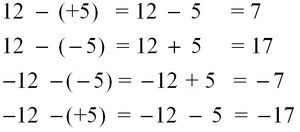
Positive numbers are greater than zero, while negative numbers are less than zero. The rules for arithmetic operations are:
Multiplying or dividing two numbers with the same sign yields a positive result.
Multiplying or dividing numbers with different signs yields a negative result.
When adding a positive and a negative number, subtract the smaller from the larger and keep the sign of the larger.
For subtraction, change the sign of the number being subtracted and follow the rules for addition.


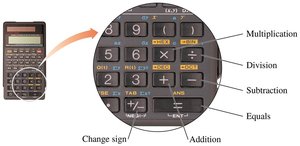
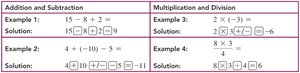
Calculator Operations
Basic calculator operations include addition, subtraction, multiplication, division, and changing the sign of a number. Familiarity with these functions is essential for solving chemistry problems efficiently.
Calculating Percentages
Percentages are calculated by dividing the part by the whole and multiplying by 100%:
Percentage formula:
Solving Equations
Solving equations involves isolating the unknown variable by rearranging terms and performing inverse operations. Always check your solution by substituting it back into the original equation.
Example:
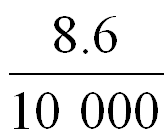
Subtract 8 from both sides:
Divide both sides by 2:

Interpreting Graphs
Graphs visually represent the relationship between two variables. The x-axis (horizontal) and y-axis (vertical) are used to plot data points, and the trend line shows the relationship (e.g., direct or inverse).
Example: The volume of a gas increases with temperature, showing a direct relationship.

1.5 Writing Numbers in Scientific Notation
Scientific Notation
Scientific notation expresses very large or very small numbers as the product of a coefficient (between 1 and 10) and a power of 10. This format simplifies calculations and clearly indicates the magnitude of a value.
General form: where and is an integer.
Example: 2400 =
Example: 0.00086 =

Powers of 10
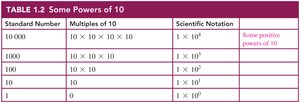
Understanding positive and negative powers of 10 is essential for scientific notation.
Standard Number | Multiples of 10 | Scientific Notation |
|---|---|---|
10,000 | 10 × 10 × 10 × 10 | 1 × 10⁴ |
1,000 | 10 × 10 × 10 | 1 × 10³ |
100 | 10 × 10 | 1 × 10² |
10 | 10 | 1 × 101 |
1 | — | 1 × 100 |
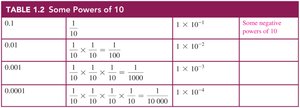
Standard Number | Multiples of 1/10 | Scientific Notation |
|---|---|---|
0.1 | 1/10 | 1 × 10⁻¹ |
0.01 | 1/10 × 1/10 | 1 × 10⁻² |
0.001 | 1/10 × 1/10 × 1/10 | 1 × 10⁻³ |
0.0001 | 1/10 × 1/10 × 1/10 × 1/10 | 1 × 10⁻⁴ |
Measurements in Scientific Notation
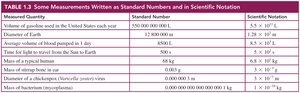
Scientific notation is used to express measurements in chemistry, making it easier to handle very large or small values.
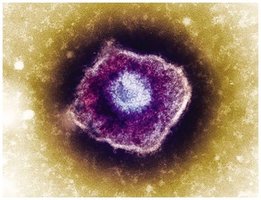
Example: Diameter of chickenpox virus = 0.0000003 m = m
Measured Quantity | Standard Number | Scientific Notation |
|---|---|---|
Volume of gasoline used in the US each year | 150,000,000,000 L | 1.5 × 10¹¹ L |
Diameter of Earth | 12,800 km | 1.28 × 10⁴ km |
Average volume of blood pumped in 1 day | 6,000 L | 6.0 × 10³ L |
Time for light to travel from the Sun to Earth | 500 s | 5.0 × 10² s |
Mass of average human | 68 kg | 6.8 × 101 kg |
Mass of shrimp larvae | 0.00003 g | 3.0 × 10⁻⁵ g |
Diameter of a chickenpox (Varicella zoster) virus | 0.0000003 m | 3 × 10⁻⁷ m |
Mass of electrons (mycoplasma) | 0.00000000000000000000000000000091 kg | 9.1 × 10⁻³¹ kg |
Scientific Notation and Calculators
Calculators use the EXP or EE key to enter numbers in scientific notation. The display typically shows a number between 1 and 10, followed by E and the power of 10.


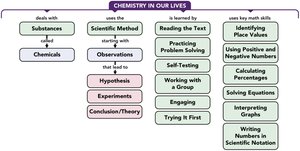
Concept Map: Chemistry in Our Lives
The following concept map summarizes the main ideas of this chapter, including the definition of chemistry, the scientific method, study strategies, and key math skills.