 Back
BackComprehensive Study Notes: Chemical Reactions and Related Concepts
Study Guide - Smart Notes
 Tailored notes based on your materials, expanded with key definitions, examples, and context.
Chapter 5: Chemical Reactions
Concept: Chemical Reaction and Chemical Change
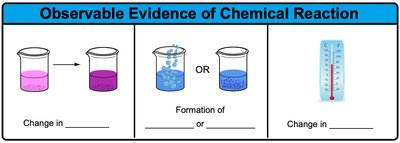
A chemical reaction is a process in which chemical bonds in reactants are broken and new bonds are formed in products, resulting in a chemical change. Observable evidence of a chemical reaction includes changes in color, formation of a precipitate or gas, and changes in temperature.
Chemical Equation: Uses chemical formulas and symbols to represent a chemical reaction.
Example: Decomposition of sodium bicarbonate:
Symbols in Chemical Equations
Δ: Heat is applied
(s): Solid
(l): Liquid
(g): Gas
(aq): Aqueous (dissolved in water)
Law of Conservation of Mass
The Law of Conservation of Mass states that in a chemical reaction, matter is neither created nor destroyed. The total mass of reactants equals the total mass of products. Compounds before the arrow are reactants, and those after are products.
Example:
Balancing Chemical Equations
Steps for Balancing
Balancing ensures the number and type of atoms are equal on both sides of the equation. The numbers in front of compounds are called coefficients.
List elements in reactants and products.
Count atoms of each element on both sides.
Balance polyatomic ions as a unit if present on both sides.
Adjust coefficients to balance atoms; multiply through if fractions appear.
Solubility Rules
Solubility and Precipitation
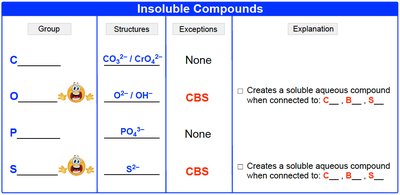
Solubility is the ability of a solute to dissolve in a solvent. Soluble compounds dissolve; insoluble compounds do not. The solubility rules help predict if a compound will dissolve in water or form a precipitate.
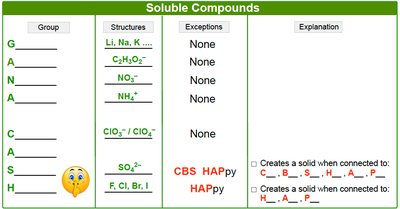
GANA CASH: Mnemonic for soluble ionic compounds (Groups 1A, Ammonium, Nitrates, Acetates, Chlorates, Sulfates, Halides).
Exceptions (e.g., CBS HAPpy): Certain ions form insoluble compounds with specific cations.
Molecular, Complete Ionic, and Net Ionic Equations
Molecular Equations
Show all reactants and products as intact compounds. Used to represent neutralization, gas evolution, and precipitation reactions.
Write reactants in ionic form, swap partners, and balance the equation.
A reaction occurs if a precipitate, gas, or water forms.
Complete Ionic Equations
Show all strong electrolytes as dissociated ions. Solids, liquids, and gases are not broken into ions.
Net Ionic Equations
Show only the ions and molecules directly involved in the reaction, omitting spectator ions.
Types of Chemical Reactions
Classification
Combination: Multiple reactants form one product.
Decomposition: One reactant splits into multiple products.
Single Displacement: One element replaces another in a compound.
Double Displacement: Ions in two compounds exchange places.
Combustion: Hydrocarbon reacts with O2 to produce CO2 and H2O.
Redox: Involves transfer of electrons between reactants.
Electrolytes
Classification of Electrolytes
Strong Electrolytes: Completely dissociate into ions (e.g., NaCl, HCl, NaOH).
Weak Electrolytes: Partially dissociate (e.g., acetic acid, HF).
Non-Electrolytes: Do not dissociate into ions (e.g., glucose, alcohols).
Oxidation Numbers and Redox Reactions
Oxidation Number Rules
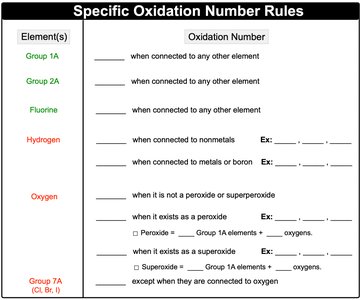
Oxidation numbers are assigned to elements to track electron transfer in reactions. Specific rules exist for groups and elements (e.g., Group 1A is always +1, oxygen is usually -2 except in peroxides).
Redox Reactions
Redox (oxidation-reduction) reactions involve electron transfer. The oxidizing agent is reduced, and the reducing agent is oxidized. The mnemonic "LEO the lion says GER" helps remember: Lose Electrons = Oxidation, Gain Electrons = Reduction.

Reaction Rates and Energy Diagrams
Factors Affecting Reaction Rate
Concentration: Higher concentration increases collision frequency.
Surface Area: Greater surface area increases reaction rate.
Temperature: Higher temperature increases energy and collision frequency.
Catalyst: Lowers activation energy, increasing reaction rate.


Energy Diagrams
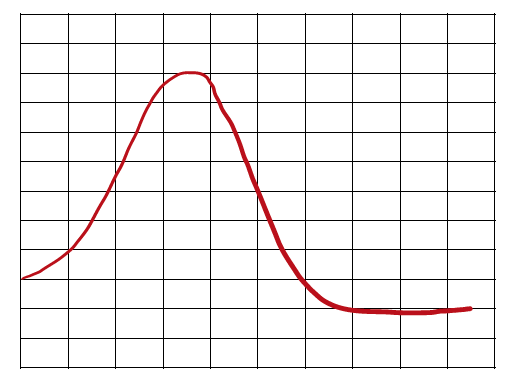
Energy diagrams plot the energy changes during a reaction. The activation energy (Ea) is the energy barrier that must be overcome. The difference in energy between reactants and products determines if the reaction is exothermic or endothermic.
Chemical Equilibrium
Dynamic Equilibrium
At equilibrium, the rate of the forward reaction equals the rate of the reverse reaction. Concentrations of reactants and products remain constant but are not necessarily equal.
The Equilibrium Constant (K)
The equilibrium constant, K, is the ratio of product concentrations to reactant concentrations at equilibrium (excluding solids and pure liquids):
If K > 1, products are favored.
If K < 1, reactants are favored.
Le Chatelier’s Principle
If a system at equilibrium is disturbed, it will shift to counteract the disturbance and restore equilibrium. Changes in concentration, pressure, or temperature can shift the equilibrium position.
Organic Reaction Types
Alkane Reactions
Combustion: Alkane + O2 → CO2 + H2O
Halogenation: Substitution of H with Br or Cl, requires heat or light.
Redox in Organic Chemistry
Oxidation: Increases number of C–O bonds.
Reduction: Increases number of C–H bonds.
Alcohol Reactions
Oxidation: Alcohols can be oxidized to aldehydes, ketones, or carboxylic acids using agents like K2Cr2O7.
Reduction of Aldehydes and Ketones
Aldehydes are reduced to primary alcohols; ketones to secondary alcohols, using H2 and a metal catalyst.
Triacylglycerol Reactions
Hydrolysis: Acid-catalyzed or enzymatic hydrolysis splits triacylglycerols into glycerol and fatty acids.
Saponification: Base-catalyzed hydrolysis produces soap (fatty acid salts) and glycerol.
Addition Reactions
Halogenation: Addition of Br2 or Cl2 to alkenes/alkynes.
Hydrogenation: Addition of H2 to alkenes/alkynes, requires a catalyst.
Hydrohalogenation: Addition of H and X (Br or Cl) to alkenes/alkynes, follows Markovnikov’s rule.
Hydration: Acid-catalyzed addition of water to alkenes produces alcohols, also follows Markovnikov’s rule.
Practice and Application
Practice problems throughout the chapter reinforce the application of these concepts, including balancing equations, predicting solubility, classifying electrolytes, assigning oxidation numbers, and identifying reaction types.
