 Back
BackSolving Linear Equations: Intermediate Algebra Study Guide
Study Guide - Smart Notes
 Tailored notes based on your materials, expanded with key definitions, examples, and context.
Solving Linear Equations
Introduction to Linear Equations
Linear equations are fundamental in algebra and represent statements where two algebraic expressions are equal. The solution to a linear equation is the value of the variable that makes the equation true when substituted.
Equation: A statement that two algebraic expressions are equal.
Linear Equation in One Variable: An equation of the form , where , , and are real numbers and is the variable.
Solution Set: The set of values that satisfy the equation, written in set brackets { }.
Example: Determine whether a given value is a solution to the equation .
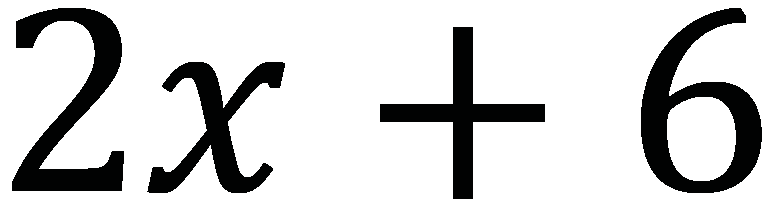

Identifying Linear Equations
Not all equations are linear. Linear equations have variables raised only to the first power and do not involve products of variables or higher powers.
Linear Equation:
Nonlinear Equation: or
Example: is linear; is not.

Expressions vs. Equations
It is important to distinguish between expressions and equations. An expression does not have an equal sign, while an equation does.
Expression:
Equation:


Solving Linear Equations
Solving linear equations involves isolating the variable using properties of equality. The main properties are addition, subtraction, multiplication, and division.
Addition Property: If , then
Subtraction Property: If , then
Multiplication Property: If , then
Division Property: If , then (for )
Example: Solve
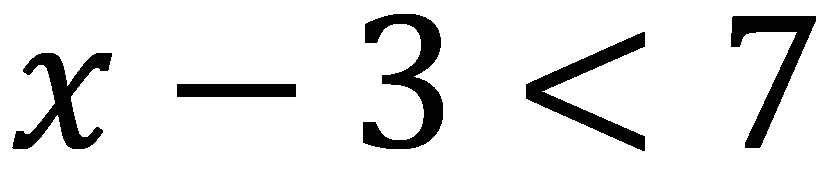
Checking Solutions
Always check your solution by substituting the value back into the original equation to verify it makes the statement true.
Example: For , is a solution because .

Solving Equations with Fractions and Decimals
When equations involve fractions or decimals, clear them by multiplying both sides by the least common denominator (LCD) or a power of 10.
Example:
Example:


Summary Table: Properties of Equality
The properties of equality are essential tools for solving equations. The table below summarizes their use:
Property | Operation | Example |
|---|---|---|
Addition | Add to both sides | |
Subtraction | Subtract from both sides | |
Multiplication | Multiply both sides | |
Division | Divide both sides |

Solving Linear Equations: Step-by-Step
Follow these steps to solve any linear equation:
Simplify both sides of the equation (distribute, combine like terms).
Use addition/subtraction properties to collect variable terms on one side and constant terms on the other.
Use multiplication/division properties to isolate the variable.
Check your solution by substituting back into the original equation.

Examples of Linear Equations



Practice Problems
Solve
Solve
Solve ;
Solve ;



Additional info:
These notes cover the foundational concepts and procedures for solving linear equations, which are essential for intermediate algebra students. The included images visually reinforce the algebraic concepts and steps described.
