What is wrong with the following electron configurations?a. Ni 1s^2 2s^2 2p^6 3s^2 3p^6 3d^10b. N 1s^2 2p^5c. Si 1s^2 2s^2 2p d. Mg 1s^2 2s^2 2p^6 3s
Verified step by step guidance
1
Identify the correct order of filling electron orbitals using the Aufbau principle, which states that electrons fill orbitals starting from the lowest energy level to the highest.
For part (a), check if the electron configuration for Ni (Nickel) is complete and follows the order of filling. Nickel should have 28 electrons, so verify if all electrons are accounted for.
For part (b), verify if the electron configuration for N (Nitrogen) is complete. Nitrogen should have 7 electrons, so check if the configuration accounts for all electrons and follows the correct order.
For part (c), check if the electron configuration for Si (Silicon) is complete. Silicon should have 14 electrons, so ensure the configuration accounts for all electrons and follows the correct order.
For part (d), verify if the electron configuration for Mg (Magnesium) is complete. Magnesium should have 12 electrons, so check if the configuration accounts for all electrons and follows the correct order.
Verified video answer for a similar problem:
This video solution was recommended by our tutors as helpful for the problem above
Video duration:
4m
Play a video:
0 Comments
Key Concepts
Here are the essential concepts you must grasp in order to answer the question correctly.
Electron Configuration
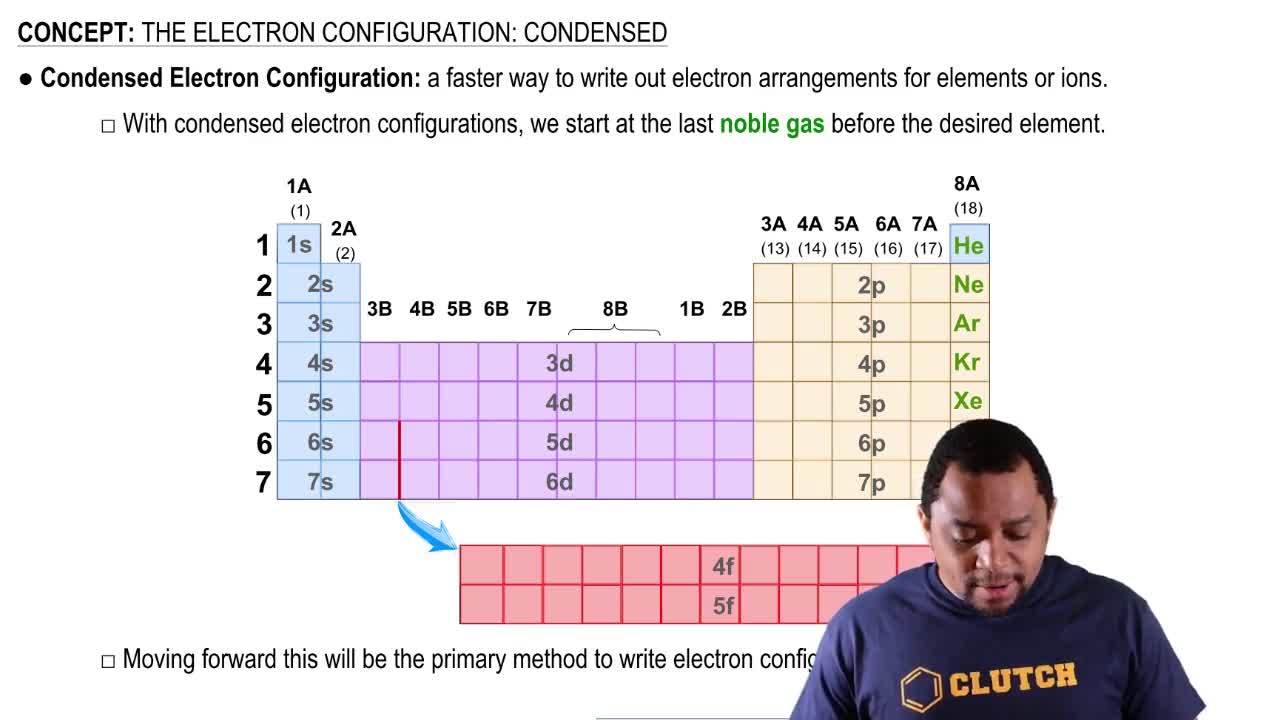
Electron configuration describes the distribution of electrons in an atom's orbitals. It follows specific rules, such as the Aufbau principle, which states that electrons fill lower-energy orbitals before higher-energy ones. Understanding the correct order of filling and the maximum number of electrons each orbital can hold is essential for identifying errors in configurations.
The Pauli Exclusion Principle states that no two electrons in an atom can have the same set of four quantum numbers. This principle implies that an orbital can hold a maximum of two electrons, which must have opposite spins. Recognizing this principle helps in identifying configurations that incorrectly suggest more than two electrons in a single orbital.
The following is an endothermic reaction where Kc = 6.73 x 10³.For each of the choices below predict in which direction the reaction will proceed
Hund's Rule
Hund's Rule states that electrons will occupy degenerate orbitals (orbitals of the same energy) singly before pairing up. This means that for orbitals like p, d, and f, each orbital should receive one electron before any orbital receives a second. Understanding this rule is crucial for determining the correct electron configuration, especially in cases where multiple orbitals are involved.

 4:15 minutes
 Verified step by step guidance
 01:08
01:08