In photosynthesis, green plants convert carbon dioxide and water into glucose (C6H12O6) according to the following equation:6 CO2(g) + 6 H2O(l) → C6H12O6(aq) + 6 O2(g)Is the reaction endothermic or exothermic?
Verified step by step guidance
1
Identify the type of reaction: Photosynthesis is a process where plants convert light energy into chemical energy, storing it in the form of glucose.
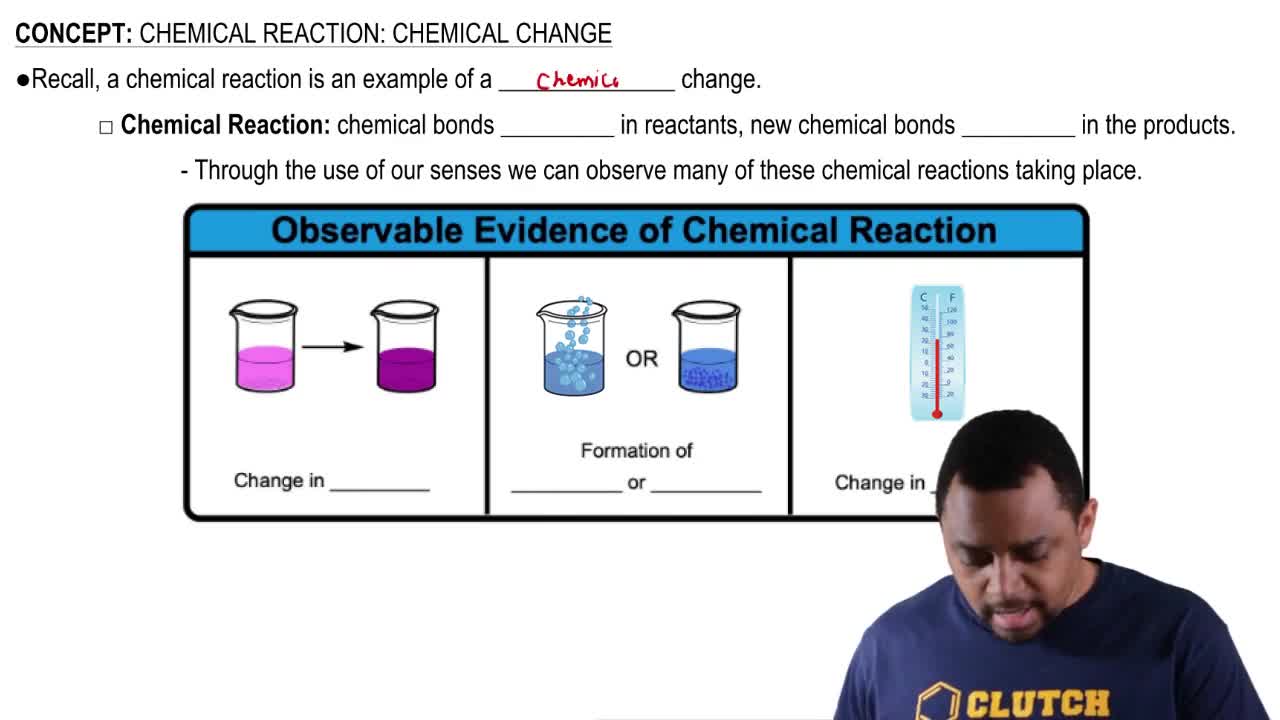
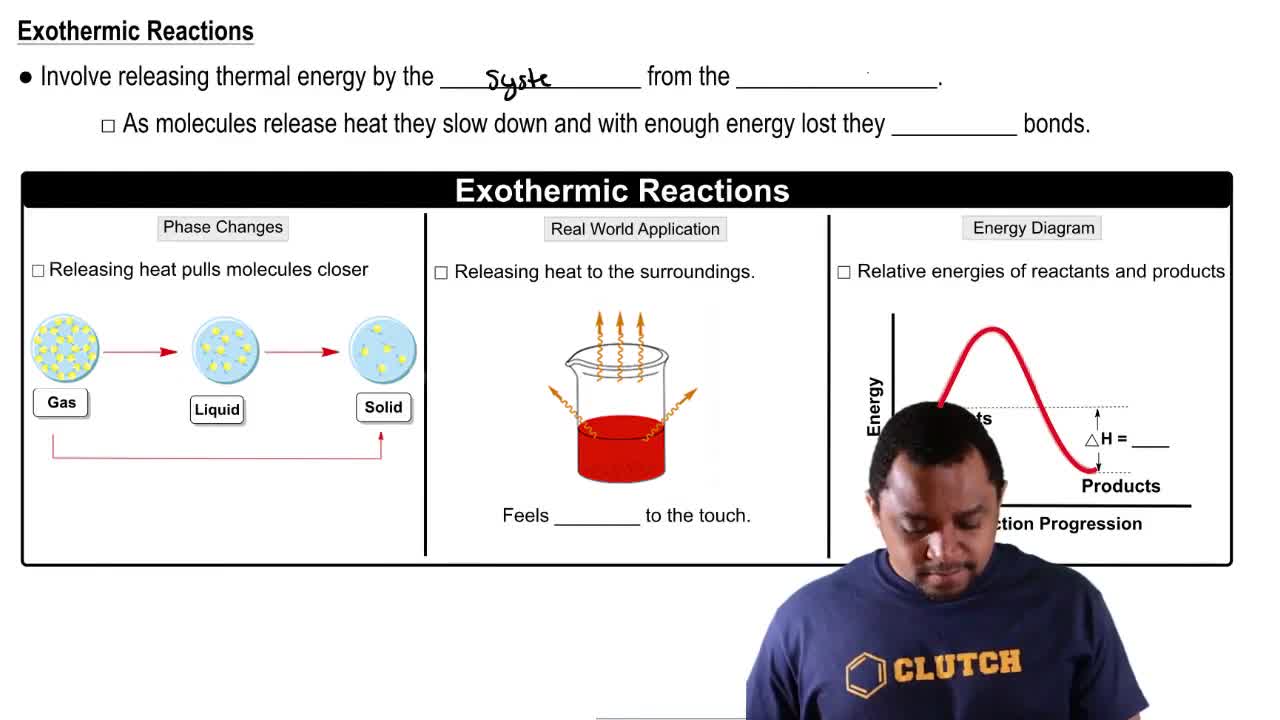
Understand energy flow: In an endothermic reaction, energy is absorbed from the surroundings, while in an exothermic reaction, energy is released.
Consider the energy source: Photosynthesis requires sunlight, which provides the energy needed for the reaction to occur.
Analyze the energy requirement: Since the reaction requires an input of energy (sunlight) to proceed, it indicates that the reaction absorbs energy.
Conclude the nature of the reaction: Based on the absorption of energy from sunlight, determine whether the reaction is endothermic or exothermic.
Verified video answer for a similar problem:
This video solution was recommended by our tutors as helpful for the problem above
Video duration:
1m
Play a video:
0 Comments
Key Concepts
Here are the essential concepts you must grasp in order to answer the question correctly.
Photosynthesis
Photosynthesis is the biochemical process by which green plants, algae, and some bacteria convert light energy into chemical energy. During this process, carbon dioxide and water are transformed into glucose and oxygen, utilizing sunlight as the energy source. The overall reaction can be summarized by the equation provided, highlighting the conversion of inorganic substances into organic compounds.
Endothermic and Exothermic Reactions
Endothermic reactions absorb energy from their surroundings, resulting in a decrease in temperature of the environment, while exothermic reactions release energy, often in the form of heat, leading to an increase in temperature. In the context of photosynthesis, the process requires energy input from sunlight, indicating that it is endothermic, as it absorbs energy to drive the conversion of carbon dioxide and water into glucose.
In chemical reactions, energy transfer is a crucial aspect that determines whether a reaction is endothermic or exothermic. The energy required to break bonds in reactants must be compared to the energy released when new bonds form in products. In photosynthesis, the energy absorbed from sunlight is used to create glucose, thus illustrating the concept of energy transfer where the input of energy is essential for the reaction to proceed.