 Back
BackAtoms and Elements: Foundations of Chemistry
Study Guide - Smart Notes
 Tailored notes based on your materials, expanded with key definitions, examples, and context.
Atoms and Elements
Introduction to Atoms and Elements
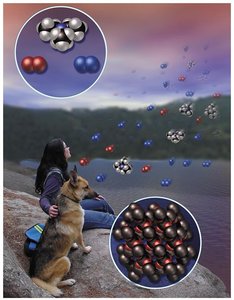
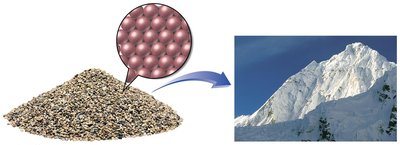
Atoms are the fundamental building blocks of matter. The properties of atoms determine the properties of all substances. An atom is the smallest identifiable unit of an element, and an element is a substance that cannot be broken down into simpler substances by chemical means. There are about 91 naturally occurring elements, with additional synthetic elements created in laboratories.
Atoms compose all matter.
Elements are defined by their number of protons.
Atoms of the same element have the same number of protons but may differ in neutrons (isotopes).
Historical Development of Atomic Theory
Early Ideas: Democritus and Leucippus
Ancient Greek philosophers Democritus and Leucippus first proposed that matter is made of tiny, indivisible particles called atomos (atoms). This idea laid the groundwork for modern atomic theory, though it lacked experimental evidence.
Dalton's Atomic Theory
In 1808, John Dalton formalized atomic theory, which became widely accepted due to supporting experimental evidence. Dalton's theory consists of three main points:
Each element is composed of tiny, indestructible particles called atoms.
All atoms of a given element have the same mass and properties that distinguish them from atoms of other elements.
Atoms combine in simple, whole-number ratios to form compounds.
Modern Evidence for Atoms
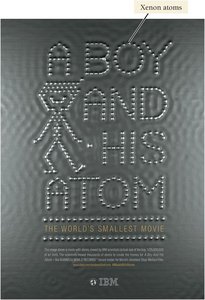
Modern technology, such as the scanning tunneling microscope (STM), allows scientists to manipulate and visualize individual atoms, providing direct evidence for their existence.
Structure of the Atom
Discovery of Subatomic Particles
Atoms are composed of smaller particles: electrons, protons, and neutrons.
Electrons are negatively charged, much smaller and lighter than atoms, and are present in all substances (discovered by J.J. Thomson).
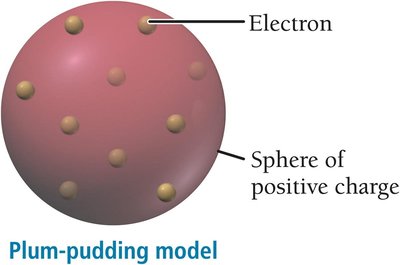
Thomson's plum-pudding model proposed that electrons are embedded in a sphere of positive charge.
Rutherford's Gold Foil Experiment and Nuclear Model
Ernest Rutherford's gold foil experiment (1909) demonstrated that atoms have a small, dense, positively charged nucleus. Most alpha particles passed through gold foil, but some were deflected, indicating a concentrated center of positive charge.
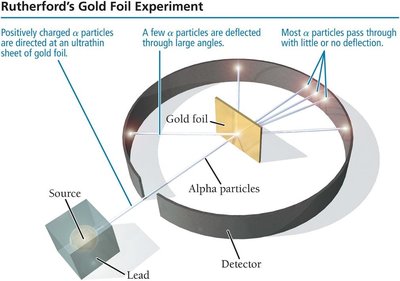
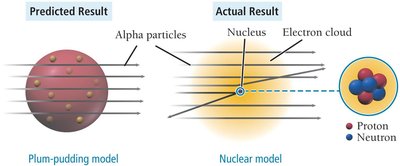
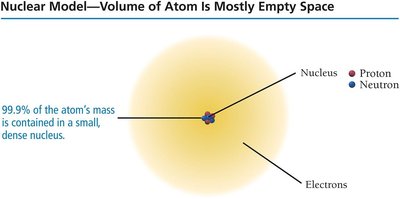
Most of the atom's mass and all its positive charge are in the nucleus.
Electrons occupy most of the atom's volume but contribute little to its mass.
The number of electrons equals the number of protons in a neutral atom.
Subatomic Particles: Mass and Charge
Atoms are made of three main subatomic particles:
Protons: Positively charged, mass ≈ 1 amu
Neutrons: No charge, mass ≈ 1 amu
Electrons: Negatively charged, mass ≈ 0.00055 amu (almost negligible compared to protons and neutrons)
Particle | Mass (kg) | Mass (amu) | Charge |
|---|---|---|---|
Proton | 1.67262 × 10⁻²⁷ | 1.0073 | +1 |
Neutron | 1.67493 × 10⁻²⁷ | 1.0087 | 0 |
Electron | 0.00091 × 10⁻²⁷ | 0.00055 | −1 |
Electrical Charge and Neutrality
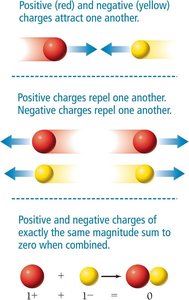
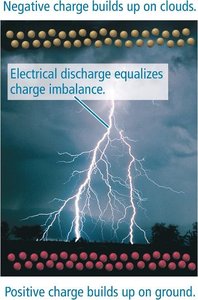
Electrical charge is a fundamental property of protons and electrons. Opposite charges attract, like charges repel, and equal numbers of positive and negative charges result in a neutral atom.
The Periodic Table and Classification of Elements
Atomic Number and Element Identity
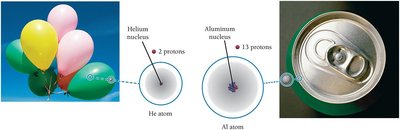
The atomic number (Z) is the number of protons in an atom's nucleus and defines the element. Changing the number of protons changes the element.
The Periodic Table
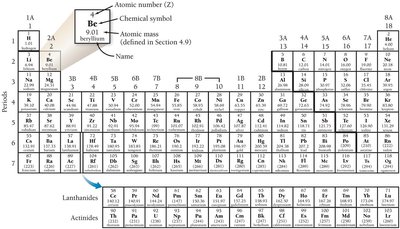
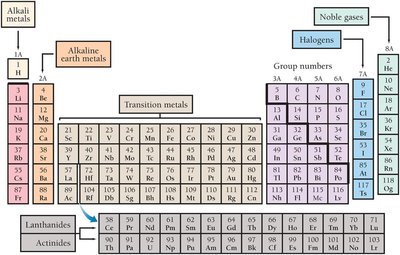
The periodic table organizes elements by increasing atomic number. Each element is represented by its name, symbol, and atomic number.
Element Symbols and Names
Most element symbols are derived from their English names, but some are based on Latin or Greek names (e.g., K for potassium from kalium, Na for sodium from natrium).
Element | Symbol | Origin |
|---|---|---|
Lead | Pb | Plumbum (Latin) |
Mercury | Hg | Hydrargyrum (Latin) |
Iron | Fe | Ferrum (Latin) |
Silver | Ag | Argentum (Latin) |
Tin | Sn | Stannum (Latin) |
Copper | Cu | Cuprum (Latin) |
Periodic Law and Mendeleev's Contribution
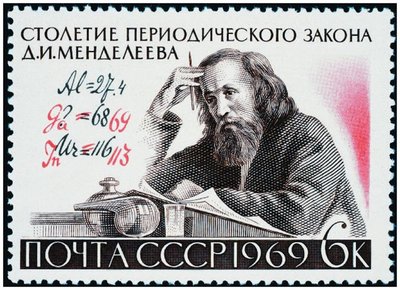
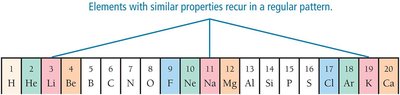
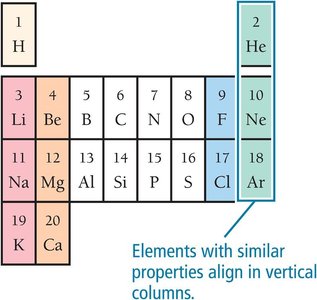
Dmitri Mendeleev arranged elements by increasing relative mass and observed that similar properties recur in a regular pattern, leading to the periodic law. Elements with similar properties are grouped in columns called groups or families.
Classification: Metals, Nonmetals, and Metalloids
Elements are broadly classified as metals, nonmetals, or metalloids based on their properties and position in the periodic table.
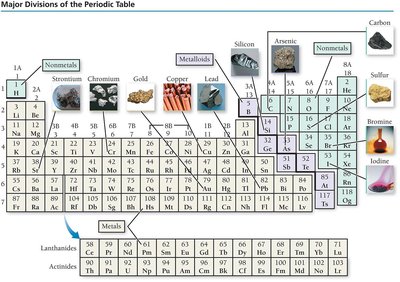
Metals: Good conductors, malleable, ductile, lustrous, tend to lose electrons in reactions (e.g., Fe, Mg, Na).
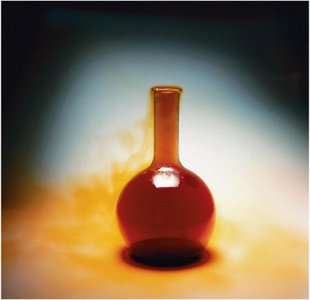
Nonmetals: Poor conductors, varied states, tend to gain electrons in reactions (e.g., O, N, Cl, Br, I).
Metalloids: Intermediate properties, semiconductors (e.g., Si, As, Ge).

Main Group and Transition Elements
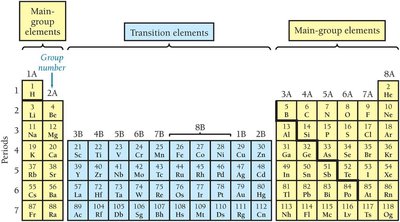
The periodic table is divided into main group elements (predictable properties) and transition elements (less predictable properties).
Groups and Families
Each column is a group or family. Main-group elements in the same group have similar properties and may have group names (e.g., alkali metals, alkaline earth metals, halogens, noble gases).
Ions and Isotopes
Formation of Ions
Atoms can gain or lose electrons to form ions. Cations are positively charged (loss of electrons), and anions are negatively charged (gain of electrons). The charge is determined by the difference between the number of protons and electrons:
Ion charge = number of protons − number of electrons
Example equations:
Lithium:
Fluorine:
Predicting Ion Charges
The group number (1A–8A) for main-group elements indicates the number of valence electrons and helps predict the charge of ions formed to achieve noble gas configuration.
Isotopes
Isotopes are atoms of the same element with different numbers of neutrons. The mass number (A) is the sum of protons and neutrons. Isotopes are represented as:
Symbol notation: (e.g., )
Name notation: Element name–mass number (e.g., neon-20)
Calculating Atomic Mass
The atomic mass of an element is the weighted average of the masses of its isotopes, calculated as:
Example (chlorine):
Radioactive Isotopes
Some isotopes are unstable and emit nuclear radiation, transforming into different elements or isotopes. These radioactive isotopes can be harmful but also have beneficial uses, such as in medical imaging (e.g., technetium-99).
Summary Table: Subatomic Particles
Particle | Symbol | Relative Mass (amu) | Charge |
|---|---|---|---|
Proton | p | 1 | +1 |
Neutron | n | 1 | 0 |
Electron | e− | 0.00055 | −1 |
Key Learning Objectives
Recognize that all matter is composed of atoms.
Explain how experiments led to the nuclear theory of the atom.
Describe the properties and charges of electrons, neutrons, and protons.
Determine atomic symbols, numbers, and classify elements using the periodic table.
Predict ion charges and calculate atomic mass from isotopic abundances.
