 Back
BackCalculating Reaction Rates: Measuring the Speed of Chemical Reactions
Study Guide - Smart Notes
 Tailored notes based on your materials, expanded with key definitions, examples, and context.
Reaction Rates
Introduction to Reaction Rates
Chemical reactions occur at different speeds, and understanding how to measure and calculate these rates is essential in chemistry. The rate of a reaction refers to how quickly reactants are converted into products over time. This topic is fundamental for analyzing reaction mechanisms, optimizing industrial processes, and understanding natural phenomena.
Monitoring Reactions Over Time
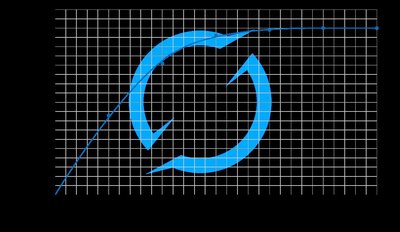
To study reaction rates, chemists monitor changes in the amount of reactants or products as a reaction progresses. This can be visualized using graphs that plot concentration, mass, or volume against time. The slope of these graphs at any point indicates the reaction rate at that moment.
Product Formation: The rate is determined by how quickly the amount of product increases over time. The slope is steepest at the start, indicating the fastest rate.
Reactant Consumption: The rate can also be measured by how quickly reactants are used up. The slope is negative (since reactants decrease), but reaction rates are always reported as positive values.
Types of Reaction Rates
The rate of a reaction is not constant; it changes as the reaction proceeds. There are three main ways to describe reaction rates:
Initial Rate: The rate at the very start of the reaction, when reactant concentrations are highest. This is often the fastest rate observed.
Average Rate: The overall rate calculated over a longer period or the entire reaction. Useful for assessing overall efficiency.
Instantaneous Rate: The rate at a specific moment in time, found by drawing a tangent to the curve at that point.
Basic Formula for Reaction Rate
The general formula for calculating the rate of a chemical reaction is:
Where the "quantity" can be:
Mass of reactant lost (g)
Volume of product gas produced (cm3)
Concentration change (mol/dm3)
Turbidity time for precipitate formation
Note: Rate values are always positive, indicating the progress of the reaction.
Finding Rates from Experimental Data
By collecting data on the amount of reactant or product at various times, a curve can be plotted to show how the rate changes. Typically, reactions start fast and slow down as reactants are consumed, eventually stopping when a reactant is used up.
Example Data Table: CO2 Lost Over Time
Time (s) | CO2 lost (g) |
|---|---|
0 | 0 |
20 | 0.40 |
40 | 0.80 |
60 | 1.10 |
80 | 1.40 |
100 | 1.60 |
120 | 1.80 |
140 | 1.95 |
160 | 2.10 |
180 | 2.22 |
200 | 2.33 |
220 | 2.40 |
240 | 2.46 |
260 | 2.48 |
280 | 2.50 |
300 | 2.50 |
Calculating Different Types of Rates
Initial Rate: Determined by the slope at the start of the graph (e.g., from 0 to 20 seconds).
Average Rate: Calculated over the entire reaction (e.g., from 0 to 280 seconds).
Instantaneous Rate: Found by drawing a tangent at a specific time (e.g., at 100 seconds, between 80s and 120s).
Choosing Which Rate to Use
The choice of which rate to calculate depends on the experimental goal:
Initial Rate: Best for studying the effect of variables like concentration, surface area, or temperature, since these are only known precisely at the start.
Average Rate: Used when initial data is unavailable or the reaction is too fast to measure at the start.
Instantaneous Rate: Useful for understanding the reaction at a specific moment, especially when detailed kinetic information is needed.
What Data to Collect?
To calculate a reaction rate, you need measurements at specific times:
Rate to be Found | Times to Measure |
|---|---|
Initial rate | At 0 seconds and the first reliable time after the reaction starts |
Average rate | At 0 seconds and the point when the reaction stops (one reactant is used up) |
Instantaneous rate | At equal times before and after the time for which the rate is planned to be found |
Summary Table: Types of Reaction Rates
Type of Rate | How to Measure | When to Use |
|---|---|---|
Initial Rate | Slope at the start of the reaction | Studying variable effects |
Average Rate | Total change / total time | Overall efficiency |
Instantaneous Rate | Tangent at a specific time | Detailed kinetic analysis |
Visualizing Reaction Progress
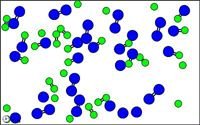
On the molecular level, reaction rates reflect how quickly reactant molecules are converted into products. The frequency of collisions and the energy of those collisions determine the speed of the reaction.
Example Application: In an experiment where carbon dioxide is produced, the rate can be measured by the mass of CO2 lost over time, the volume of gas collected, or the change in concentration of reactants.
Additional info: Understanding reaction rates is crucial for controlling industrial chemical processes, predicting reaction outcomes, and ensuring safety in laboratory and manufacturing settings.
