 Back
BackChemical Bonding: Lewis Structures, Molecular Geometry, and Polarity
Study Guide - Smart Notes
 Tailored notes based on your materials, expanded with key definitions, examples, and context.
Chemical Bonding
Introduction to Bonding Models and Their Applications
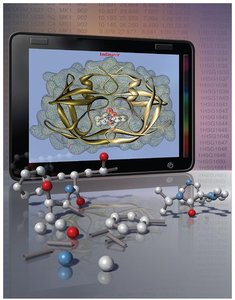
Chemical bonding theories are essential for understanding how atoms combine to form molecules and compounds. These models not only predict the types of bonds that will form but also help explain the physical and chemical properties of substances. For example, bonding models have been used in drug design, such as the development of HIV-protease inhibitors for AIDS treatment.
Lewis Model of Chemical Bonding
Valence Electrons and Lewis Structures
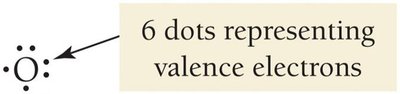
The Lewis model represents valence electrons as dots around the chemical symbol of an element. These dot structures, or Lewis structures, are powerful tools for predicting molecular stability and structure.
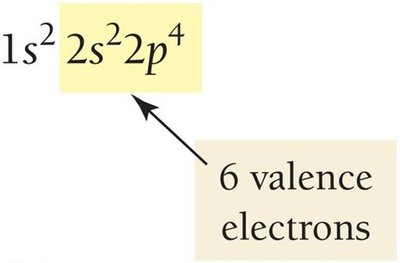
Valence electrons are the electrons in the outermost shell of an atom and are responsible for chemical bonding.
The number of valence electrons for main-group elements equals the group number in the periodic table (except helium).
Lewis Structures for Main-Group Elements
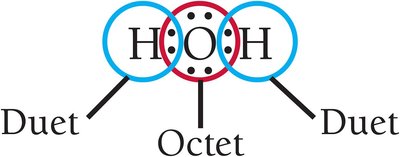
Lewis structures allow visualization of valence electrons and help identify atoms with stable configurations (octets or duets).
Atoms with eight valence electrons (an octet) are particularly stable.
Helium is an exception, achieving stability with two electrons (a duet).


Lewis Model of Chemical Bonding: Ionic and Covalent Bonds
In the Lewis model, chemical bonds form by the transfer or sharing of electrons to achieve stable electron configurations.
Ionic bonds: Electrons are transferred from metals to nonmetals, forming cations and anions.
Covalent bonds: Electrons are shared between nonmetals.
The octet rule: Atoms tend to gain, lose, or share electrons to achieve eight electrons in their valence shell (except H and He, which achieve a duet).
Lewis Structures for Ionic Compounds
Electron Transfer and Ionic Bond Formation
When metals react with nonmetals, electrons are transferred, resulting in the formation of ionic compounds.
The metal becomes a positively charged cation, and the nonmetal becomes a negatively charged anion.
The Lewis structure shows the transfer of electrons and the resulting ions.



Lewis Structures for Covalent Compounds
Electron Sharing and Covalent Bond Formation
Nonmetals form covalent bonds by sharing electrons to achieve octets (or duets for hydrogen).
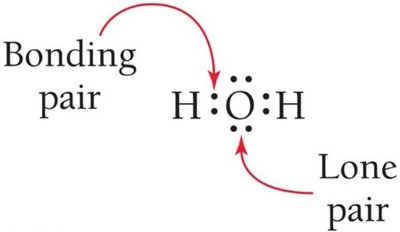
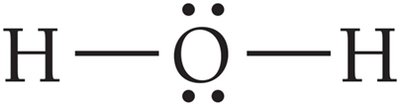
Shared electrons are called bonding pairs.
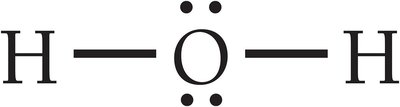
Unshared electrons are called lone pairs or nonbonding pairs.


Single, Double, and Triple Bonds
Atoms may share more than one pair of electrons to achieve octets, resulting in double or triple bonds.
Single bond: One pair of shared electrons.
Double bond: Two pairs of shared electrons (e.g., O2).
Triple bond: Three pairs of shared electrons (e.g., N2).
Double and triple bonds are shorter and stronger than single bonds.




Writing Lewis Structures for Covalent Compounds
Stepwise Procedure
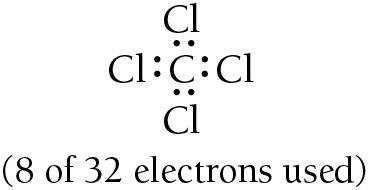
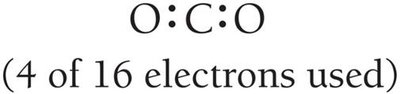
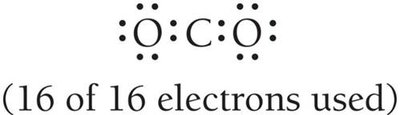
Write the correct skeletal structure for the molecule (central atom, symmetry).
Calculate the total number of valence electrons (consider charges for polyatomic ions).
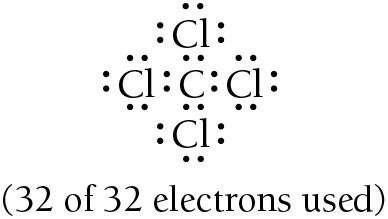
Distribute electrons to form bonds and complete octets (or duets for H).
If necessary, form double or triple bonds to satisfy the octet rule.

Polyatomic Ions
When writing Lewis structures for polyatomic ions, adjust the total electron count for the ion's charge and enclose the structure in brackets with the charge indicated.
Exceptions to the Octet Rule
Odd-Electron Molecules, Incomplete and Expanded Octets
Some molecules have an odd number of electrons (free radicals) and cannot achieve octets for all atoms.
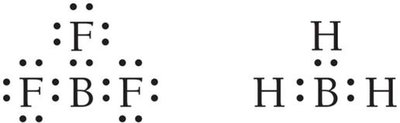
Boron often forms compounds with only six electrons (e.g., BF3).
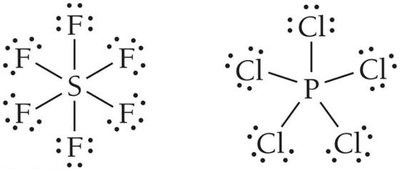
Some elements (e.g., SF6, PCl5) can have expanded octets with more than eight electrons.
Resonance Structures
Equivalent Lewis Structures
Some molecules can be represented by two or more valid Lewis structures, called resonance structures. The actual molecule is an average of these forms.
Predicting Molecular Shapes: VSEPR Theory
Electron and Molecular Geometry
The Valence Shell Electron Pair Repulsion (VSEPR) theory predicts molecular shapes based on the repulsion between electron groups around a central atom.
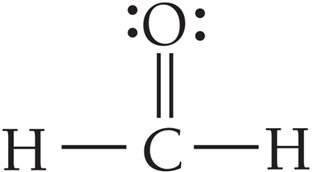
Electron groups include lone pairs, single, double, and triple bonds.
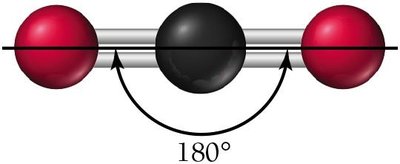
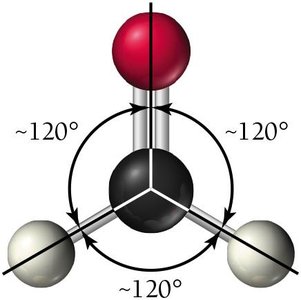
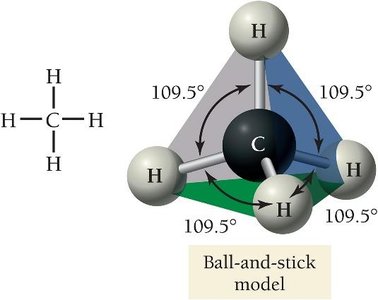
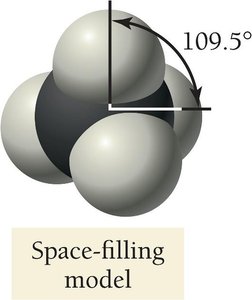
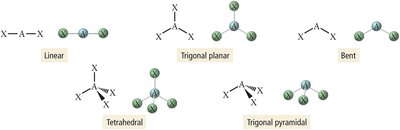
Common geometries: linear (180°), trigonal planar (120°), tetrahedral (109.5°).
Effect of Lone Pairs on Molecular Geometry
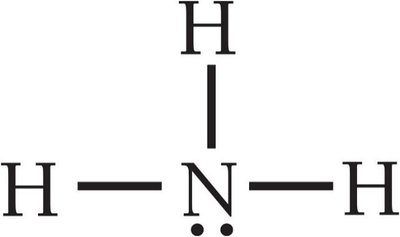
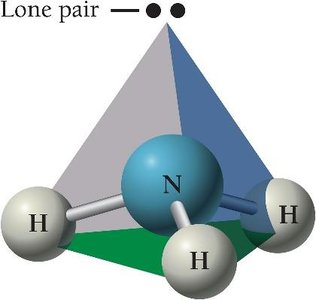
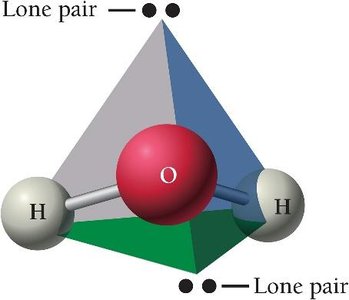
Lone pairs occupy more space than bonding pairs, causing deviations from ideal bond angles and affecting molecular geometry.
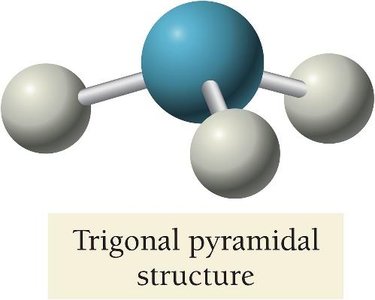
NH3: Trigonal pyramidal geometry due to one lone pair.
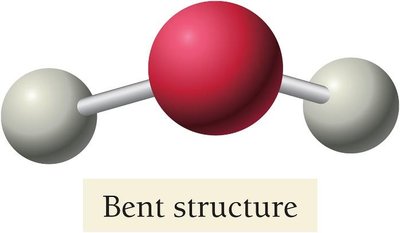
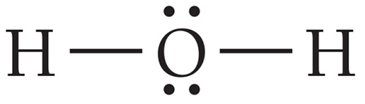
H2O: Bent geometry due to two lone pairs.
Summary Table: Electron and Molecular Geometries
Electron Groups | Bonding Groups | Lone Pairs | Electron Geometry | Angle | Molecular Geometry | Example |
|---|---|---|---|---|---|---|
2 | 2 | 0 | Linear | 180° | Linear | CO2 |
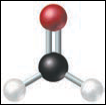
3 | 3 | 0 | Trigonal planar | 120° | Trigonal planar | H2CO |
3 | 2 | 1 | Trigonal planar | ~120° | Bent | SO2 |
4 | 4 | 0 | Tetrahedral | 109.5° | Tetrahedral | CH4 |
4 | 3 | 1 | Tetrahedral | 109.5° | Trigonal pyramidal | NH3 |
4 | 2 | 2 | Tetrahedral | 109.5° | Bent | H2O |
Representing Molecular Geometries on Paper
Chemists use straight lines, wedges, and hashed lines to represent three-dimensional molecular structures on two-dimensional paper.

Electronegativity and Polarity
Electronegativity and Bond Polarity
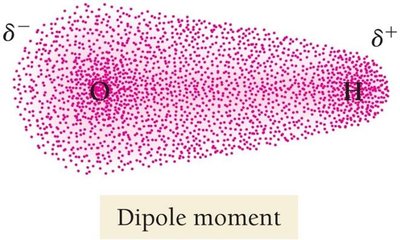
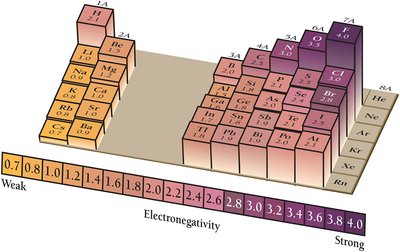
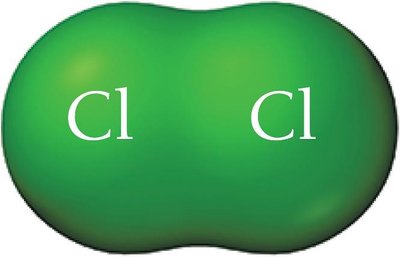
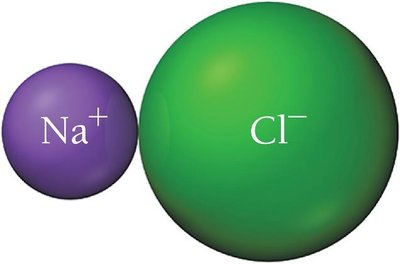
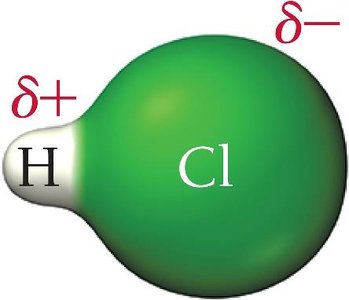
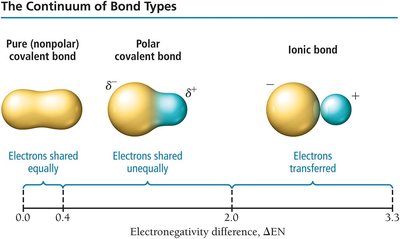
Electronegativity is the ability of an atom to attract electrons in a covalent bond. Differences in electronegativity between atoms lead to bond polarity.
If electrons are shared equally, the bond is nonpolar covalent.
If electrons are shared unequally, the bond is polar covalent.
If electrons are transferred, the bond is ionic.

Bond Type and Electronegativity Difference
Electronegativity Difference (ΔEN) | Bond Type | Example |
|---|---|---|
0–0.4 | Pure covalent | Cl2 |
0.4–2.0 | Polar covalent | HF |
2.0+ | Ionic | NaCl |
Polar Bonds and Molecular Polarity
Determining Molecular Polarity
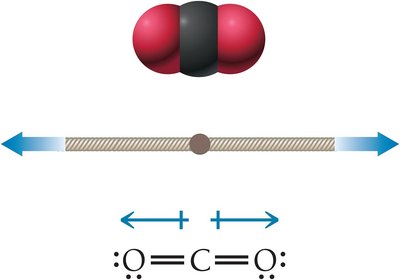
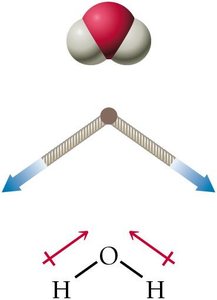
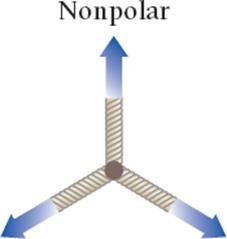
A molecule is polar if it contains polar bonds that do not cancel each other out, resulting in a net dipole moment. Molecular geometry determines whether bond dipoles cancel.
CO2: Linear geometry, dipoles cancel, nonpolar molecule.
H2O: Bent geometry, dipoles do not cancel, polar molecule.
Applications: Why Oil and Water Don’t Mix & How Soap Works
Polarity and Solubility
Polar molecules (like water) attract each other and exclude nonpolar molecules (like oil), leading to phase separation. Soap molecules have both polar and nonpolar regions, allowing them to interact with both water and grease, enabling cleaning.
Review and Learning Objectives
Write Lewis structures for elements, ionic, and covalent compounds.
Draw resonance structures and predict molecular shapes using VSEPR theory.
Determine molecular polarity based on bond polarity and geometry.
