Back
BackChemical Reactions: Evidence, Types, and Equations
Study Guide - Smart Notes
 Tailored notes based on your materials, expanded with key definitions, examples, and context.
Chemical Reactions
Evidence of a Chemical Reaction
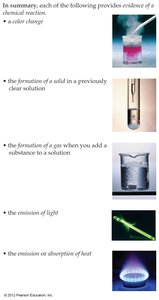
Chemical reactions are processes in which substances (reactants) are transformed into new substances (products). Evidence for a chemical reaction can be observed through various changes in physical properties or energy emission.
Color Change: A new color appears, indicating the formation of a new substance.
Formation of a Precipitate: A solid forms in a previously clear solution.
Gas Formation: Bubbles or gas are produced when substances are mixed.
Emission of Light: Light is released during the reaction.
Emission or Absorption of Heat: The reaction releases or absorbs heat energy.
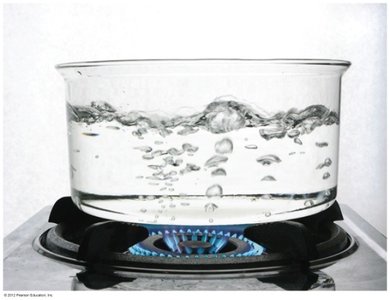
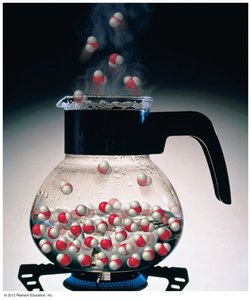
Note: Not all observable changes indicate a chemical reaction. For example, boiling water produces bubbles, but this is a physical change, not a chemical one, as water molecules remain unchanged.
Chemical Equations
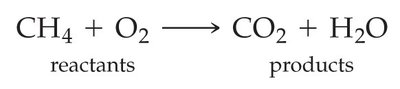
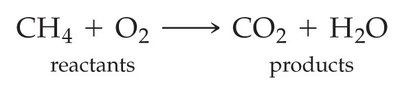
Chemical equations represent chemical reactions using symbols and formulas. The substances on the left are reactants, and those on the right are products. States of matter are indicated as (s) for solid, (l) for liquid, (g) for gas, and (aq) for aqueous solution.

Balancing Chemical Equations
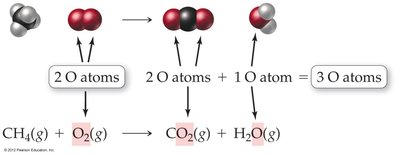
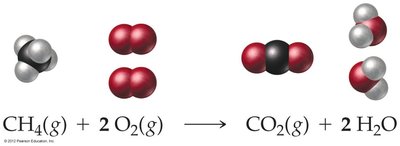
Balancing equations ensures the law of conservation of mass is obeyed: the number of atoms of each element is the same on both sides. Only coefficients (numbers in front of formulas) are changed, never subscripts (numbers within formulas).
Write the unbalanced equation.
Balance the equation by adjusting coefficients.
Indicate the states of matter for all reactants and products.
Aqueous Solutions and Solubility
Solubility and Electrolytes
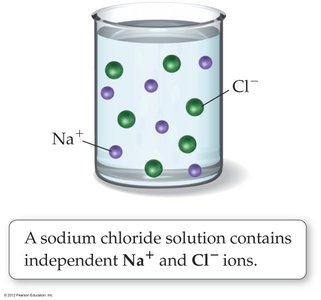
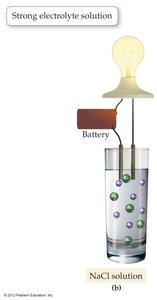
A compound is soluble if it dissolves in a liquid, and insoluble if it does not. An aqueous solution is a homogeneous mixture of a substance with water. Ionic compounds that dissolve in water usually dissociate into ions, forming strong electrolytes that conduct electricity.
Strong Electrolyte: A substance that completely dissociates into ions in solution (e.g., NaCl, AgNO3).
Nonelectrolyte: A substance that does not dissociate into ions (e.g., AgCl).
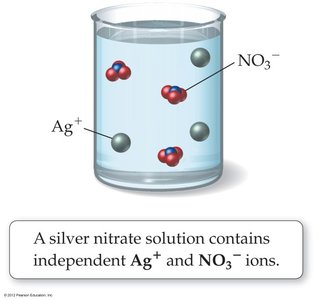
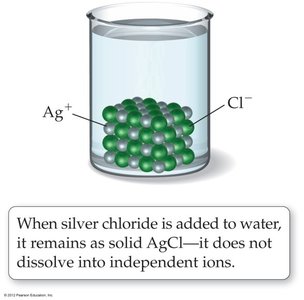
Solubility Rules
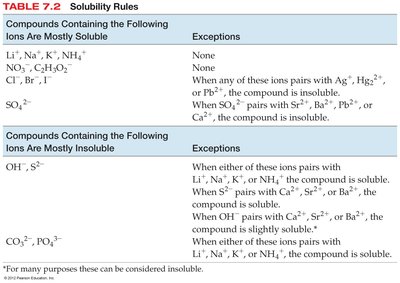
Solubility rules help predict whether an ionic compound will dissolve in water. These rules are summarized in the following table:
Compounds Containing the Following Ions Are Mostly Soluble | Exceptions |
|---|---|
Li+, Na+, K+, NH4+ | None |
NO3-, C2H3O2- | None |
Cl-, Br-, I- | When paired with Ag+, Hg22+, or Pb2+, the compound is insoluble. |
SO42- | When paired with Sr2+, Ba2+, Pb2+, or Ca2+, the compound is insoluble. |
Compounds Containing the Following Ions Are Mostly Insoluble | Exceptions |
|---|---|
OH-, S2- | When paired with Li+, Na+, K+, or NH4+, the compound is soluble. S2- with Ca2+, Sr2+, or Ba2+ is soluble. OH- with Ca2+, Sr2+, or Ba2+ is slightly soluble. |
CO32-, PO43- | When paired with Li+, Na+, K+, or NH4+, the compound is soluble. |
Precipitation Reactions
Formation of a Precipitate
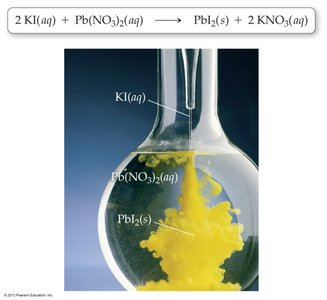
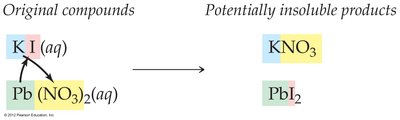
Precipitation reactions occur when two aqueous solutions combine to form an insoluble solid, called a precipitate. The key to predicting these reactions is to use solubility rules to determine if any product is insoluble.
Mix two solutions containing soluble compounds.
If an insoluble compound forms, it precipitates out as a solid.
If all products are soluble, no reaction occurs.
Example: Mixing potassium iodide and lead(II) nitrate solutions forms a yellow precipitate of lead(II) iodide:
Predicting and Writing Precipitation Reactions
Write the formulas of the two reactant compounds.
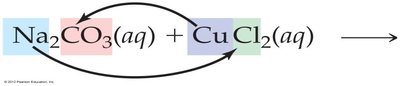
Switch the cations and anions to form possible products.
Use solubility rules to determine if any product is insoluble.
If a precipitate forms, write its formula with (s); if not, write "NO REACTION".
Balance the equation.
Example:
Chemical Equations in Solution
Molecular, Complete Ionic, and Net Ionic Equations
Chemical reactions in solution can be represented in three ways:
Molecular Equation: Shows all compounds as neutral formulas.
Complete Ionic Equation: Shows all strong electrolytes as ions.
Net Ionic Equation: Shows only the ions and molecules directly involved in the reaction; spectator ions are omitted.
Example: For the reaction of AgNO3 and NaCl:
Molecular:
Complete Ionic:
Net Ionic:


Classifying Chemical Reactions
Types of Chemical Reactions
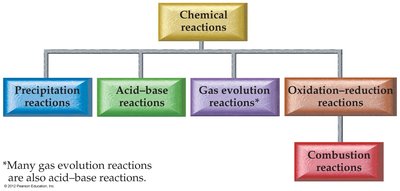
Chemical reactions can be classified based on the changes that occur:
Precipitation Reactions: Formation of an insoluble solid.
Acid–Base Reactions: Formation of water from an acid and a base.
Gas Evolution Reactions: Formation of a gas.
Oxidation–Reduction (Redox) Reactions: Transfer of electrons between substances.
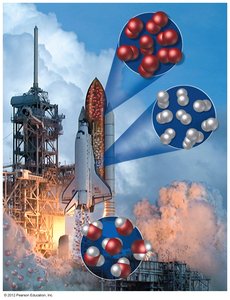
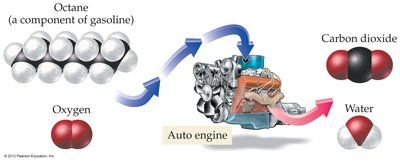
Combustion Reactions: A type of redox reaction where a substance reacts with O2 to form water and carbon dioxide, releasing heat.
Acid–Base Reactions
Acid–base (neutralization) reactions occur when an acid reacts with a base to produce water and a salt. The net ionic equation for many acid–base reactions is:

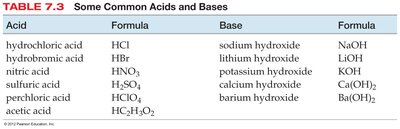
Acid | Formula | Base | Formula |
|---|---|---|---|
hydrochloric acid | HCl | sodium hydroxide | NaOH |
hydrobromic acid | HBr | lithium hydroxide | LiOH |
nitric acid | HNO3 | potassium hydroxide | KOH |
sulfuric acid | H2SO4 | calcium hydroxide | Ca(OH)2 |
perchloric acid | HClO4 | barium hydroxide | Ba(OH)2 |
acetic acid | HC2H3O2 |
Oxidation–Reduction (Redox) Reactions
Redox reactions involve the transfer of electrons. Oxidation is the loss of electrons, and reduction is the gain of electrons. These processes always occur together.
Combustion Reactions: A type of redox reaction where a substance reacts with oxygen to form water and carbon dioxide, releasing energy as heat.
Example: Combustion of methane:
Other Classifications
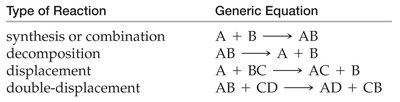
Type of Reaction | Generic Equation |
|---|---|
Synthesis or Combination | A + B → AB |
Decomposition | AB → A + B |
Displacement | A + BC → AC + B |
Double-Displacement | AB + CD → AD + CB |