 Back
BackChemical Warfare Agents: Classification, Properties, and Mechanisms
Study Guide - Smart Notes
 Tailored notes based on your materials, expanded with key definitions, examples, and context.
Chemical Warfare Agents
Classification of Chemical Warfare Agents
Chemical warfare agents are substances designed to cause harm or incapacitation through chemical action. They are classified based on their physiological effects and chemical properties.
Choking Agents: Attack lung tissue, causing pulmonary edema. Examples: Chlorine, Phosgene, Diphosgene, Chloropicrin.
Blood Agents (Cyanogens): Inhibit enzymes involved in cellular respiration, similar to carbon monoxide. Examples: Cyanide, Cyanogen.
Blister Agents (Vesicants): Cause severe blistering, incapacitation, and potentially death. Examples: Mustards (HD, HN), Lewisite.
Nerve Agents: Highly toxic, affect the nervous system. Examples: Sarin, Tabun, Soman, Cyclosarin, VX, Novichok.
Incapacitants: Produce temporary physiological or mental effects. Examples: CN, CS, Agent BZ, Kolokol-1.
Incendiary Agents: Designed to start fires or destroy equipment. Examples: White phosphorus, Napalm, Thermite.

Blood Agents (Cyanogens)
Properties and Mechanism of Action
Blood agents are inhaled chemicals containing the cyanide group (CN). They act rapidly, interfering with oxygen absorption and cellular respiration.
Hydrogen Cyanide (AC): Colourless, volatile liquid; precursor to many compounds; fatal if inhaled, swallowed, or absorbed. Mechanism: poisons cell mitochondria, halting cellular respiration.
Cyanogen Chloride (CK): Converts to hydrogen cyanide in the body; denser than air; strong irritating and choking effects; slows breathing.
Mechanisms of Toxicity:
Prevents red blood cells from carrying oxygen.
Poisons cell mitochondria, preventing oxygen utilization.
Symptoms: Cherry red skin, coughing, confusion, edema, loss of consciousness, paralysis, and death.
Protection: Protective masks prevent inhalation.
Properties of Hydrogen Cyanide and Cyanogen Chloride
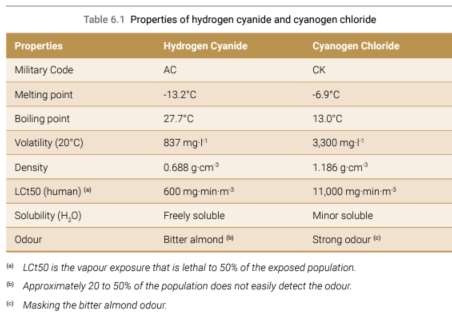
The following table compares the physical and chemical properties of hydrogen cyanide and cyanogen chloride:
Properties | Hydrogen Cyanide | Cyanogen Chloride |
|---|---|---|
Military Code | AC | CK |
Melting point | -13.2°C | -6.9°C |
Boiling point | 27.7°C | 13.0°C |
Volatility (20°C) | 837 mg/l | 3,300 mg/l |
Density | 0.688 g/cm³ | 1.186 g/cm³ |
LCt50 (human) | 6,000 mg·min·m-3 | 11,000 mg·min·m-3 |
Solubility (H2O) | Freely soluble | Minor soluble |
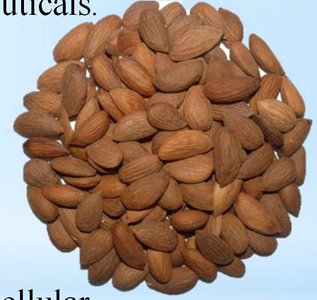
Odour | Bitter almond | Strong odour |
Synthesis of Hydrogen Cyanide
The most important industrial synthesis process for hydrogen cyanide is the Andrussow oxidation:
(at 1200° C)
Blister Agents (Vesicants)
Military Purpose and History
Blister agents are designed to cause incapacitating injuries rather than fatalities, forcing troops to wear protective equipment. They were first used in World War I, with mustard gas causing prolonged hospital stays and significant casualties.
Sites of Action and Skin Penetration
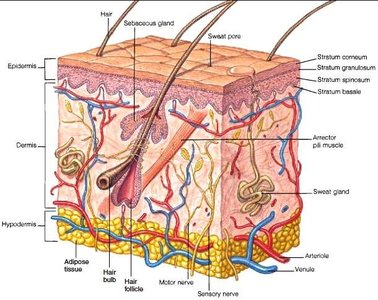
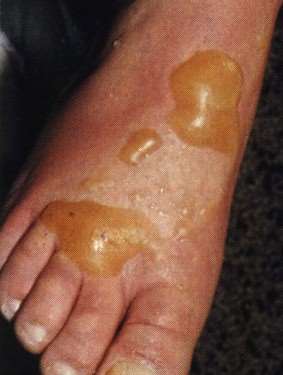
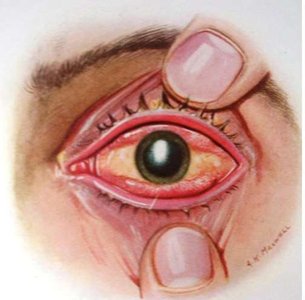
Blister agents primarily absorb through the skin, but also affect the eyes and respiratory system. The stratum corneum acts as a protective barrier, but agents can penetrate through pores and sweat glands, reacting with biological compounds and causing blisters.
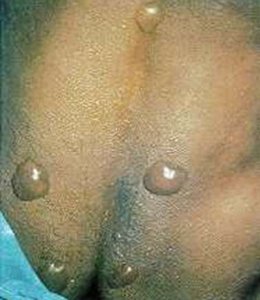
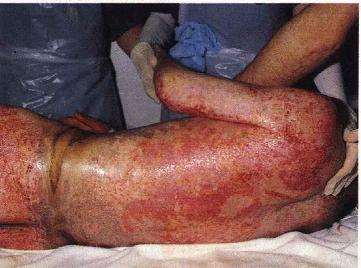
Skin: Vesication results from separation of basal cell membrane from basement membrane. Secondary infections are common.
Eyes: Painful conjunctivitis, potential blindness.
Respiratory tract: Attacks mucous membranes, can lead to bronchopneumonia.

Chemistry and Types of Blister Agents
Blister agents are chemically stable, persistent, and lack antidotes. They can be dispersed as vapor, liquid, dust, or aerosol. The main types are arsenicals (Lewisite) and mustards (sulphur and nitrogen mustards).
Sulphur Mustards: Affect DNA, prevent cell division; toxicity highest in rapidly dividing cells.
Nitrogen Mustards: Derived from ammonia; also used in chemotherapy.
Lewisite: Arsenical agent; has an antidote (British Anti-Lewisite, BAL).

Physical and Chemical Properties of Mustard Agents
The following table summarizes the properties of sulphur mustard, nitrogen mustard, and Lewisite:
Property | Sulphur Mustard | Nitrogen Mustard | Lewisite |
|---|---|---|---|
Appearance | Colourless to light yellow liquid, colourless vapour | Dark colour liquid, colourless vapour | Dark oily liquid, colourless vapour |
Chemical formula | C4H8Cl2S | C5H10Cl2N | C2H4AsCl2 |
Molecular weight | 159.08 | 204.54 | 207.32 |
Density (g/cm³, 25°C) | 1.27 | 1.24 | 1.88 |
Melting point (°C) | 14.5 | 25.2 | -18 |
Boiling point (°C) | 217.5 | 257.2 | 195.9 |
Vapour pressure (mmHg, 25°C) | 0.11 | 0.011 | 0.35 |
Volatility (mg/m³) | 910 (20°C), 2,860 (40°C) | 75 (20°C), 390 (40°C) | 2,500 (20°C), 12,000 (40°C) |
Nerve Agents (Organophosphorus Esters)
Properties and Toxicity
Nerve agents are highly toxic organophosphates that interfere with nerve impulse transmission. They are divided into G-series (Tabun, Sarin, Soman, Cyclosarin) and V-series (VX, VE, VG, VM).
G-series: Non-persistent, volatile.
V-series: Persistent, non-volatile.
Dispersal: Aerosol, liquid, vapour.
Protection: Protective mask and clothing required.

Toxicity Data on Nerve Agents
The following table summarizes toxicity and physical properties of nerve agents:
Agent | LCt50 (mg·min/m³) | LD50 (mg, skin) | LD50 (mg, oral) | VP (mmHg) |
|---|---|---|---|---|
Tabun | 200 | 4000 | 25-50 | 0.07 |
Sarin | 100 | 1700 | 5-20 | 2.9 |
Soman | 100 | 300 | 5-20 | 0.3 |
VX | 50 | 10 | 3-10 | 0.0007 |
Synthesis of Nerve Agents
Nerve agents are difficult to synthesize due to their extreme toxicity and the need for specialized equipment. Many precursors are restricted by international conventions. Binary weapons are designed so the final synthesis occurs inside the weapon, reducing danger during transport.
Sarin: Methyl phosphoryl difluoride + isopropanol
Soman: Methyl phosphoryl difluoride + pinacoyl alcohol

Mechanism of Action: Nerve Impulse Transmission
Nerve impulses traverse synapses using neurotransmitters such as acetylcholine (ACh). The process involves:
Release of neurotransmitter from presynaptic membrane, binding to postsynaptic receptors and stimulating the impulse.
Breakdown of neurotransmitter by acetylcholinesterase (AChE) to stop the impulse.
Nerve agents inhibit AChE, causing continuous stimulation and potentially fatal effects.

Additional info: Nerve agents are more easily obtainable than biological or nuclear weapons, but their synthesis and handling require advanced chemical knowledge and safety precautions.
