 Back
BackConservation of Mass and Balancing Chemical Equations
Study Guide - Smart Notes
 Tailored notes based on your materials, expanded with key definitions, examples, and context.
Conservation of Mass
The Fundamental Law
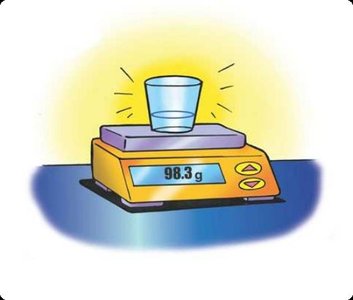
The Law of Conservation of Mass states that matter is neither created nor destroyed in a chemical reaction. This principle is foundational in chemistry and ensures that the total mass of reactants equals the total mass of products in a closed system.
Closed System: No matter can enter or leave; mass is strictly conserved.
Open System: Mass may appear to change due to escape of gases, but the law still holds when all products are accounted for.
Atomic Level: Atoms are rearranged, not destroyed or created. Every atom present at the start must be present at the end.
Example: If a reaction starts with 10g of methane and oxygen, the resulting carbon dioxide and water vapor will weigh exactly 10g in a closed system.
Balancing Chemical Equations
Quantitative Equality
Balancing chemical equations is essential to reflect the conservation of mass. The number of atoms for each element must be equal on both sides of the equation.
Subscripts: Small numbers within a chemical formula (e.g., the 2 in H2O) indicate the ratio of elements in a molecule. Changing subscripts changes the chemical identity.
Coefficients: Large numbers in front of a formula (e.g., the 2 in 2H2O) indicate the number of molecules. Only coefficients are used to balance equations.
Golden Rule: Never change subscripts when balancing equations. Altering subscripts changes the substance itself.
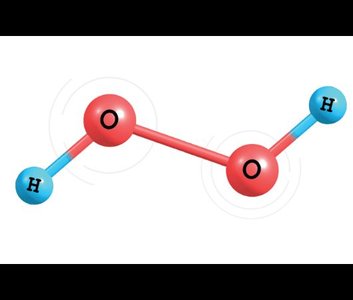
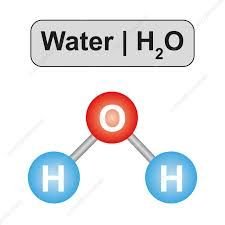
Example: Water vs. Hydrogen Peroxide
H2O: Water, safe to drink.
H2O2: Hydrogen peroxide, a bleach/poison.
The Balancing Strategy: Inventory Method
Balancing equations requires a systematic approach to ensure all atoms are accounted for:
List Elements: Identify every element present on both sides of the equation.
Initial Count: Count the number of atoms for each element.
Add Coefficients: Start with the most complex molecule or the most unbalanced atom.
Recount & Repeat: Update the inventory after each change.
Final Check: Ensure all ratios are simplified to the lowest possible integers.
Worked Example: Methane Combustion
Element | Reactants (Left) | Products (Right) | Status |
|---|---|---|---|
Carbon (C) | 1 | 1 | Balanced |
Hydrogen (H) | 4 | 4 (from 2H2O) | Balanced |
Oxygen (O) | 4 (from 2O2) | 2 + 2 = 4 | Balanced |
Expert Tips for Balancing Equations
Save H & O for Last: Balance oxygen and hydrogen last, as they often appear most frequently and may self-balance after other elements are set.
Polyatomic Ions: If a polyatomic ion (e.g., SO4) appears on both sides, treat it as a single unit for faster balancing.
Simplification: Always check if coefficients can be divided to achieve the lowest ratio (e.g., 2:2:4 becomes 1:1:2).
Summary Table: Subscripts vs. Coefficients
Term | Definition | Effect |
|---|---|---|
Subscript | Small number within a formula | Defines ratio of elements; changing alters molecule |
Coefficient | Large number in front of formula | Indicates number of molecules; used for balancing |
Additional info: The notes are directly relevant to "Chemical Reactions" and "Quantities in Chemical Reactions" chapters, covering conservation of mass, balancing equations, and the use of subscripts and coefficients.
